
Concrete producers evaluate carbon reduction technologies by assessing technical performance, production integration, financial return, and the verifiability of carbon savings. The evaluation process typically combines engineering review, cost modelling, and carbon accounting analysis. The sections below address the specific questions producers ask most often before committing to an investment.
What criteria do concrete producers use to assess new carbon technologies?
Concrete producers typically assess carbon reduction technologies against four core criteria: technical compatibility with existing production processes, measurable impact on the carbon footprint of concrete, effect on product quality and production speed, and the financial case for investment. A technology that reduces emissions but compromises product strength or slows output is unlikely to gain traction in a commercial precast facility.
Beyond these fundamentals, producers also examine whether the technology meets carbon accounting requirements, whether the carbon reductions are independently verifiable, and whether the system can be integrated without major disruption to the factory floor. Regulatory readiness matters too: as carbon reporting obligations increase across the construction sector, producers want assurance that any system they adopt will support compliance rather than create an additional administrative burden.
A practical checklist for evaluation tends to include:
- Compatibility with current curing chamber infrastructure
- Effect on cement content and raw material costs
- Impact on curing time and production throughput
- Availability of lifecycle support and maintenance
- Ability to generate verified carbon data for Environmental Product Declarations (EPDs) and carbon credits
- Track record of commercial deployment, not just pilot results
Producers with precast operations tend to prioritise technologies that can be retrofitted to existing curing chambers, since building new infrastructure adds cost and delays the return on investment.
How do producers calculate the actual carbon savings of a curing system?
Calculating actual carbon savings from a CO₂ curing system involves two distinct mechanisms: the reduction in cement content enabled by the curing process, and the permanent mineralisation of CO₂ into the concrete product itself. Both contribute to a lower calculated carbon footprint, but they are measured differently and have different implications for carbon accounting.
Cement reduction savings
When carbon dioxide curing accelerates strength development and enables denser microstructures, producers can reduce the amount of Portland cement in the mix without sacrificing product performance. Since cement production is one of the most carbon-intensive steps in concrete manufacturing, reducing cement content directly lowers the embodied emissions of the finished product. The size of this saving depends on the product type, the original cement content, and the supplementary cementitious materials (SCMs) used alongside cement.
CO₂ mineralisation savings
The second mechanism is CO₂ mineralisation: carbon dioxide introduced during curing reacts with calcium compounds in the concrete and is permanently converted into carbonate minerals. This stored CO₂ is not released back into the atmosphere, even if the concrete is later demolished or recycled. The amount mineralised per cubic metre of concrete depends on the binder composition, the curing conditions, and the duration of the process. This mineralised CO₂ can be counted as a negative emission in the product’s carbon footprint calculation, or sold as a carbon removal credit in voluntary markets.
Accurate calculation requires real-time measurement of CO₂ flow during curing, laboratory validation of mineralisation rates, and documentation that meets the requirements of relevant carbon certification standards. Without this measurement infrastructure, producers cannot substantiate the carbon savings to customers, auditors, or carbon market buyers.
What’s the difference between carbon capture, storage, and mineralization in concrete?
Carbon capture, carbon storage, and CO₂ mineralisation are distinct processes that are often used interchangeably but refer to different stages and mechanisms. In the context of concrete production, understanding the difference matters for both technical accuracy and carbon accounting.
Carbon capture refers to the process of collecting CO₂ from an emission source, such as a power plant or industrial facility, before it enters the atmosphere. Concrete producers do not typically perform carbon capture themselves; they use CO₂ that has already been captured and supplied by industrial partners.
Carbon storage is the broader concept of keeping captured CO₂ out of the atmosphere over a defined period. Storage methods vary significantly in permanence: geological storage in underground reservoirs, for example, has different permanence characteristics than biological storage in forests or soil.
CO₂ mineralisation is a specific form of permanent carbon storage in which CO₂ reacts chemically with calcium or magnesium compounds to form stable carbonate minerals. In concrete production, this happens when CO₂ is introduced into the curing chamber and reacts with calcium ions from the cement or SCMs. The resulting carbonates are chemically stable and remain locked in the concrete structure indefinitely. This is considered one of the most durable forms of carbon removal available, with storage timescales measured in centuries rather than decades.
For concrete producers evaluating carbon reduction technology, the distinction is important because only mineralisation delivers permanent, verifiable carbon removal that qualifies for the most credible carbon credit standards. Carbon storage approaches that rely on biological processes or reversible chemical reactions carry higher permanence risk and may not meet the same certification requirements.
How does CO2 curing technology affect concrete strength and production speed?
Carbon dioxide curing technology improves both concrete strength and production speed through distinct chemical mechanisms. These are not theoretical benefits: they are the result of how CO₂ interacts with the concrete mix during the early stages of hardening, and they have direct consequences for how precast producers manage their production lines.
Effect on production speed
CO₂ introduced during early curing acts through two complementary mechanisms. First, carbon dioxide reacts with calcium to form ultrafine calcium carbonate particles, which act as nucleation sites for further hydration reactions. This accelerates the initial stages of strength development. Second, the mildly acidic nature of CO₂ increases the dissolution rate of cement particles, which speeds up the overall hydration process. The combined effect is that concrete reaches the required early-age strength faster, allowing producers to demould products sooner and increase throughput without adding extra shifts or equipment.
Effect on concrete strength
Carbonation densifies the microstructure of concrete through several mechanisms. CO₂ replaces hydroxides with carbonates, which occupy a larger molar volume and fill pore spaces more effectively. This makes the concrete denser and less permeable. Additionally, free silica released during carbonation reacts with remaining cement hydration products over the following days and weeks, continuing to build strength after the initial curing period. Products cured with CO₂ often show stronger performance at later testing ages compared to conventionally cured equivalents.
A practical consequence is that producers can reduce cement content while maintaining the mechanical performance required by product standards. This is not a compromise: it is a recalibration of the mix design based on the additional binding work done by the carbonation process itself.
What does integrating a CO2 curing system into an existing factory involve?
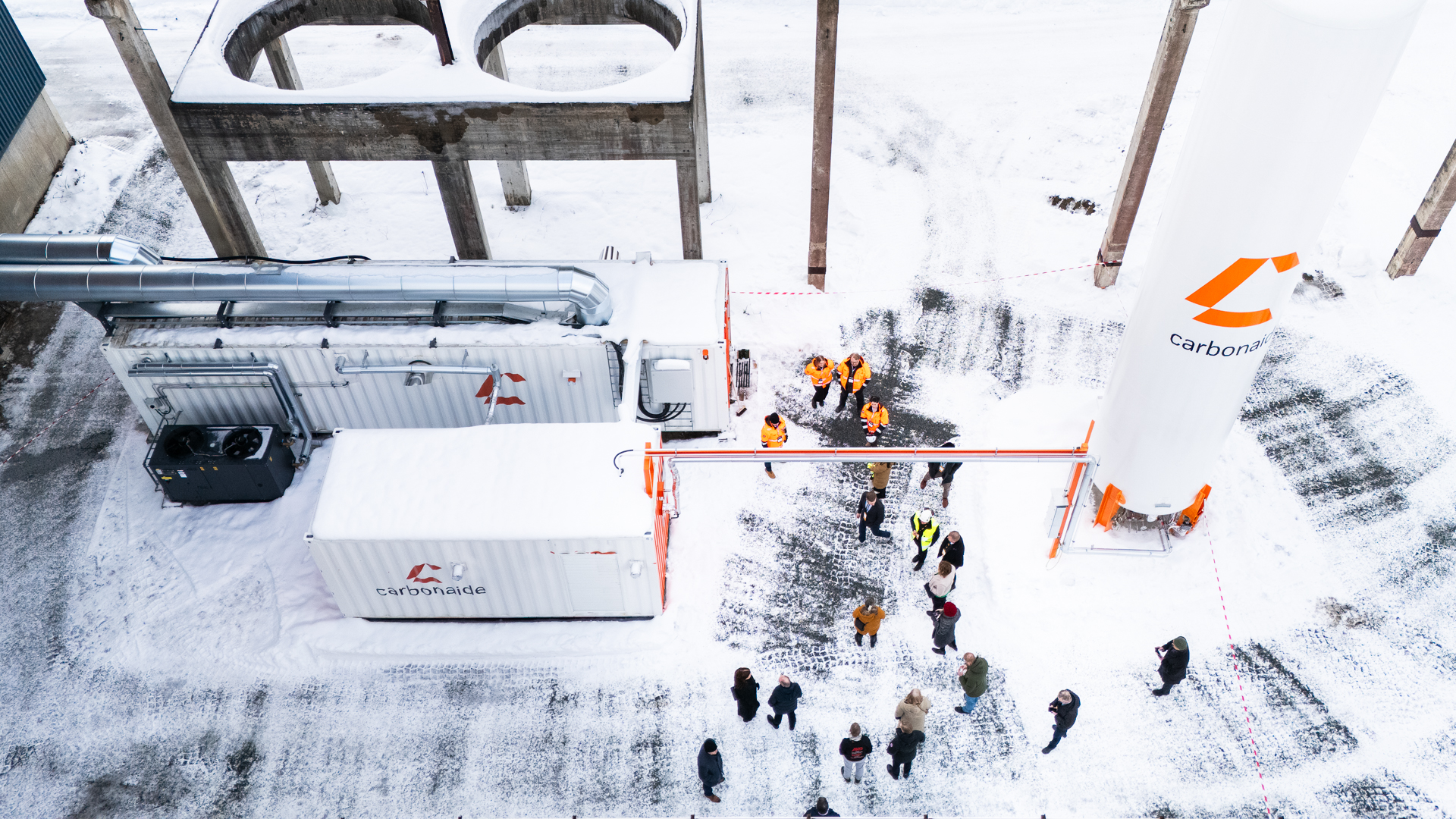
Integrating a CO₂ curing system into an existing precast factory involves modifications to the curing chambers, installation of CO₂ supply and process control hardware, and connection to a software platform for monitoring and data management. The process is designed to work with existing infrastructure rather than replace it, which makes retrofitting technically feasible for most precast operations.
The main components of a typical integration include:
- Curing chamber modifications: The chambers must be made sufficiently gas-tight to maintain the required CO₂ concentration during curing. The extent of modification depends on the existing chamber design.
- Process module installation: A process module with instrumentation for CO₂ flow control and measurement is installed and connected to the curing chambers.
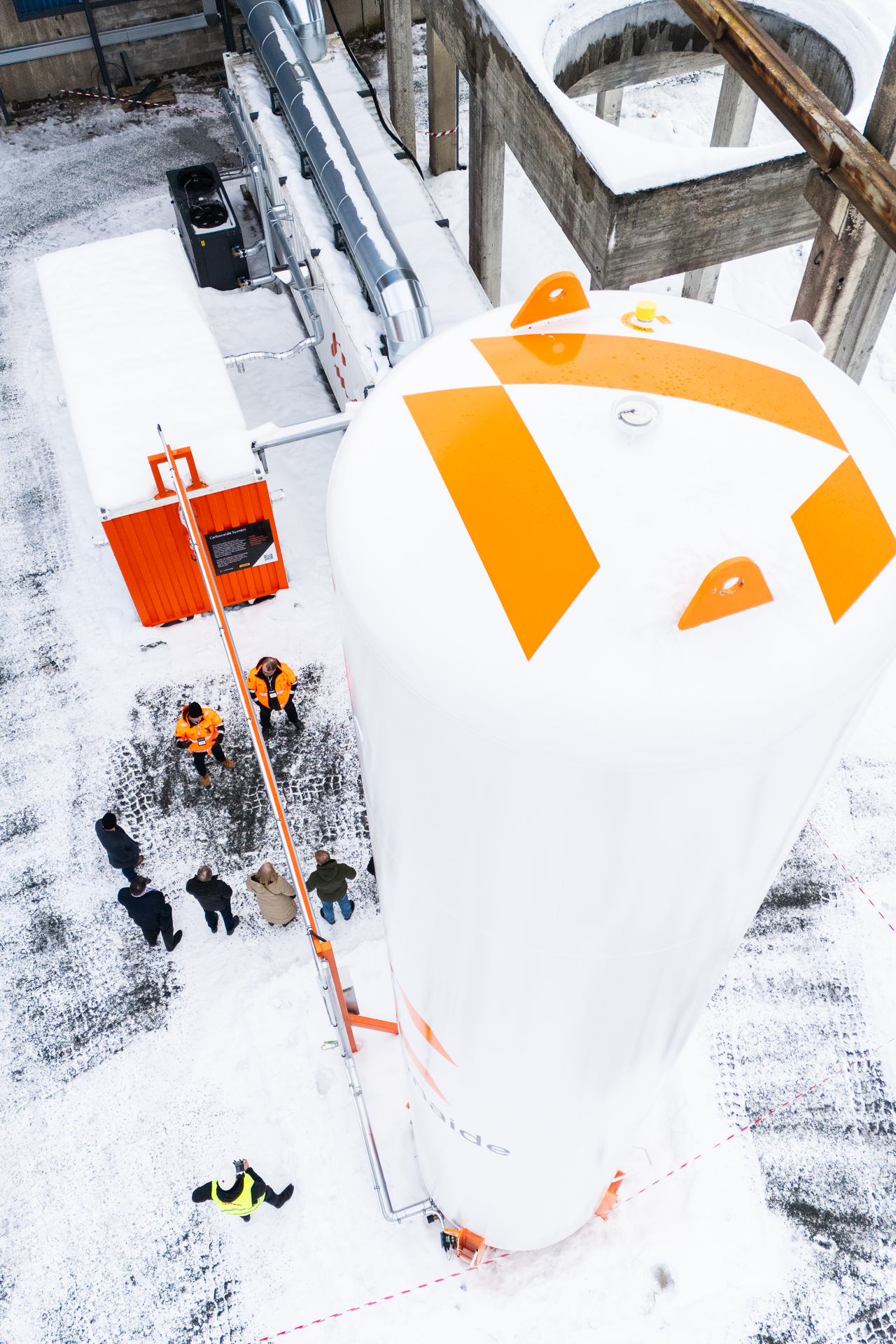
- CO₂ supply infrastructure: A CO₂ storage tank, typically holding liquid CO₂, is installed outside the curing area. A vaporiser converts it to gas before it enters the chamber.
- Software integration: The system connects to a software platform that manages CO₂ flow, records mineralisation data, and generates the documentation needed for carbon reporting and credit certification.
The integration process also involves adjusting mix designs to take advantage of the reduced cement content that CO₂ curing enables. This requires collaboration between the technology provider and the producer’s technical team to validate product performance against the relevant standards.
The Carbonaide CO₂ Curing System is built specifically for this kind of retrofit scenario, with project planning, chamber design support, and lifecycle maintenance included as part of the full delivery. The Carbonaide Service Platform handles real-time process control and carbon data management from the same interface.
How can concrete producers verify and monetize carbon credits from CO2 curing?
Concrete producers can verify and monetise carbon credits from CO₂ curing by measuring the amount of CO₂ mineralised during production, having that measurement independently certified against a recognised carbon removal standard, and then selling the resulting credits to buyers in voluntary carbon markets. The entire process depends on accurate, real-time measurement and documentation of the mineralisation process.
Verification process
Verification starts with gas flux measurement during curing: the system tracks how much CO₂ enters the chamber and how much remains after curing, allowing the mineralised quantity to be calculated. Laboratory-tested control samples provide additional confirmation of the measurement accuracy. The resulting data is then reviewed by an independent third-party verifier, who confirms that the claimed carbon removal meets the requirements of the applicable certification standard. In Carbonaide’s case, this process follows the requirements of Isometric’s module for CO₂ storage via carbonation in the built environment.
Monetisation options
Once credits are certified, producers have two main options for using the stored carbon value. The first is to apply the negative emissions directly to the carbon footprint of the concrete products, reducing the declared CO₂ per cubic metre in EPDs and product documentation. This supports sales to customers and project teams with carbon targets. The second option is to sell the credits as carbon removal units to third-party buyers in voluntary carbon markets, generating a direct revenue stream from the mineralisation activity.
The Carbonaide Service Platform supports both pathways. The premium version of the platform provides full carbon storage documentation, including the data needed for credit certification and reporting by product type and production batch. This removes the administrative complexity that would otherwise make carbon credit management impractical for a precast factory.
As demand for credible, permanent carbon removal grows across corporate net-zero strategies and supply chain reporting requirements, the ability to generate and sell durable carbon removal credits is becoming a meaningful part of the business case for CO₂ curing investment, not just an environmental benefit but a revenue line.