
Clinker reduction affects precast concrete performance in ways that depend heavily on what replaces the clinker and how the curing process compensates for the change. When managed well, reducing clinker content can maintain or even improve mechanical properties while significantly lowering the carbon footprint of precast products. The sections below address the most common questions precast manufacturers have about clinker substitution in practice.
What happens to concrete strength when clinker content is reduced?
Reducing clinker content does not automatically reduce concrete strength, but it does change how and when strength develops. The outcome depends on which supplementary cementitious materials replace the clinker and what curing method is used. Without compensating measures, lower clinker content typically slows early strength gain, which can create production challenges in precast manufacturing where quick demoulding is important.
Portland cement clinker is the primary driver of early hydration reactions in conventional concrete. When clinker is replaced with SCMs such as slag or limestone filler, the early strength development mechanism changes. Some SCMs are latently hydraulic, meaning they react more slowly than clinker and contribute to strength over longer periods rather than in the first hours after casting.
This is where the curing method becomes decisive. Carbon dioxide curing accelerates early strength development through a different chemical pathway than hydration alone. CO₂ reacts with calcium compounds to form calcium carbonate, which densifies the concrete microstructure and provides nucleation sites that speed up the overall hardening process. This means that precast products cured with CO₂ can achieve adequate early strength even with reduced clinker content, removing one of the main practical barriers to clinker substitution in precast production.
Which supplementary materials replace clinker in precast concrete?
The most widely used materials for clinker substitution in precast concrete are ground granulated blast furnace slag, fly ash, limestone filler, and calcined clays. Each material has different reactivity levels, availability constraints, and effects on concrete properties. Choosing the right SCM depends on the product type, required strength class, and available local supply.
Slag
Ground granulated blast furnace slag is a byproduct of iron production. It is latently hydraulic, meaning it requires an activator to react. In conventional concrete, Portland cement clinker provides the alkaline environment that activates slag. In carbon dioxide curing, CO₂ can activate certain slag types directly, including gamma dicalciumsilicate phases that are otherwise non-reactive under normal curing conditions. This opens up a wider range of slag materials for use in precast production.
Limestone filler
Limestone filler is not a reactive SCM in the traditional sense, but it contributes to concrete performance by improving particle packing and providing nucleation sites for hydration products. In carbon dioxide curing, limestone filler interacts with the CO₂ environment in ways that support early strength development, making it a practical option for partial clinker replacement in precast elements where a high strength class is not the primary requirement.
How does clinker reduction affect curing time and production speed?
Clinker reduction can slow conventional curing because SCMs generally react more slowly than Portland cement clinker. In a standard steam or ambient curing process, this means longer demoulding times, which reduces throughput in precast factories. However, carbon dioxide curing counteracts this effect by accelerating early strength development through CO₂ mineralisation rather than relying solely on hydration speed.
In carbon dioxide curing, CO₂ introduced into the curing chamber reacts with calcium compounds to form calcium carbonate crystals. These act as nucleation sites, accelerating the overall hardening process in the first hours after casting. The result is that precast products with reduced clinker content can reach demoulding strength within a comparable timeframe to conventionally produced concrete, and in some cases faster.
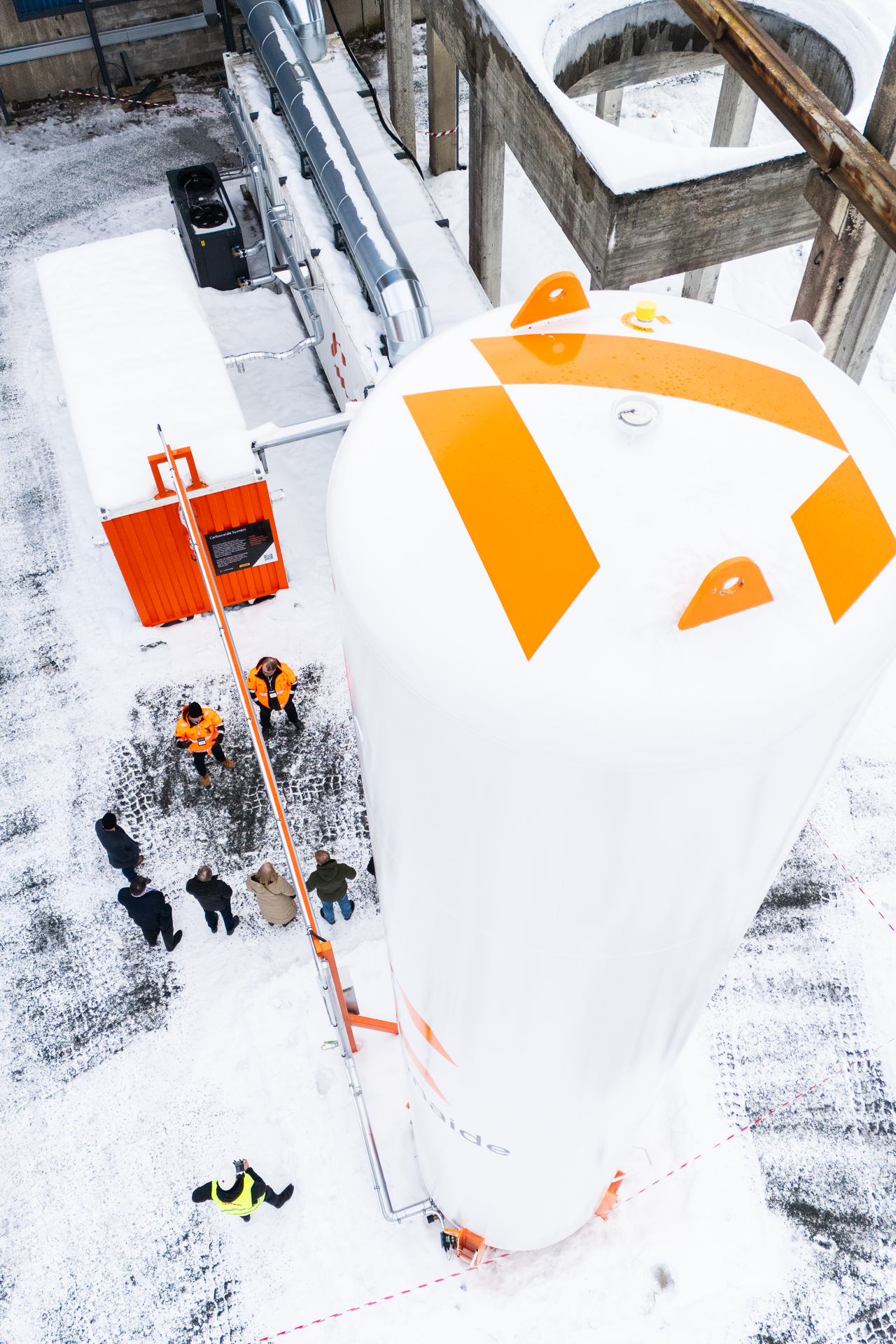
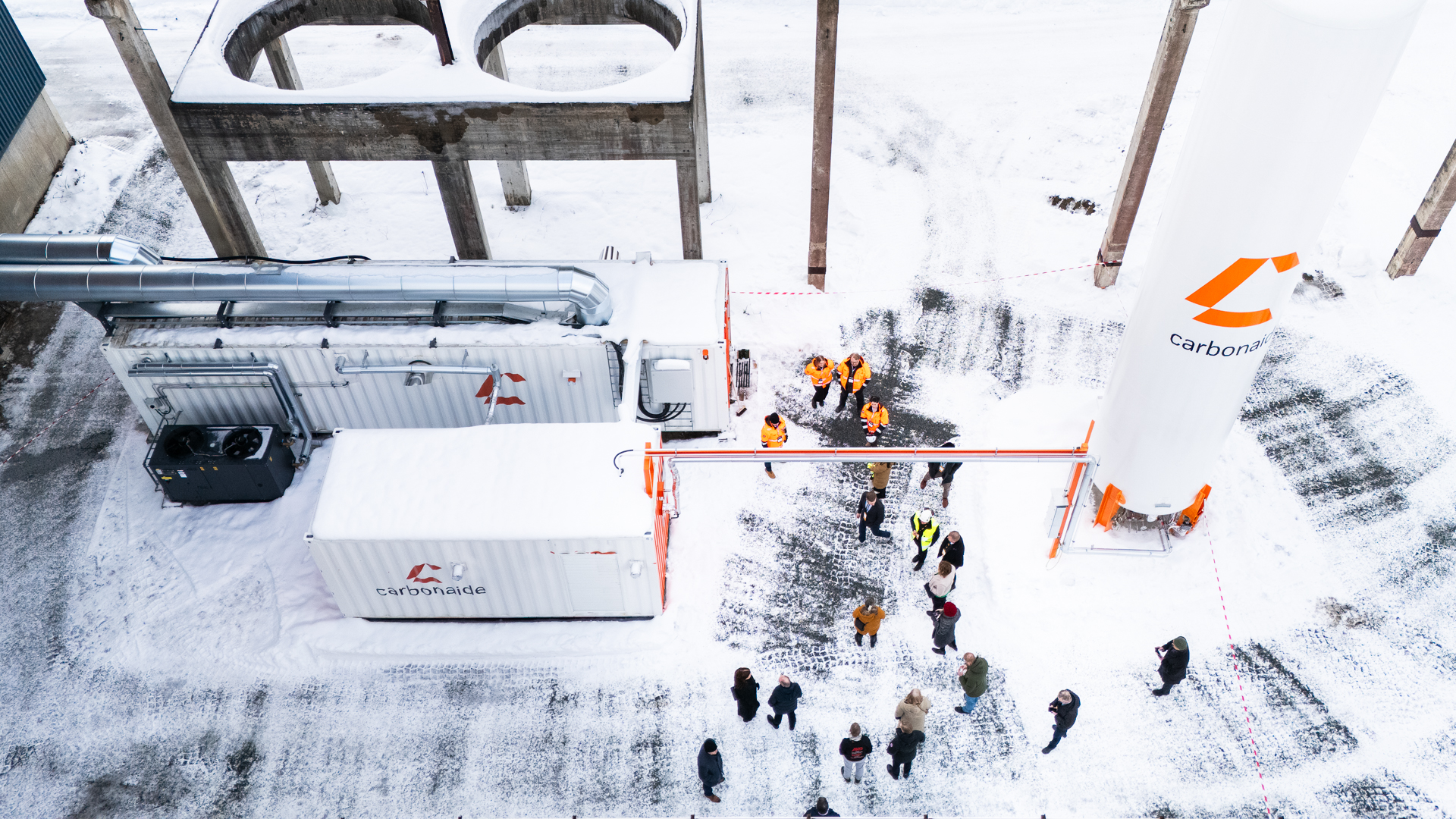
For precast manufacturers, this matters because production speed directly affects factory economics. A curing method that compensates for the slower reactivity of SCMs removes one of the main practical objections to clinker substitution. The Carbonaide CO₂ Curing System is designed specifically to manage this balance, controlling CO₂ flow in curing chambers to optimise both mineralisation and early strength development simultaneously.
Does reduced clinker content affect long-term durability?
Reduced clinker content can affect long-term durability, but not necessarily in a negative direction. The outcome depends on the specific SCM used and the curing process applied. Some SCMs improve certain durability characteristics compared to high-clinker concrete, while others require careful mix design to avoid weaknesses in specific exposure conditions.
Slag, for example, is known to reduce the permeability of concrete over time as its slower hydration reactions fill capillary pores. Lower permeability generally improves resistance to chloride ingress and sulfate attack, which are relevant durability concerns for precast infrastructure products. Carbon dioxide curing reinforces this effect by densifying the microstructure through carbonation, which reduces the concrete’s tendency to leach calcium and lowers porosity.
One durability consideration that precast producers should assess carefully is carbonation depth in reinforced products. Carbonation of the concrete cover reduces the alkalinity that protects steel reinforcement from corrosion. In CO₂ curing, carbonation is concentrated in the early curing phase and affects the surface layers, but the process is controlled and the depth is limited. For unreinforced precast products such as pavement blocks, kerbs, and wall elements, this concern does not apply.
The general principle is that clinker reduction does not automatically compromise durability. It requires appropriate SCM selection, proper mix design, and a curing method that compensates for the differences in reactivity. When these factors are managed correctly, low-clinker precast concrete can meet the same durability requirements as conventional products.
What is the carbon footprint impact of cutting clinker in precast products?
Cutting clinker content reduces the carbon footprint of precast concrete products because Portland cement clinker production is the largest source of CO₂ emissions in concrete manufacturing. Less clinker means fewer process emissions from raw material calcination and less fuel consumption in the kiln. When clinker is replaced with industrial byproducts such as slag, the embodied carbon of the replacement material is considerably lower.
The carbon footprint reduction from clinker substitution alone depends on the replacement ratio and the SCM used. Replacing a portion of clinker with slag or limestone filler reduces the emissions attributed to the binder component of the concrete mix. When this is combined with carbon dioxide curing, a second mechanism adds further emission reductions: CO₂ is mineralised into the concrete structure during curing and permanently stored as carbonates.
This combination of clinker reduction and CO₂ mineralisation can shift the calculated carbon footprint of precast products considerably. In cases where high SCM replacement ratios are achieved alongside significant CO₂ mineralisation, the carbon footprint of the concrete can reach net-negative values. The CO₂ stored in the product offsets the remaining process emissions from clinker production and other manufacturing steps.
Precast manufacturers can document and verify this stored carbon through the Carbonaide Service Platform, which measures CO₂ flow during curing and supports carbon credit certification. This makes the emission reductions from clinker substitution and mineralisation traceable and reportable, which is increasingly relevant for environmental product declarations and carbon market participation.
When should precast manufacturers consider clinker reduction in their mix design?
Precast manufacturers should consider clinker reduction when they have access to a reliable SCM supply, when product specifications allow for adjusted early strength development timelines, or when they are implementing carbon dioxide curing that compensates for the reactivity differences. Clinker reduction is most straightforward for products that do not require the highest strength classes or where curing conditions can be controlled precisely.
Products with moderate strength requirements, such as lightweight wall elements, pavement blocks, and kerb stones, are generally well suited to clinker substitution. These products allow more flexibility in mix design and tolerate a wider range of SCM types. Products with demanding structural requirements or tight production cycles require more careful optimisation before clinker content is reduced.
The business case for clinker reduction is also relevant. Clinker is the most expensive component of the cement binder. Replacing part of it with SCMs such as slag or limestone filler reduces raw material costs directly. When combined with CO₂ curing, which can accelerate production and enable higher SCM replacement ratios, the cost savings can be substantial relative to conventional production.
Precast manufacturers evaluating clinker reduction should assess three factors together: the availability and quality of local SCMs, the curing technology they can access, and the product portfolio they produce. These three factors together determine how far clinker content can be reduced without compromising product performance or production efficiency. Carbon dioxide curing expands what is achievable across all three dimensions by enabling higher replacement ratios and compensating for the slower reactivity of alternative binders.
How Carbonaide supports clinker reduction in precast production
Carbonaide’s approach to clinker reduction combines hardware, software, and process expertise into a complete system for precast producers. The core benefits for manufacturers exploring clinker substitution include:
- Accelerated early strength development: CO₂ mineralisation compensates for the slower reactivity of SCMs, maintaining production throughput even at lower clinker content.
- Activation of alternative SCM types: The CO₂ curing process can activate slag phases that are non-reactive in conventional curing, broadening the range of usable materials.
- Microstructure densification: Carbonation strengthens the concrete structure through multiple mechanisms, supporting mechanical performance even with reduced binder content.
- Measurable carbon storage: CO₂ mineralised during curing is permanently stored in the product and quantified through the Carbonaide Service Platform, enabling verified emission reporting and carbon credit certification.
- Mix design optimisation: Carbonaide works with producers to tailor the curing process to their specific product range and SCM supply, rather than applying a one-size-fits-all approach.
For precast producers looking to reduce clinker content without compromising product quality or production speed, carbon dioxide curing provides a technically sound and commercially viable path forward.