
Concrete manufacturers can prepare their product portfolios for future carbon requirements by acting now: auditing the carbon footprint of existing products, identifying where emissions originate in the production process, and integrating technologies that reduce cement consumption and store CO₂ permanently in the product itself. The pressure to act is real and building fast, driven by tightening procurement standards, evolving regulations, and buyers who increasingly require verified environmental product declarations. This article works through the key questions manufacturers need to answer to get ahead of those requirements.
What carbon regulations are coming for construction manufacturers?
Carbon regulations for construction manufacturers are tightening across multiple fronts: mandatory carbon reporting, embodied carbon limits in public procurement, and expanding carbon pricing schemes that will eventually reach building materials. Precast concrete producers in particular face growing pressure from both regulatory bodies and large construction clients that set their own carbon thresholds independently of government timelines.
In the European Union, the Construction Products Regulation revision is moving toward requiring Environmental Product Declarations (EPDs) for a wider range of products. Public procurement rules in several member states already set maximum embodied carbon thresholds for structural elements. In 2026, this trend is accelerating rather than stabilising.
Beyond procurement rules, the EU Emissions Trading System continues to expand, and discussions around a carbon border adjustment mechanism are pushing manufacturers to think about the carbon content of their products in export markets as well. Voluntary carbon markets are also maturing, with buyers of carbon removal credits setting increasingly strict standards around permanence and verification.
For concrete manufacturers, the practical implication is straightforward: products without verified carbon data will face barriers to sale, and products with high embodied carbon will face price disadvantages. Waiting for final regulatory text before acting means losing the lead time needed to adjust production processes and update EPD documentation.
How does a product’s carbon footprint get measured and verified?
A concrete product’s carbon footprint is measured through a life cycle assessment (LCA), which quantifies greenhouse gas emissions across the production chain: raw material extraction, transport, manufacturing, and in some frameworks, end of life. For precast concrete, the manufacturing stage, covering cement production and curing, typically accounts for the largest share of emissions. Verification requires independent third-party review of the underlying data and methodology.
The result of an LCA is published as an Environmental Product Declaration, a standardised document that allows buyers to compare the carbon footprint of competing products on a like-for-like basis. EPDs follow international standards and must be verified by accredited bodies to be accepted in procurement processes.
What data goes into a concrete EPD?
An EPD for precast concrete draws on data from several sources: the carbon intensity of each raw material (cement type and quantity being the dominant factor), energy consumption during production, transport distances, and any carbon stored or removed during the process. If CO₂ mineralisation takes place during curing, the amount of CO₂ permanently stored in the product can be counted as a negative emission, reducing the declared carbon footprint of that product batch.
What does verification involve?
Verification means an independent body reviews the LCA methodology, checks that the underlying data is accurate, and confirms that the EPD follows the relevant product category rules. For carbon storage through mineralisation, verification also requires measurement data from the curing process itself, not just calculated estimates. The Carbonaide Service Platform supports this by providing real-time CO₂ flow measurement and certified carbon storage documentation, which feeds directly into EPD updates and carbon credit certification.
What production changes can lower concrete’s embodied carbon?
Lowering the embodied carbon of precast concrete products requires reducing the amount of Portland cement used, since cement production is the primary source of CO₂ in concrete manufacturing. The main production levers are: substituting a portion of cement with supplementary cementitious materials (SCMs) such as slag or fly ash, optimising the mix design to use cement more efficiently, and applying carbon dioxide curing to both accelerate strength development and mineralise CO₂ into the product structure.
SCMs work alongside cement and can replace a meaningful portion of it, but they still require cement for activation. This is an important distinction: SCMs reduce cement content but do not eliminate the need for it. Alternative binders, such as alkali-activated slags, can go further, but their availability and performance characteristics vary significantly by production context.
Carbon dioxide curing offers a different mechanism. By introducing CO₂ into the curing chamber during the early hardening phase, the process accelerates strength development, which in turn allows cement content to be reduced without sacrificing product quality. At the same time, CO₂ reacts with calcium compounds in the concrete and mineralises as stable carbonates, permanently storing that carbon in the product. When slag or other alternative binders are used alongside CO₂ curing, the combined effect can bring the product’s calculated carbon footprint into negative territory.
These changes do not require building a new factory. CO₂ curing systems can be retrofitted into existing curing chambers, and mix design adjustments can be phased in product by product based on performance testing and EPD targets.
When should manufacturers start updating their product portfolios?
Concrete manufacturers should start updating their product portfolios now, not when regulations formally require it. The lead time for adjusting mix designs, commissioning new equipment, running performance trials, and updating EPD documentation is significant. Manufacturers who begin in 2026 will be positioned to meet procurement thresholds that are already active in several markets and to respond quickly as additional requirements come into force.
There is also a commercial argument for early action that goes beyond compliance. Buyers in the construction sector, particularly larger contractors and developers with their own net-zero commitments, are already specifying products with verified low embodied carbon. Manufacturers that can offer documented, third-party verified carbon data have a differentiation advantage in competitive tenders.
Starting early also allows manufacturers to phase the transition systematically: beginning with the products that have the largest carbon footprint or the highest sales volume, building internal expertise with the measurement and reporting processes, and expanding the updated portfolio as confidence grows. Attempting to update an entire product range at once, under regulatory pressure, is significantly harder than a planned, staged approach.
How can carbon credits turn low-carbon concrete into a revenue stream?
When CO₂ is permanently mineralised into concrete during curing, the stored carbon can be certified as carbon dioxide removal (CDR) credits and sold to third parties in voluntary carbon markets. This means the carbon storage achieved during production has a direct monetary value, separate from the product sale itself, creating an additional revenue stream for precast concrete manufacturers.
For this to work, the carbon storage must meet strict criteria. The CO₂ must be permanently stored, meaning it will not be released back into the atmosphere even if the concrete product is eventually demolished and recycled. Mineralised CO₂ in concrete meets this requirement: the carbonates formed during the curing process are geochemically stable over timescales well beyond any practical building lifespan. The storage must also be additional, meaning it would not have occurred without the specific intervention, and it must be independently verified and certified.
Carbonaide’s CDR credits are certified under Isometric’s module for CO₂ storage via carbonation in the built environment, which applies rigorous standards for permanence, additionality, and quantification. The Carbonaide Service Platform measures CO₂ flow during curing and provides the documentation needed for certification, reducing the administrative burden on the manufacturer.
The practical revenue model works as follows: manufacturers invest in a CO₂ curing system, reduce their product carbon footprints (improving their competitive position in procurement), and generate certified CDR credits from the mineralised CO₂. Those credits can be sold to companies seeking high-integrity carbon removal to meet their own net-zero targets. The credit revenue contributes to the return on investment of the curing system, shortening the payback period and making the business case for the technology more straightforward to calculate.
Demand for durable, verified CDR credits is growing as corporate buyers move away from lower-quality offsets toward removal credits that meet stricter scientific and regulatory standards. Concrete mineralisation, with its permanent storage mechanism and measurable, certified outputs, sits well within the category of CDR that buyers and regulators are increasingly willing to recognise.
How Carbonaide supports manufacturers preparing for carbon requirements
Carbonaide offers a complete solution for precast concrete producers working to reduce the carbon footprint of their products and generate verified carbon removal credits. The system covers the full process from production to certification:
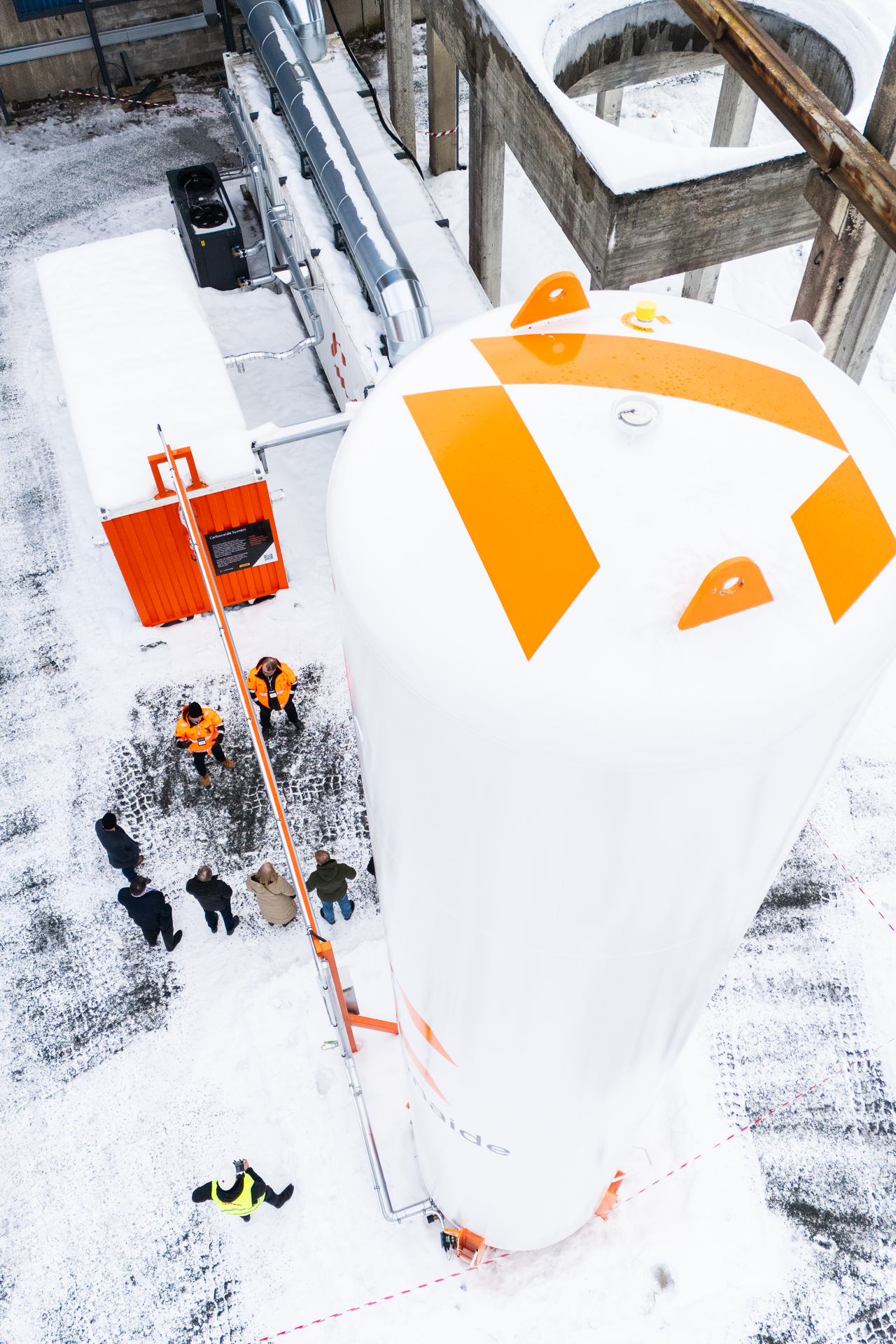
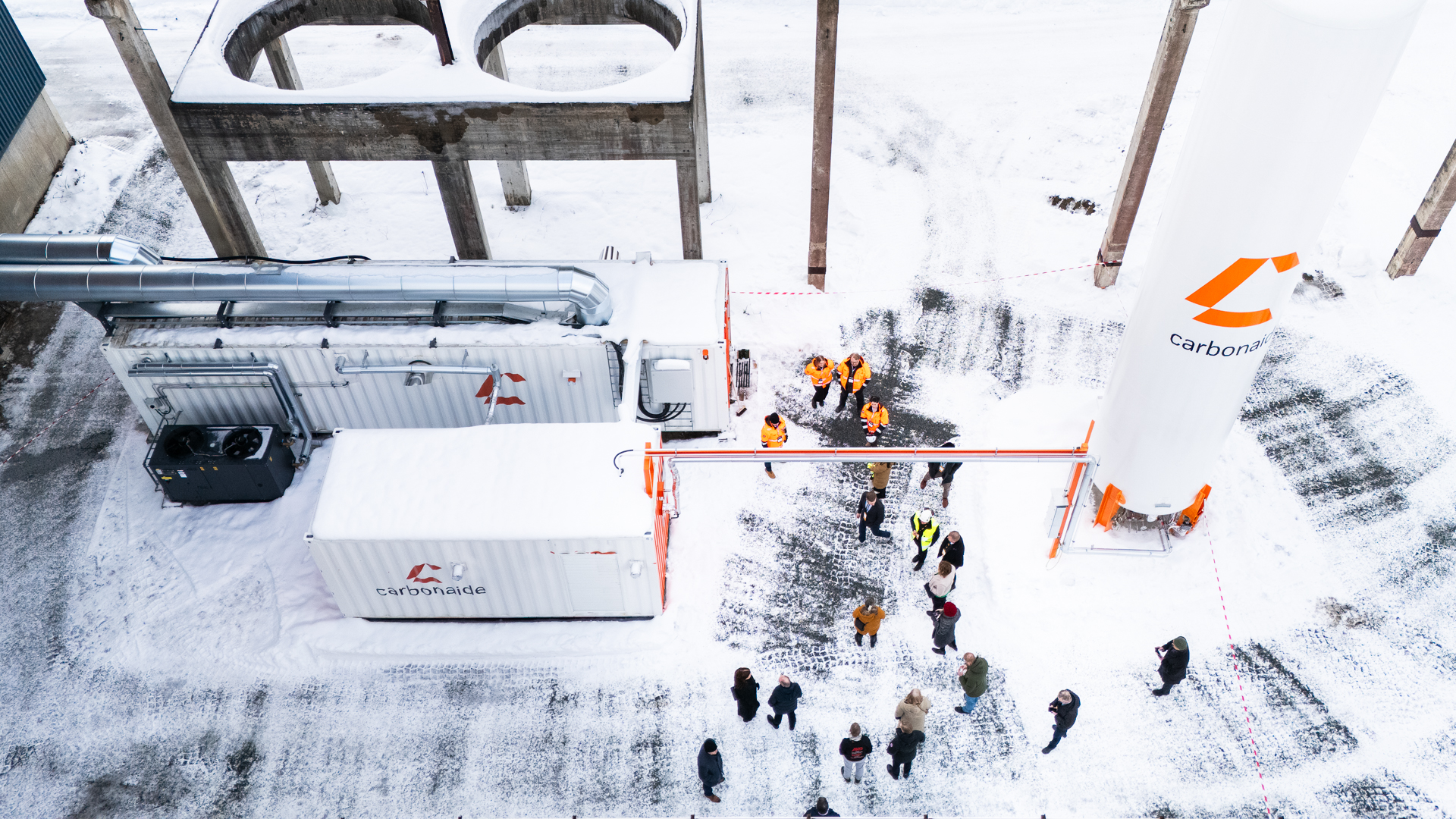
- Carbonaide CO₂ Curing System: Hardware that integrates with new or existing curing chambers, enabling CO₂ mineralisation during the concrete hardening phase. The system reduces cement requirements and permanently stores CO₂ in the product.
- Carbonaide Service Platform: Cloud-based software that manages CO₂ flow, measures mineralised carbon in real time, and generates the documentation needed for EPD updates and CDR credit certification.
- Carbonaide Care: Lifecycle support covering setup, maintenance, calibration, and ongoing reporting, so manufacturers can focus on production rather than system management.
- Carbon credit management: Support for certifying and selling CDR credits through established carbon market partners, turning stored CO₂ into a verified revenue stream.
The technology has been commercially operational in Finland since 2024, with certified CDR activities at two facilities running in 2026. Manufacturers looking to assess the investment case for their own production volumes can use Carbonaide’s ROI calculator or contact the team directly for a production-specific analysis.