
Yes, concrete products can become permanent carbon storage assets. When CO₂ is introduced during the curing process, it reacts with calcium compounds in the cement to form stable carbonate minerals that remain locked in the concrete structure indefinitely. This process, known as CO₂ mineralisation, transforms a material historically associated with high emissions into one that actively removes carbon from circulation. The sections below address the most common questions about how this works in practice, how much CO₂ can be stored, and what it means for the construction industry.
How does CO₂ become permanently locked inside concrete?
CO₂ becomes permanently locked inside concrete through a chemical process called mineralisation. During the curing phase, carbon dioxide reacts with calcium ions released from cement compounds to form calcium carbonate minerals. These carbonates are chemically stable solids that integrate into the concrete matrix and do not revert to gaseous CO₂ under any normal conditions, including demolition and recycling.
The process takes place in gas-tight curing chambers where CO₂ concentration, temperature, and humidity are carefully controlled to achieve high mineralisation rates. The CO₂ is not simply absorbed or trapped in pores; it undergoes a permanent chemical transformation. The result is a carbonate mineral structure that becomes part of the concrete itself.
This is fundamentally different from physical carbon capture, where CO₂ is compressed and stored in geological formations. In concrete mineralisation, the carbon is chemically bound at the molecular level. Industry research and certified verification processes confirm that mineralised CO₂ remains stored for well over a thousand years, even if the concrete product is eventually crushed and reused as aggregate.
What makes concrete a credible long-term carbon sink?
Concrete qualifies as a credible long-term carbon sink because the mineralisation process produces chemically stable carbonates that do not release CO₂ back into the atmosphere. Unlike biological carbon sinks such as forests, which can release stored carbon through fire, decay, or land-use change, the carbonate minerals in concrete are inert and permanent under all realistic conditions.
Credibility also depends on measurability and verification. Modern CO₂ curing systems measure the exact volume of CO₂ flowing into and out of the curing chamber, allowing precise quantification of how much carbon has been mineralised per batch of concrete. Laboratory-tested control samples provide additional confirmation. Independent third-party certification bodies can then verify and certify the stored amounts, meeting the requirements of voluntary carbon markets.
A further factor is additionality: CO₂ mineralisation in concrete production is not mandated by regulation, which means every tonne of CO₂ mineralised represents a genuine removal that would not have happened otherwise. Combined with the absence of any double-counting risk under current EU or national greenhouse gas accounting frameworks, this makes concrete-based carbon storage a high-integrity option for carbon dioxide removal.
How much CO₂ can a concrete product actually store?
The amount of CO₂ a concrete product can store depends on several production variables, including cement type, binder composition, product geometry, and curing conditions. In general terms, the storage capacity per cubic metre of concrete is meaningful at an industrial scale, and the total potential across the global concrete market is very large. Exact figures vary considerably between product types and production setups.
The binder composition is the most significant variable. Products made with higher cement content have more calcium available for carbonation and can therefore store more CO₂. When alternative binders such as steel slag are used alongside or instead of Portland cement, the mineralisation chemistry changes, and the achievable storage volume shifts accordingly. Some slag-rich mixes can produce concrete with a net-negative carbon footprint when the stored CO₂ outweighs the emissions from remaining cement and production energy.
Product geometry also matters. Thinner precast elements with a higher surface-area-to-volume ratio allow CO₂ to penetrate more effectively during the curing window. Smaller concrete products such as pavers, wall panels, and infrastructure blocks are particularly well suited to achieving high mineralisation rates within standard production timelines.
Can CO₂-storing concrete qualify for carbon credits?
Yes, CO₂-storing concrete can qualify for carbon credits, provided the mineralisation process meets established criteria for additionality, permanence, and quantification. Durable carbon dioxide removal credits from concrete mineralisation are already being independently verified and certified under recognised frameworks, including Isometric’s module for CO₂ storage via carbonation in the built environment.
For carbon credits to be issued, several conditions must be met. The CO₂ must be quantified accurately through gas flux measurement during the curing process. The stored amount must be verified by an independent third party. The activity must not be required by existing regulation, confirming additionality. And the storage must be demonstrated to be permanent, which carbonates in concrete satisfy given their stability over geological timescales.
Concrete manufacturers who implement CO₂ curing can use the resulting carbon credits in two ways. They can count the stored carbon as a reduction in the declared carbon footprint of their products, which supports lower Environmental Product Declaration values. Alternatively, they can sell the credits to third-party buyers in voluntary carbon markets, creating an additional revenue stream that improves the financial case for adopting CO₂ curing technology.
Which concrete products are best suited for CO₂ storage?
Precast concrete products cured in separate, controlled curing chambers are best suited for CO₂ storage. This includes wall panels, floor slabs, pavers, kerb stones, pipes, and other infrastructure products that are manufactured in factory conditions where CO₂ concentration and curing parameters can be precisely managed. Wet-cast production processes with enclosed curing chambers are particularly compatible with CO₂ mineralisation at scale.
Smaller products with relatively thin cross-sections benefit most from CO₂ curing because the gas can reach a larger proportion of the cement paste within the available curing time. Lightweight wall elements and pavement products have both demonstrated strong results in operational settings, achieving significant reductions in cement content while storing meaningful quantities of CO₂.
Ready-mix concrete, by contrast, is not well suited to this approach. Because ready-mix is poured on-site without a controlled curing environment, introducing CO₂ at the required concentrations and durations is not practically achievable with current technology. The benefits of CO₂ mineralisation are therefore concentrated in the precast and infrastructure product sectors, where factory-based production and enclosed curing are standard practice.
How does the construction industry scale permanent carbon storage through concrete?
Scaling permanent carbon storage through concrete requires integrating CO₂ curing systems into precast production facilities at a broad level, supported by reliable CO₂ supply chains, digital measurement infrastructure, and carbon credit verification frameworks. Each of these components needs to be in place simultaneously for the approach to move from individual installations to sector-wide impact.
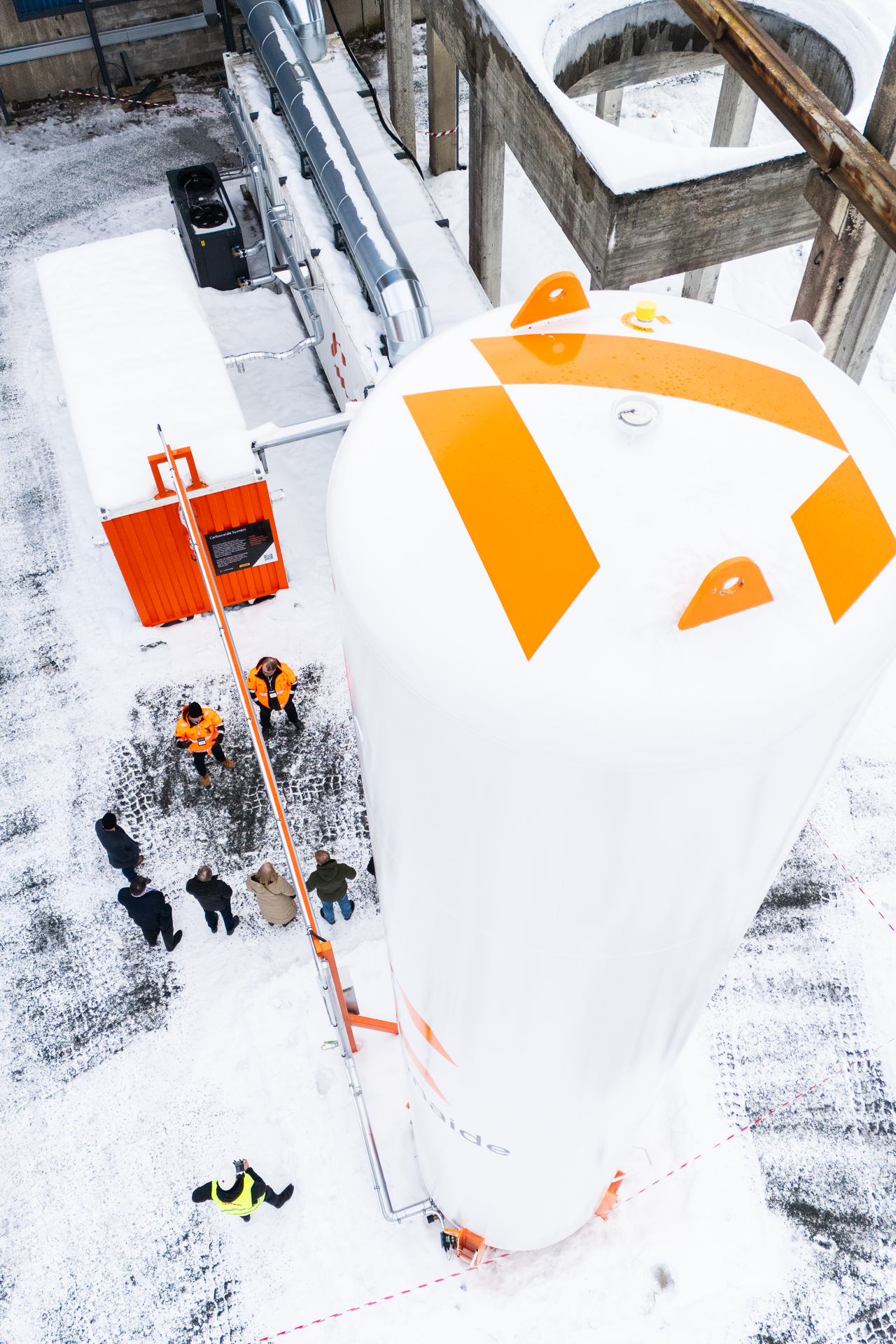
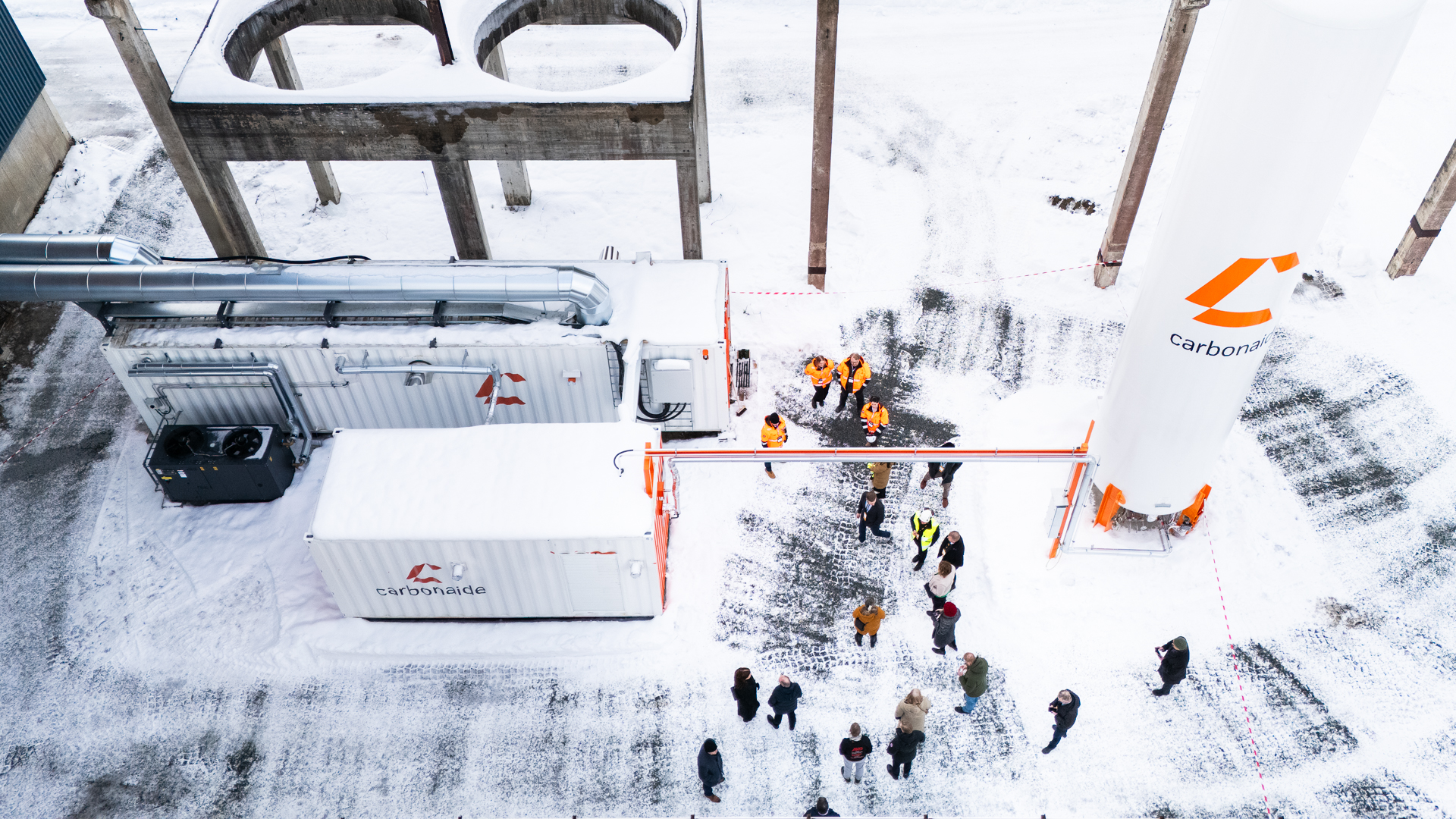
On the technology side, CO₂ curing systems can be retrofitted into existing factory curing chambers without requiring entirely new production facilities. This lowers the barrier to adoption for precast producers who already operate enclosed curing infrastructure. The hardware manages CO₂ flow and curing conditions, while cloud-based software platforms handle real-time measurement, process optimisation, and carbon storage documentation.
CO₂ supply is another scaling factor. Industrial CO₂ captured from other processes needs to reach concrete factories reliably and at competitive cost. Partnerships between concrete producers, CO₂ suppliers, and technology providers are forming to address this logistics challenge. As more facilities come online and supply chains mature, the cost per tonne of CO₂ mineralised is expected to decrease.
The carbon credit market also plays a role in scaling. Revenue from certified carbon dioxide removal credits improves the return on investment for concrete producers, accelerating adoption decisions. Early buyers of durable CDR credits from concrete mineralisation help build the market volume that makes large-scale deployment economically viable. Carbonaide’s CO₂ curing solutions, including the Carbonaide CO₂ Curing System and the Carbonaide Service Platform, address the full chain from hardware installation to carbon credit certification, offering precast producers a practical path to participating in permanent carbon storage at production scale.