
Concrete manufacturers can reduce emissions without sacrificing production capacity by adopting carbon dioxide curing technology, which cuts cement use, speeds up curing, and permanently stores CO₂ in the concrete itself. The key is that emission reduction and production performance are not competing goals: the right approach delivers both at the same time. The questions below unpack how this works in practice, from the sources of emissions to measurement and verification.
What are the biggest sources of emissions in concrete manufacturing?
The largest source of emissions in concrete manufacturing is Portland cement. Producing cement requires heating limestone to very high temperatures, a process that releases CO₂ both from the energy used and from the chemical reaction itself. Because cement is the binding material in virtually all concrete, its production footprint flows directly into every concrete product made.
Beyond cement, concrete manufacturing generates emissions from energy use across the production facility, including mixing, curing, and transport of finished products. However, these operational emissions are considerably smaller than those tied to the cement content of the mix. This is why most emission reduction strategies in concrete manufacturing start with cement: reducing how much is used, replacing part of it with supplementary cementitious materials (SCMs) such as slag or ash, or finding ways to achieve the same structural performance with less binder overall.
Precast concrete production adds one more variable: the curing process. Traditional thermal curing, which uses heat to accelerate concrete hardening, requires energy and often demands higher cement contents to meet early strength targets. This combination of heat energy and cement intensity makes the curing stage a meaningful contributor to the overall carbon footprint of precast concrete elements.
How does CO2 curing technology reduce emissions without slowing production?
Carbon dioxide curing reduces emissions by enabling manufacturers to use less cement in the concrete mix while simultaneously mineralizing CO₂ into the concrete structure. The process works during the curing stage, when CO₂ is introduced into sealed curing chambers. Rather than slowing production, CO₂ curing accelerates it: the gas speeds up early strength development, which means products can leave the curing chamber sooner.
The emission reduction mechanism works through two parallel effects. First, because CO₂ curing strengthens concrete more efficiently than traditional curing alone, manufacturers can reduce the cement content of their mix without compromising the final product. Less cement directly means lower emissions from raw materials. Second, the CO₂ introduced during curing does not escape: it mineralizes into the concrete as stable carbonates, permanently storing carbon that would otherwise remain in the atmosphere.
The result is a process that is faster, uses fewer high-emission raw materials, and stores additional carbon at the same time. For precast concrete producers operating with separate curing chambers, integrating CO₂ curing does not require changes to the production line itself. The curing chamber is modified to manage CO₂ flow, and the rest of the process continues as normal. Production capacity is maintained or improved, not reduced.
Can concrete production ever be carbon negative?
Yes, concrete production can achieve a net-negative carbon footprint when CO₂ curing is combined with alternative binders or SCMs such as steel slag. In this scenario, the CO₂ stored in the concrete exceeds the emissions generated during production, resulting in a product that removes more carbon from the atmosphere than it produces.
This outcome depends on the specific material mix. When a concrete product uses a high proportion of SCMs or alternative binders alongside CO₂ curing, the emissions from raw materials drop considerably. At the same time, the amount of CO₂ mineralized into the concrete structure adds a negative emission credit to the product’s footprint. When these two effects are combined, the calculated carbon footprint of the finished product can fall below zero.
It is worth being precise about what carbon negative means here. The CO₂ stored in the concrete must come from a captured source, not ambient air, and the storage must be permanent. Mineralization into concrete carbonates meets this requirement: the CO₂ is converted into stable carbonate minerals that do not release back into the atmosphere, even if the concrete is later demolished or recycled. This makes the negative emissions credible and verifiable, not theoretical.
What’s the difference between carbon reduction and permanent carbon storage in concrete?
Carbon reduction refers to producing concrete with lower emissions than a conventional reference product, typically by using less cement or replacing part of it with lower-emission materials. Permanent carbon storage goes further: it means that CO₂ is actively removed from the atmosphere and locked into the concrete structure indefinitely, contributing negative emissions rather than simply fewer positive ones.
Both outcomes are valuable, but they are not the same thing and should not be treated as interchangeable.
Carbon reduction in concrete manufacturing
Carbon reduction is achieved through mix optimization: using SCMs to replace a portion of Portland cement, improving curing efficiency to reduce excess cement, or switching to lower-carbon binders. These measures reduce the emissions associated with producing a cubic metre of concrete. The product still has a positive carbon footprint, just a smaller one than a conventional equivalent.
Permanent carbon storage through mineralization
Permanent carbon storage through CO₂ mineralization is a different mechanism. During carbon dioxide curing, CO₂ reacts with calcium ions in the cement and binder materials, forming calcium carbonate minerals within the concrete matrix. This is not absorption or adsorption: it is a chemical transformation. The carbon is no longer CO₂. It exists as a solid carbonate mineral that is stable over geological timescales. This means the storage is permanent, with no risk of leakage during the product’s service life or after demolition.
For concrete manufacturers, the distinction matters because these two mechanisms can be stacked. A product that uses less cement already has reduced emissions. If that same product also mineralizes CO₂ during curing, it adds a negative emission contribution on top of the reduction. The combination is what makes carbon-negative concrete possible.
How can manufacturers retrofit existing facilities for low-emission production?
Existing precast concrete facilities can be retrofitted for CO₂ curing without rebuilding production lines. The modifications focus on the curing chambers: making them gas-tight, adding CO₂ supply connections, and installing the process equipment that manages CO₂ flow and concentration during curing. The rest of the production process, including mixing, casting, and product handling, remains unchanged.
Retrofitting is practical for most precast facilities because curing chambers are already a standard part of the production setup. The chamber is a contained environment, which is exactly what CO₂ curing requires. Modifications typically involve sealing, instrumentation, and integration with a CO₂ supply, which can be a dedicated tank or a connection to an industrial CO₂ source. The process module that controls CO₂ conditions during curing is installed alongside the chamber.
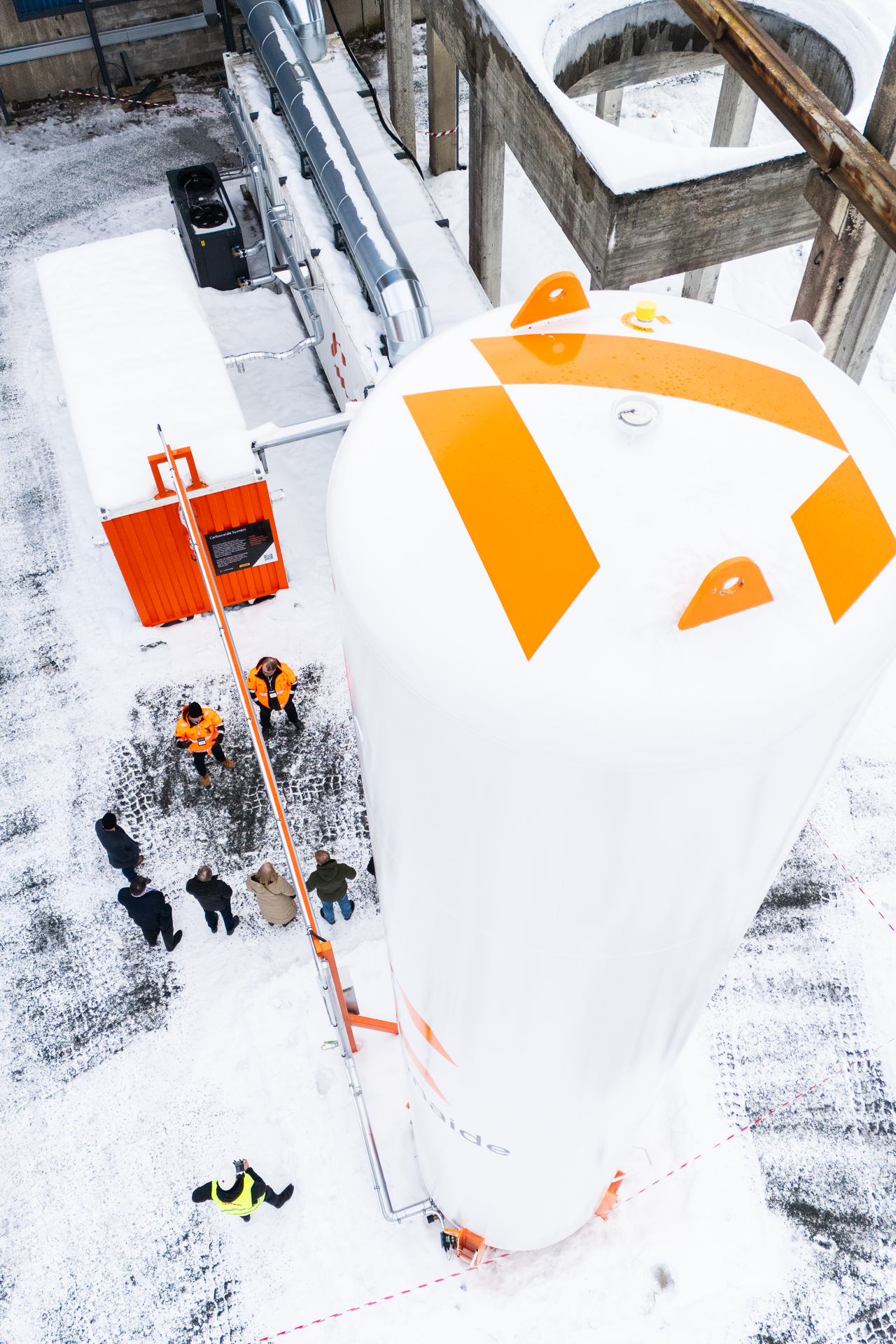
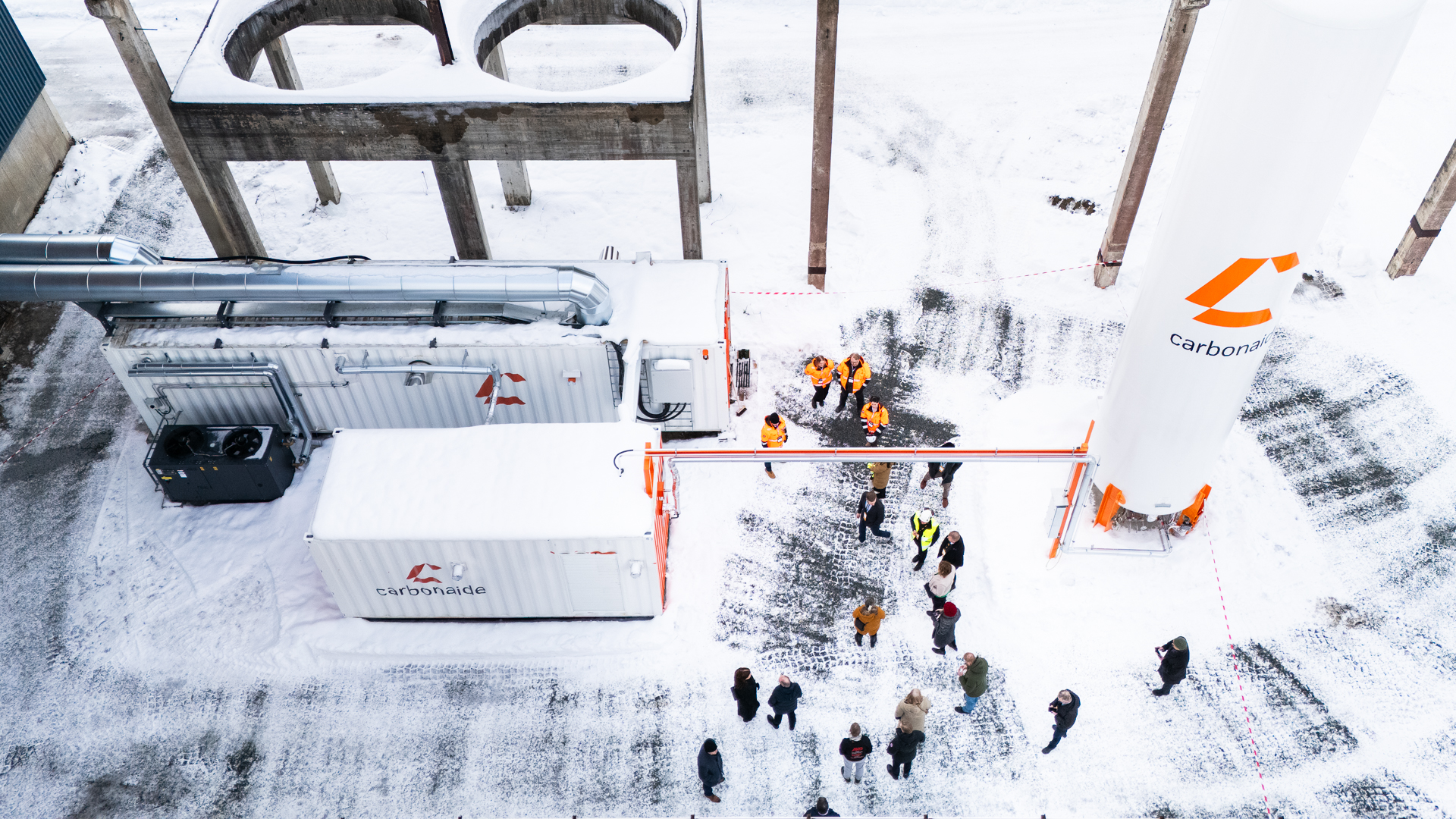
The Carbonaide CO₂ Curing System is designed specifically to support both new facilities and retrofits of existing curing chambers. The system includes the process module, CO₂ supply integration, and chamber modification specifications, delivered as a complete package. This means manufacturers do not need to design the technical solution themselves: the system comes with the engineering support needed to adapt it to the specific dimensions and configuration of the existing facility.
From a production planning perspective, retrofitting a curing chamber for CO₂ curing does not require a production shutdown of the entire facility. Work can be scoped and scheduled around production cycles, making the transition manageable for operating plants.
How do manufacturers measure and verify emission reductions from concrete production?
Emission reductions in concrete production are measured by tracking two things: the change in cement content of the mix compared to a reference product, and the amount of CO₂ mineralized into the concrete during curing. Both figures feed into the carbon footprint calculation for the finished product, which can be reported in environmental product declarations (EPDs) or used to generate carbon credits.
Measuring cement reduction is straightforward: the mix design records show how much cement was used per cubic metre. Comparing this to a reference mix gives the emission reduction from raw materials. Measuring CO₂ mineralization requires instrumentation in the curing chamber: the process module tracks CO₂ concentration and flow throughout the curing cycle, calculating how much CO₂ was absorbed by the concrete. Laboratory testing of control samples confirms the accuracy of these measurements.
Verification is the step that gives these figures credibility outside the factory. For carbon credits specifically, the mineralized CO₂ must be independently verified and certified by a recognized certification body. This confirms that the storage is real, additional, and permanent, meeting the standards required by voluntary carbon markets. The Carbonaide Service Platform manages this data centrally, producing the documentation needed for certification, EPD updates, and compliance reporting.
For manufacturers who want to report emission reductions without entering the carbon credit market, the same measurement data supports product-level carbon footprint reporting. This is increasingly relevant as building companies and their clients request verified environmental data for construction projects. Having traceable, instrument-based records of CO₂ mineralization per product batch gives manufacturers a credible basis for their environmental claims.