
Manufacturers can respond to growing demand for carbon-negative products by adopting CO₂ curing technology, which mineralizes carbon dioxide into precast concrete during the curing process. This approach reduces cement content, permanently stores CO₂ as carbonates, and can shift the carbon footprint of concrete products from positive to negative. The sections below cover what carbon-negative concrete actually means, why demand is rising, and how manufacturers can act on it.
What makes a concrete product genuinely carbon-negative?
A concrete product is genuinely carbon-negative when the amount of CO₂ permanently removed from the atmosphere during its production exceeds the emissions generated to make it. This requires two things working together: a meaningful reduction in cement content, which is the primary emission source in concrete, and the permanent mineralization of CO₂ into the concrete structure itself.
The distinction between carbon-negative and simply lower-emission concrete matters. Many products marketed as lower-carbon achieve modest reductions by substituting a portion of Portland cement with supplementary cementitious materials (SCMs) such as slag or fly ash. That is a useful step, but it does not by itself produce negative emissions. Negative emissions require that CO₂ is actively removed from the atmosphere and stored in a way that is permanent and verifiable.
Carbon mineralization achieves this by converting CO₂ gas into stable carbonate minerals within the concrete matrix. Once mineralized, the CO₂ does not re-enter the atmosphere, even if the concrete is later demolished or recycled. This permanence is what separates genuine carbon-negative concrete from products that rely on temporary offsets or unverified claims.
When CO₂ curing is combined with alternative binders such as steel slag, which can partially or fully replace Portland cement, the carbon footprint of the finished product can turn decisively negative. The combination of lower cement emissions and active CO₂ storage is what makes the claim credible and measurable.
Why is demand for carbon-negative construction products growing?
Demand for carbon-negative construction products is growing because the built environment contributes a significant share of global greenhouse gas emissions, and regulatory pressure, procurement policy, and voluntary climate commitments are all pushing the construction sector to reduce its footprint. Concrete, as the most widely used construction material, sits at the center of that pressure.
Several forces are converging at once. Public procurement in several European countries now requires Environmental Product Declarations (EPDs) and, increasingly, sets carbon thresholds that products must meet. Private developers and construction companies with net-zero targets are cascading those requirements down to their material suppliers. At the same time, voluntary carbon markets are creating a financial case for concrete manufacturers to generate and sell carbon removal credits, adding a revenue dimension to what was previously only a compliance cost.
For precast concrete producers specifically, the pressure is particularly direct. Precast elements are specified early in the design process, and architects and engineers are increasingly selecting suppliers partly on the basis of documented carbon performance. Manufacturers who cannot provide verified EPD data or credible carbon footprint figures risk losing specification opportunities to competitors who can.
The demand is not speculative. It reflects a shift in how building projects are evaluated, financed, and permitted. Construction decarbonization has moved from a reputational consideration to a commercial requirement, and the manufacturers best positioned to respond are those who have already embedded carbon reduction into their production process rather than treating it as an afterthought.
How does CO₂ curing technology reduce concrete emissions?
CO₂ curing technology reduces concrete emissions through two distinct mechanisms: it lowers the amount of Portland cement needed in the mix, and it permanently stores CO₂ as carbonate minerals within the concrete structure. Both mechanisms operate simultaneously during the curing phase, which takes place in gas-tight chambers where CO₂ concentration and flow are precisely controlled.
Cement reduction through accelerated strength development
During CO₂ curing, carbon dioxide reacts with calcium compounds in the cement to form calcium carbonates. These carbonates densify the microstructure of the concrete, improving early-age strength development. Because the concrete reaches adequate strength faster, manufacturers can reduce the cement content in the mix without sacrificing the mechanical performance required by product standards.
CO₂ curing also activates certain SCMs that are otherwise non-reactive in standard curing conditions. Steel slag, for example, contains gamma-dicalcium silicate, which does not contribute meaningfully to strength in normal curing but becomes an effective binder in the presence of CO₂. This opens the possibility of replacing a substantial portion of Portland cement with industrial byproducts that would otherwise go unused, reducing both the cost and the carbon footprint of the concrete mix.
Permanent CO₂ storage through mineralization
The second mechanism is CO₂ mineralization itself. As CO₂ reacts with calcium and magnesium ions in the curing chamber, it converts from a gas into solid carbonate minerals embedded in the concrete matrix. This is not absorption or temporary capture. The CO₂ becomes part of the material’s chemical structure and remains stored for the full service life of the product, and beyond.
The amount of CO₂ stored depends on the binder composition, the mix design, and the curing conditions. Products with higher proportions of reactive calcium compounds, including certain slags, can store more CO₂ per cubic metre. When both mechanisms are optimized together, the calculated carbon footprint of the finished product can be substantially negative.
What are the production benefits beyond lower emissions?
Beyond lower emissions, CO₂ curing delivers concrete that is stronger, produced faster, and made with less cement, which directly reduces material costs. These production benefits are not secondary advantages. They are part of the reason CO₂ curing is economically viable for mainstream precast production rather than only for niche or premium applications.
Faster curing is one of the most immediate operational benefits. CO₂ accelerates early-age strength development, which means products can be demoulded sooner and production cycles can be shortened. For precast producers operating with fixed chamber capacity, faster turnover translates directly into higher output without capital investment in additional curing infrastructure.
Cement savings reduce the largest single cost input in most precast concrete mixes. Portland cement is both the most expensive component and the highest-emission one, so reducing its share in the mix improves both the cost position and the environmental profile of the product simultaneously. When slag or other SCMs replace part of the cement, those materials are typically available at lower cost, compounding the savings.
The densification of the concrete microstructure during carbonation also improves mechanical properties. Carbonated concrete tends to show better resistance to leaching and reduced formation of calcium-based efflorescence, which affects the appearance and long-term stability of products such as paving elements and wall panels. These quality improvements matter to precast producers because they reduce rejection rates and customer complaints without requiring changes to the product specification.
How can manufacturers verify and communicate their carbon claims?
Manufacturers can verify and communicate their carbon claims by combining real-time process measurement with independent certification, then incorporating the verified data into Environmental Product Declarations. The credibility of a carbon-negative claim depends entirely on the quality of the measurement and verification behind it, not on the claim itself.
The measurement process starts in the curing chamber. CO₂ flow management software tracks how much carbon dioxide enters the chamber, how much is absorbed by the concrete, and how much exits. This gas flux measurement, when calibrated against laboratory-tested control samples, provides the basis for calculating how much CO₂ has been mineralized per batch and per product type.
Independent certification adds the external verification that procurement teams, project developers, and carbon market buyers require. Carbonaide’s approach uses the Carbonaide Service Platform, which centralizes carbon data management and supports certification of carbon removal credits under recognized standards. The platform generates the documentation needed for EPD updates and carbon credit issuance, reducing the administrative burden on manufacturers while maintaining audit-ready records.
For manufacturers communicating carbon performance to customers, the most useful output is a product-level carbon footprint figure supported by a third-party verified EPD. This gives architects, engineers, and procurement teams a comparable, standardized data point they can use in project-level carbon calculations. Claims that cannot be traced back to verified measurement and independent certification carry limited weight in a market that is becoming more sophisticated about carbon accounting.
How can manufacturers verify and communicate their carbon claims?
Where should a manufacturer start when adopting CO₂ curing?
A manufacturer considering CO₂ curing should start by assessing whether their existing production setup, specifically their curing chambers, is compatible with CO₂ curing or can be retrofitted to support it. Most precast facilities that use separate curing chambers for concrete products are good candidates. The assessment should cover chamber tightness, CO₂ supply logistics, and the current mix design to identify where cement reduction or CO₂ storage would have the greatest impact.
The next practical step is to map the production volume and product mix. CO₂ curing delivers the most measurable benefit on products where cement content is currently high, where early-age strength is a limiting factor, or where the mix already includes SCMs that could be expanded. Wall panels, paving elements, and lightweight structural products are common starting points because they combine reasonable production volumes with mix designs that respond well to carbonation.
From there, the decision involves selecting the right system configuration. A complete CO₂ curing implementation covers hardware for CO₂ flow management, integration with existing curing chambers, and a software platform for process control and carbon data reporting. Manufacturers who are new to CO₂ curing benefit from working with a supplier who can handle the full scope from chamber design through to carbon credit certification, rather than assembling components from separate vendors.
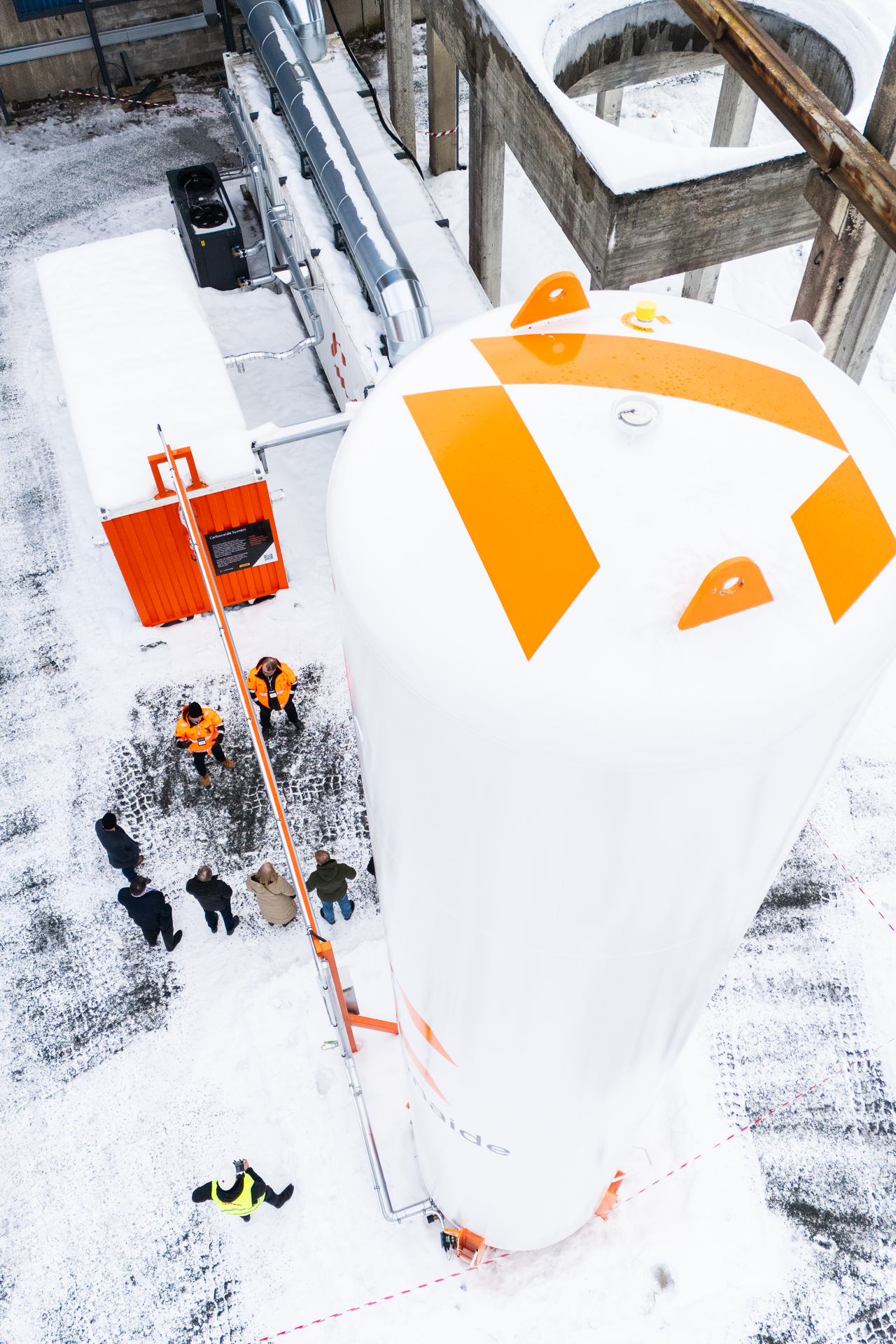
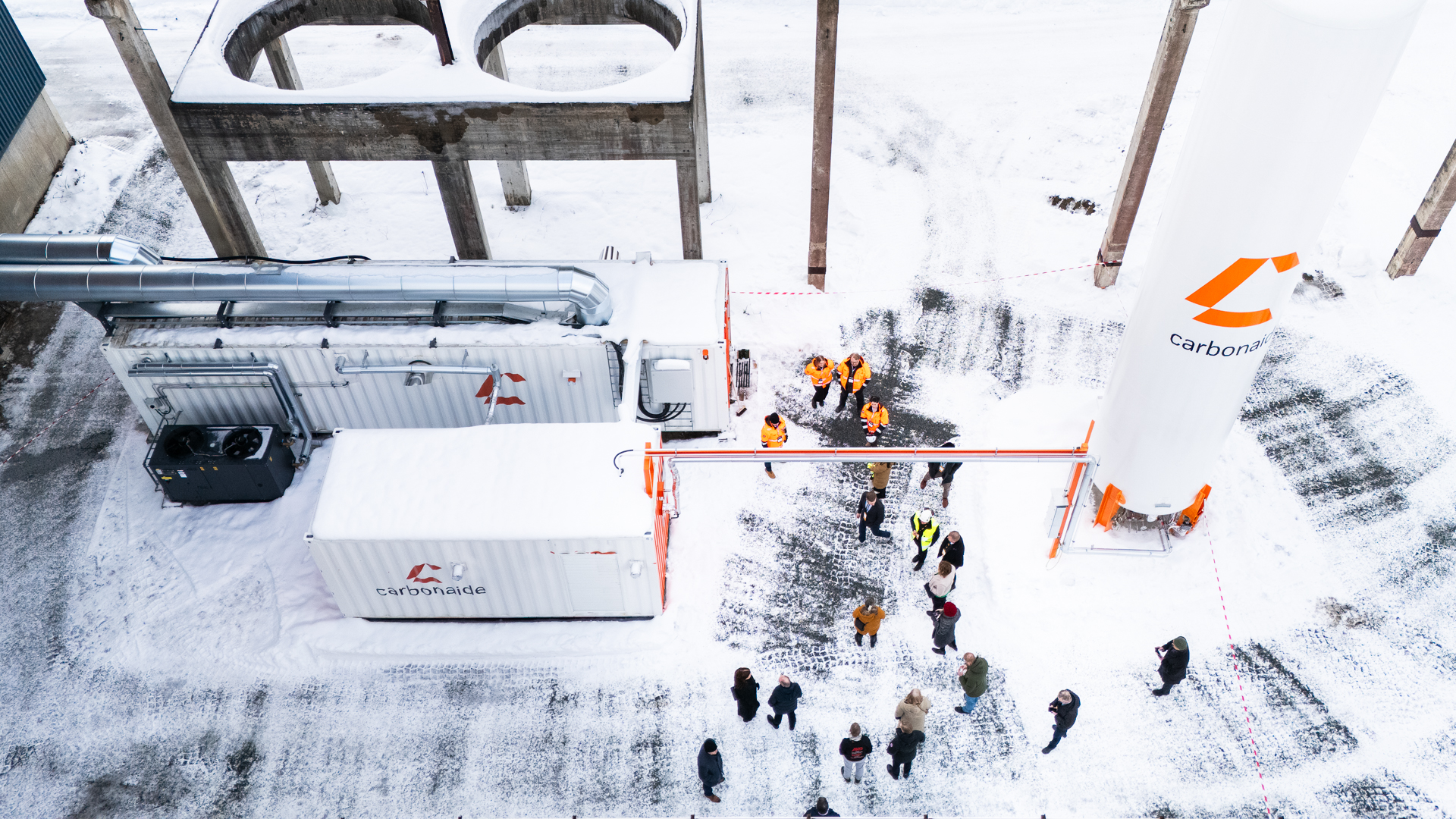
The Carbonaide CO₂ Curing System is designed to integrate with both new facilities and existing factory curing chambers, and it comes with lifecycle support through Carbonaide Care. For manufacturers who want to understand the financial case before committing, the return on investment can be estimated based on current cement prices, production volume, and average cement content, since the savings from cement reduction alone often contribute meaningfully to the payback period.
Starting with a focused pilot on one product line or one curing chamber is a practical approach. It allows the production team to build familiarity with CO₂ flow management, validate the mix design changes, and generate the first verified carbon data before scaling the system across the facility. The commercial experience from operational facilities in Finland shows that the technology performs at production scale, which means manufacturers are not taking on technology risk. The main task is integrating it effectively into their specific production environment.