
Precast concrete manufacturers can reduce embodied carbon without redesigning products by changing how concrete is cured, not what it produces. Carbon dioxide curing mineralizes CO₂ into the concrete matrix during the curing phase, reducing the cement content required and permanently storing carbon in the finished product. The sections below address the most common questions manufacturers have about this process.
What actually makes precast concrete so carbon-intensive?
Precast concrete is carbon-intensive primarily because of Portland cement. Cement production requires heating limestone to very high temperatures, a process that releases large quantities of CO₂ both from the fuel burned and from the chemical decomposition of the limestone itself. Since cement is the binding agent in concrete, and precast production relies on consistent, high-strength mixes, cement use tends to be high.
The carbon burden of precast concrete sits almost entirely in the raw materials stage, specifically in cement manufacturing. Aggregates, water, and the curing process itself contribute comparatively little to the overall carbon footprint. This means that any meaningful reduction in the carbon footprint of precast concrete has to address cement: either by using less of it, replacing part of it with lower-emission alternatives, or storing carbon during the production process to offset the emissions that cement generates.
Traditional steam curing, which is the standard method for accelerating strength development in precast factories, does not address this problem. It speeds up production but does nothing to reduce the cement content or capture any of the CO₂ associated with it. The carbon intensity of precast concrete is therefore largely locked in by the mix design and the curing method chosen.
What is embodied carbon in concrete, and how is it measured?
Embodied carbon in concrete refers to the total greenhouse gas emissions associated with producing a concrete product, from raw material extraction through manufacturing and delivery, expressed as a carbon footprint per unit of material. It does not include emissions from the building’s operation over its lifetime. For concrete, embodied carbon is dominated by the emissions from cement production.
Embodied carbon is typically measured and reported through an Environmental Product Declaration (EPD). An EPD follows a standardized life cycle assessment methodology that accounts for every stage of production: raw material extraction, transport, manufacturing, and in some cases, end-of-life treatment. The result is a verified figure, usually expressed in kilograms of CO₂ equivalent per cubic meter or per tonne of concrete.
For precast concrete manufacturers, EPDs serve two purposes. They provide a credible, comparable measure of a product’s carbon footprint that can be shared with clients and specifiers. They also create a baseline against which improvements, such as those achieved through carbon dioxide curing, can be quantified and documented. When the curing process changes in a way that reduces cement content or stores additional CO₂, the EPD figures can be updated to reflect those gains.
How does CO₂ curing reduce the carbon footprint of precast concrete?
Carbon dioxide curing reduces the carbon footprint of precast concrete through two simultaneous mechanisms: it reduces the amount of cement needed in the mix, and it permanently mineralizes CO₂ into the concrete structure. Both effects lower the net embodied carbon of the finished product, and when combined with alternative binders such as slag, the result can be a concrete product with a net-negative carbon footprint.
Cement reduction through faster strength development
During carbon dioxide curing, CO₂ reacts with calcium compounds in the fresh concrete to form calcium carbonates. These carbonates act as nucleation sites that accelerate early-age strength development. Because the concrete gains strength faster, the mix does not need to rely on excess cement to meet early strength requirements. This allows the cement content to be reduced without compromising the structural performance of the finished product.
The carbonation process also densifies the microstructure of the concrete. A denser matrix means better mechanical properties, which in turn creates further room to reduce cement without sacrificing quality. In addition, CO₂ curing activates certain supplementary cementitious materials (SCMs) that would not react under normal curing conditions, opening the door to a wider range of cement replacements.
Permanent CO₂ mineralization
The second mechanism is direct carbon storage. When CO₂ is introduced into the curing chamber, a portion of it reacts chemically with the concrete and becomes mineralized as stable carbonate compounds. This is not absorption or adsorption: the CO₂ is chemically converted into solid carbonates and remains permanently bound in the concrete structure. It does not leach out, and it is not released if the concrete is later demolished or recycled.
This permanent mineralization means the stored carbon can be counted as a negative emission in the product’s carbon footprint calculation. Depending on the binder composition and process conditions, this can shift the carbon footprint of a concrete product from positive to negative, meaning the product stores more carbon than was emitted to produce it.
Can CO₂ curing be retrofitted into existing precast factories?
Yes, carbon dioxide curing can be retrofitted into existing precast factories. The process takes place inside curing chambers, which most precast facilities already operate. Retrofitting involves modifying those existing chambers to make them sufficiently gas-tight and integrating the CO₂ supply and flow management equipment. No changes to the production line, molds, or product designs are required.
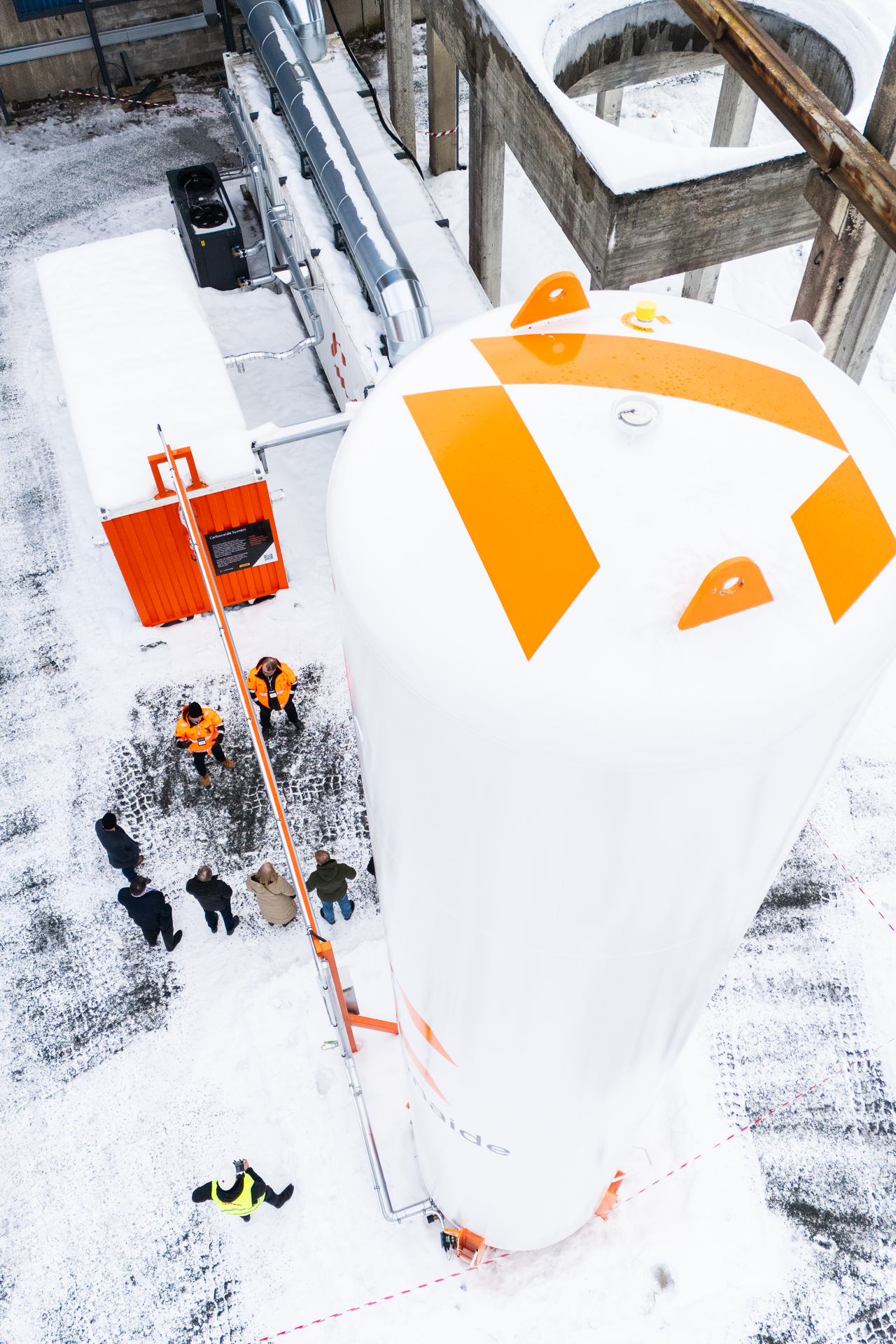
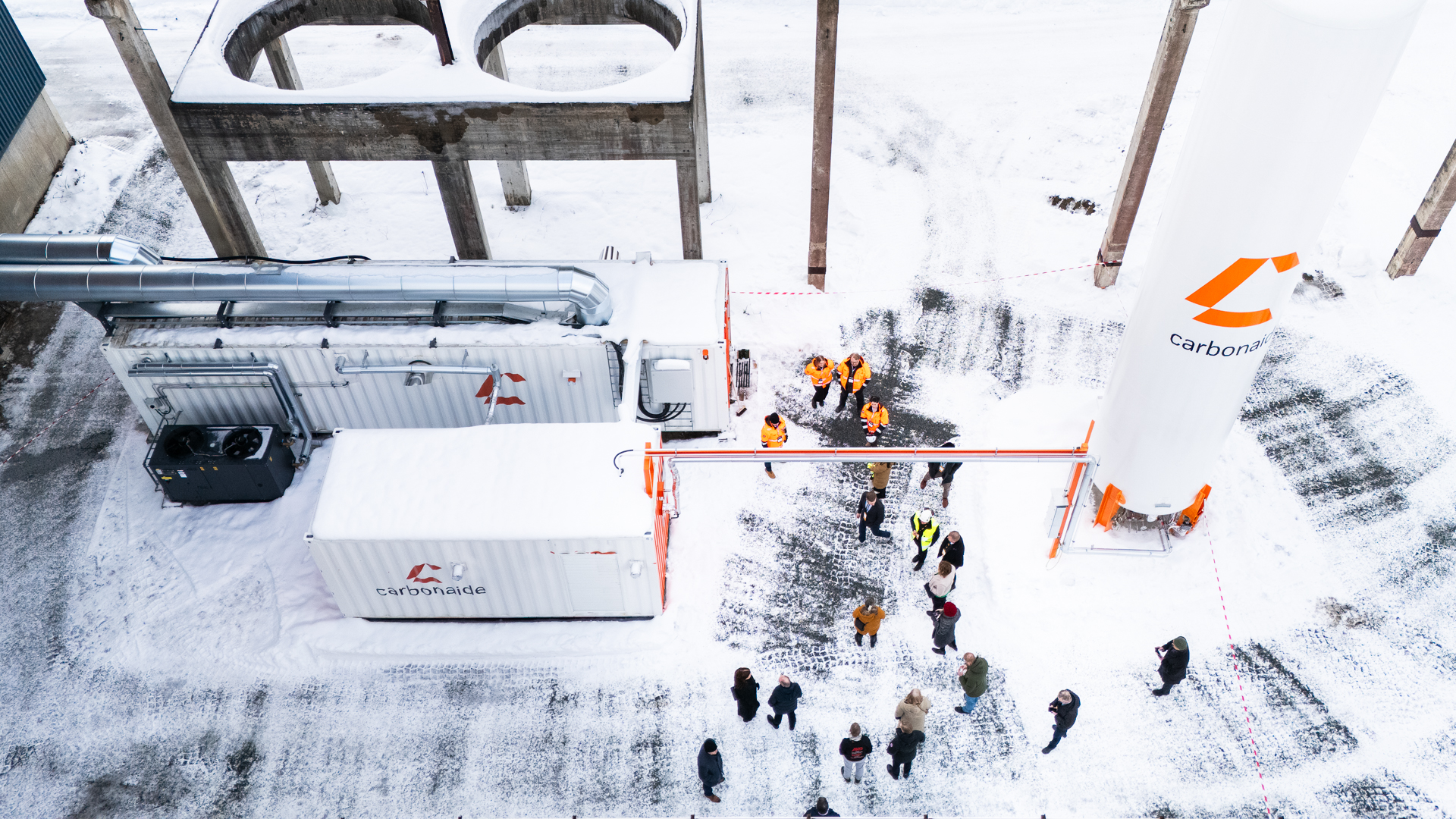
The Carbonaide CO₂ Curing System is designed specifically to support both new installations and retrofits of existing factory curing chambers. The hardware includes a process module that manages CO₂ flow with precision, a CO₂ supply module connected to an external tank, and the necessary chamber modifications. The Carbonaide team handles design specifications for the chamber changes as part of a full delivery, which means manufacturers do not need to manage the technical integration themselves.
From a practical standpoint, the retrofit approach is significant because it means precast producers do not need to build new facilities or invest in entirely different production equipment to access the carbon reduction benefits of CO₂ curing. The core production workflow, including concrete mixing, casting, and demolding, remains unchanged. The curing phase is where the change occurs, and that phase is already separated from the rest of production in most precast factories.
What’s the difference between CO₂ curing and traditional steam curing?
The key difference between CO₂ curing and traditional steam curing is what each method does to the concrete and why. Steam curing accelerates strength development by raising temperature and humidity inside the curing chamber, which speeds up cement hydration. CO₂ curing accelerates strength development through a different chemical mechanism: the reaction of carbon dioxide with calcium compounds in the concrete. Steam curing reduces production time; CO₂ curing reduces production time and reduces the carbon footprint of the product.
Steam curing is effective at achieving fast early-age strength, but it does not reduce cement content and it does not store any carbon. The emissions associated with the mix design remain unchanged. In some cases, steam curing can even reduce the long-term strength gain of concrete because the elevated temperature affects the hydration chemistry in ways that limit later strength development.
CO₂ curing, by contrast, produces concrete that continues to gain strength after the initial curing period through secondary pozzolanic reactions triggered by the carbonation process. It also eliminates the need for chemical accelerators, since the CO₂ itself performs the acceleration function. From an operational standpoint, both methods use enclosed curing chambers, which is why CO₂ curing is a practical replacement for steam curing in most precast settings rather than an entirely different system. The chamber infrastructure is compatible; the process inside it is fundamentally different.
How can manufacturers verify and report the carbon savings from CO₂ curing?
Manufacturers can verify and report carbon savings from CO₂ curing through a combination of real-time process measurement, laboratory validation, and third-party certification. The amount of CO₂ mineralized during each curing cycle is measured by gas flux monitoring within the curing chamber. Control samples are tested in the laboratory to confirm the accuracy of the software measurements. This data forms the basis for verified carbon storage figures that can be reported in updated EPDs or used to generate certified carbon removal credits.
The Carbonaide Service Platform manages this process end to end. It records CO₂ flow data at the chamber level, tracks mineralization per product batch, and produces the documentation needed for carbon credit verification and EPD updates. The platform connects with existing factory management systems where needed, reducing the administrative burden on the manufacturer. For producers who want to monetize their carbon storage, the Premium version of the platform supports full carbon storage documentation, including independent verification and certification of carbon removal credits.
Certification matters because carbon savings that cannot be independently verified have limited value in procurement decisions and carbon markets. Carbonaide’s carbon removal credits are certified under Isometric’s module for CO₂ storage via carbonation in the built environment, which applies strict additionality, permanence, and quantification criteria. This means the carbon savings are not just calculated internally: they are verified by an independent third party against recognized standards, giving manufacturers and their clients confidence in the figures being reported.
How Carbonaide supports precast concrete manufacturers in reducing embodied carbon
Carbonaide offers a complete solution for precast concrete producers who want to reduce the embodied carbon of their products without changing what they make or how they make it. The approach is built around carbon dioxide curing, and it covers hardware, software, and ongoing support in a single integrated offering.
- Carbonaide CO₂ Curing System: Full delivery of CO₂ curing hardware, including process modules, CO₂ supply integration, and chamber modifications, compatible with both new facilities and existing factory curing chambers.
- Carbonaide Service Platform: Cloud-based software that manages CO₂ flow in real time, measures and records mineralization data by product and batch, and produces the documentation needed for EPD updates and carbon credit certification.
- Carbonaide Care: Lifecycle support covering project management, setup, maintenance, and calibration, with two service tiers depending on the level of support required.
- CO₂ sourcing and carbon credit management: Support with CO₂ logistics through a partner network, and carbon credit management in cooperation with certified carbon removal partners.
The technology has been in commercial use in Finland since early 2024, and Carbonaide’s partnership with Elematic, a leading precast technology provider, supports deployment at production scale across international markets. Precast producers looking to reduce the carbon footprint of their concrete products can use Carbonaide’s pricing calculator to estimate emissions reductions and annual savings based on their own production volumes.