
Supplementary cementitious materials affect factory operations in several ways: they alter mixing and batching procedures, change how concrete gains strength during curing, and shift the carbon footprint of each product. For precast producers, understanding these effects is important because SCMs interact differently with curing conditions, production schedules, and quality control routines than Portland cement alone. The sections below cover the most common questions concrete manufacturers have about working with SCMs on the production line.
What are the main types of supplementary cementitious materials used in precast factories?
Supplementary cementitious materials are mineral materials that partially replace Portland cement in a concrete mix. They do not work independently — SCMs require cement to activate their binding properties. The most widely used types in precast concrete manufacturing are ground granulated blast furnace slag, fly ash, silica fume, and limestone filler.
Ground granulated blast furnace slag, commonly called slag, is a byproduct of iron production. It is latently hydraulic, meaning it reacts slowly with water but gains significant strength over time when activated by the alkaline environment that cement creates. Fly ash is collected from coal combustion and is pozzolanic: it reacts with calcium hydroxide released during cement hydration to form additional binding compounds. Silica fume is an extremely fine pozzolanic material produced during silicon metal manufacturing. Its very small particle size fills voids in the concrete matrix, improving density and mechanical performance. Limestone filler is less reactive but contributes to particle packing and can interact with certain cement phases to produce minor binding effects.
Each material has a different chemical composition, particle size distribution, and reactivity level. This means that replacing cement with any of these materials requires careful adjustment of the concrete mix design, including water content, admixtures, and curing conditions, before production can proceed reliably.
How do SCMs affect concrete curing time on the production line?
Most SCMs slow the early strength development of concrete compared to Portland cement alone. Slag and fly ash in particular extend the time needed before precast elements can be demolded, handled, or moved through the production line. This is because their pozzolanic or latent hydraulic reactions are slower than the primary hydration of cement clinker.
For precast factories operating on tight production cycles, this is a practical challenge. If a plant relies on overnight curing to achieve the minimum strength needed for demolding the following morning, a higher SCM replacement level can push strength development outside that window. Factories often compensate by using elevated curing temperatures in steam or heat curing chambers, which accelerates reactions and partially offsets the slower kinetics of SCMs.
Silica fume behaves somewhat differently. Because of its very fine particle size and high reactivity, it can accelerate early strength gain rather than slow it. However, silica fume is typically used at low replacement levels and is more commonly associated with high-performance applications than with standard precast production.
The net effect on curing time depends on the type of SCM, the replacement level, the ambient temperature, and the curing method used. Precast producers need to validate their specific mix design and curing cycle before scaling to production volume.
What impact do supplementary cementitious materials have on concrete strength?
SCMs generally reduce early-age strength but can match or approach the long-term strength of Portland cement concrete when given adequate curing time. The strength development profile shifts: SCM concrete tends to gain strength more slowly in the first days but continues developing strength over weeks and months as secondary reactions proceed.
Slag concrete, for example, often reaches comparable 28-day compressive strength to reference Portland cement mixes, provided curing conditions support the slower reaction. Fly ash concrete follows a similar pattern. The practical implication is that standard 28-day testing may underestimate the long-term performance of SCM concrete, while early-age tests may overestimate the risk of underperformance if production schedules are designed around those early measurements.
It is important to avoid the assumption that SCM concrete will be stronger than conventional concrete. The goal of using SCMs is to reduce cement content while maintaining adequate performance for the intended application, not to claim superior mechanical properties. In some cases, higher SCM replacement levels do reduce final strength, and the mix design must account for this with appropriate adjustments to binder content, water-to-binder ratio, and admixtures.
How do SCMs change the carbon footprint of concrete manufacturing?
SCMs reduce the carbon footprint of concrete primarily by displacing Portland cement clinker, which is the most carbon-intensive component of conventional concrete. Cement production requires heating limestone to very high temperatures, releasing CO₂ both from fuel combustion and from the chemical decomposition of calcium carbonate. Replacing a portion of cement with slag or fly ash reduces the amount of clinker needed per cubic metre of concrete, which directly lowers the emissions associated with that product.
The magnitude of the reduction depends on the replacement level and the specific SCM used. Slag and fly ash carry a significantly lower carbon footprint per kilogram than Portland cement clinker, which is why even moderate replacement levels produce a measurable improvement in the product’s calculated emissions. However, the carbon footprint of the SCM itself is not zero: transport distance, processing, and any drying or grinding required all contribute to its lifecycle emissions.
It is also worth noting that SCMs are industrial byproducts. Their availability depends on the continued operation of steel plants, coal power stations, and other industrial processes. As those industries decarbonize or reduce output, the supply of certain SCMs may become constrained, which is a factor that precast producers should consider when planning long-term material strategies.
What operational challenges do SCMs introduce in a concrete plant?
Introducing SCMs into a precast plant’s production process creates several operational challenges that require attention across batching, quality control, and logistics. These are not reasons to avoid SCMs, but they are realities that plant managers need to plan for carefully.
Material handling and storage
SCMs are typically delivered and stored as bulk powders, similar to cement. However, they require separate storage silos to prevent contamination and to allow accurate dosing of each material independently. Fly ash, slag, and silica fume all have different bulk densities and flow characteristics, which means batching systems may need recalibration when switching between materials or adjusting replacement levels. Plants that have not previously handled multiple cementitious materials will need to invest in additional silo capacity and batching infrastructure.
Mix design variability and quality control
SCMs are industrial byproducts, and their chemical composition can vary between batches and suppliers. Slag reactivity, fly ash loss on ignition, and silica fume fineness are all properties that influence concrete performance and can shift if the supply source changes. Precast producers need robust incoming material testing protocols and the ability to adjust mix designs when material properties drift. This adds complexity to quality control compared to working with a single, tightly specified cement product.
Curing chamber management also becomes more demanding. Because SCMs slow early strength gain, temperature and humidity conditions during curing need to be controlled more precisely to maintain consistent demolding strength across production batches. Variability in curing conditions that might be acceptable with Portland cement mixes can cause more significant strength variation when SCMs are present at higher replacement levels.
Can SCMs be combined with CO₂ curing to further cut emissions?
Yes, and this combination is one of the more promising directions in precast concrete manufacturing. Carbon dioxide curing and SCMs address emissions through different mechanisms: SCMs reduce the amount of cement clinker needed, while CO₂ mineralisation permanently stores carbon dioxide within the concrete structure. When both approaches are applied together, the emissions reduction is additive.
Carbon dioxide curing also offers a specific benefit when working with certain SCMs. Some materials that are normally non-reactive or only weakly reactive in conventional curing conditions can be activated by the presence of CO₂. A well-documented example is gamma dicalciumsilicate, which forms in steel production byproducts and is generally inert in standard concrete production. In the presence of CO₂ during curing, this material becomes an effective binder, enabling higher replacement of Portland cement than would otherwise be possible.
This means that carbon dioxide curing does not simply work alongside SCMs — it can expand the range of materials that are viable for cement replacement. Precast producers working with locally available industrial byproducts may find that CO₂ curing unlocks replacement levels that conventional curing cannot support.
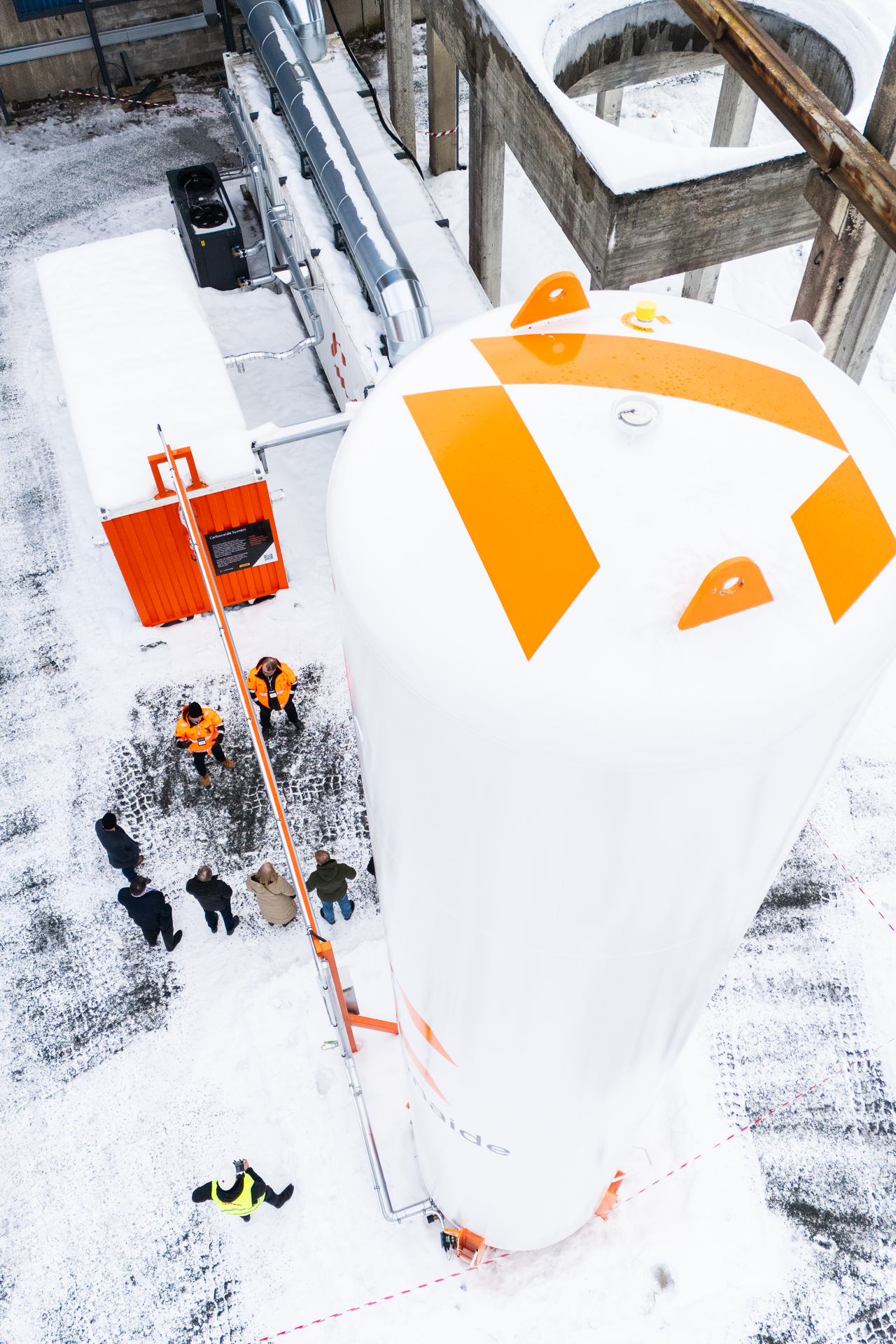
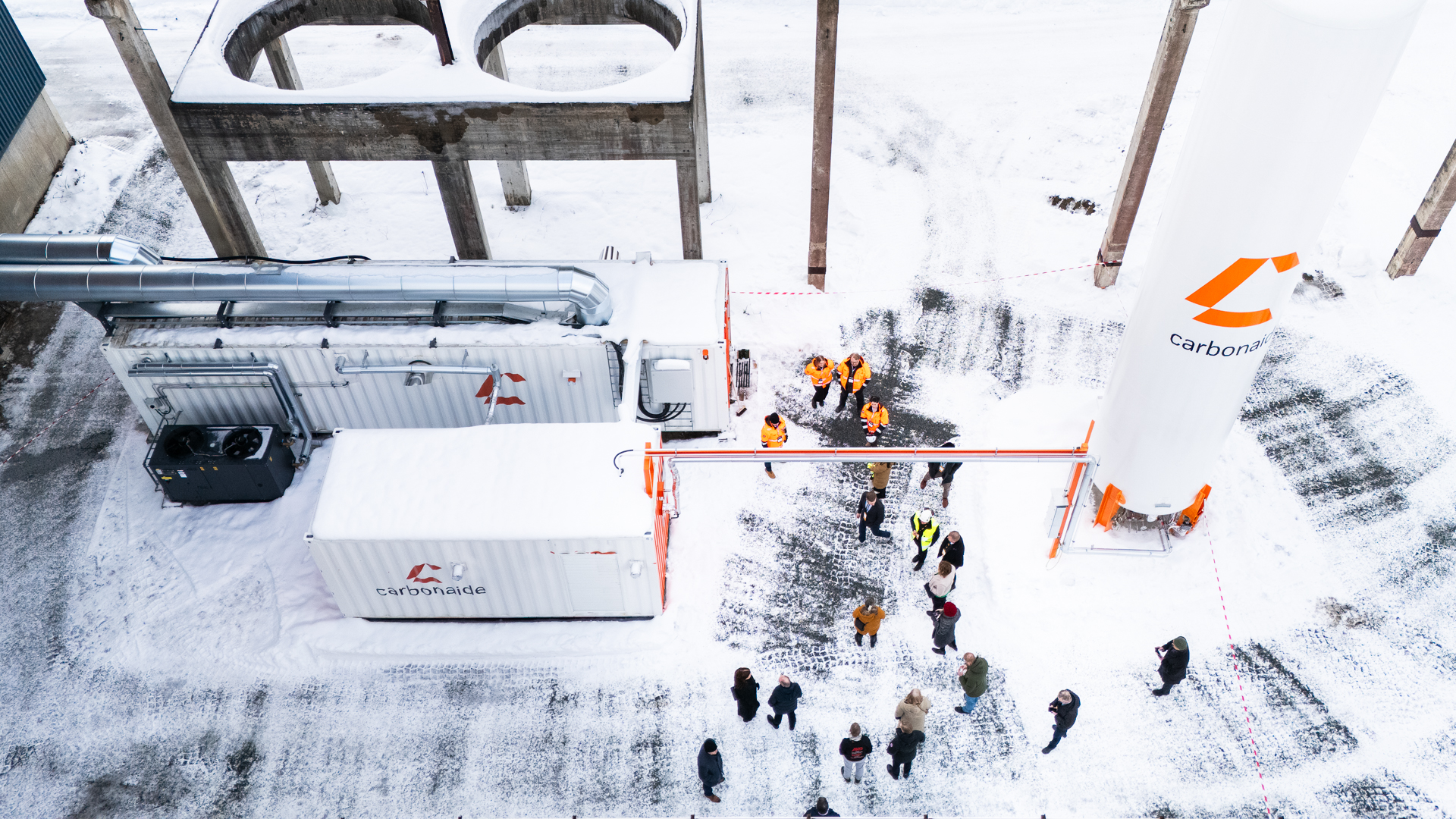
Carbonaide’s CO₂ curing technology is designed to work with SCM-containing mixes and alternative binders. The Carbonaide CO₂ Curing System can be integrated with existing curing chambers, and the Carbonaide Service Platform manages and measures CO₂ flow during the curing process, providing real-time data on CO₂ mineralisation and supporting carbon credit verification. For precast producers already using slag or fly ash, adding carbon dioxide curing to the process is a practical next step toward a measurably lower carbon footprint per product.