
Carbon dioxide curing reduces precast concrete production cycle times by accelerating early-age strength development, which means concrete elements reach demoulding strength faster than with traditional curing methods. This speed advantage directly increases the number of production cycles a factory can complete, lifting overall throughput without requiring additional floor space or equipment. The sections below unpack each dimension of how CO₂ curing affects precast concrete production, from cycle time and material costs to factory integration and output limits.
How much faster does CO₂ curing make the concrete production cycle?
CO₂ curing accelerates early-age strength development in precast concrete, allowing elements to reach demoulding strength considerably sooner than with conventional curing. The mechanism works in two stages: first, carbon dioxide reacts with calcium in fresh concrete to form ultrafine calcium carbonate particles that act as nucleation sites, seeding faster crystal growth. Second, the acidic nature of CO₂ increases the dissolution rate of cement particles, further speeding hydration in the early hours of curing.
For precast producers, the practical consequence is that curing chamber cycles can be shortened. When a factory runs multiple shifts or operates continuous production lines, even a moderate reduction in curing time translates into a meaningful increase in the number of product batches completed per day. This is particularly relevant for precast elements such as wall panels, pavement slabs, and lightweight structural components, where early-age strength is the primary bottleneck controlling how quickly moulds can be turned around.
It is worth noting that the speed gain is not uniform across all product types. Products that already achieve demoulding strength quickly under normal curing conditions benefit less than those with demanding early-age strength requirements, where CO₂ curing delivers the most noticeable reduction in cycle time.
What happens to concrete strength when CO₂ curing is used?
CO₂ curing generally improves the mechanical properties of precast concrete rather than reducing them. Carbonation densifies the microstructure through at least three distinct mechanisms: carbon dioxide replaces hydroxides with carbonates, which occupy a larger molar volume and tighten the concrete matrix; the reaction releases water that supports further cement hydration; and free silica formed in the days following curing reacts with remaining hydration products through a pozzolanic reaction, continuing to build strength between seven and twenty-eight days.
This means that concrete produced with CO₂ curing can match or exceed the strength of conventionally cured reference products, even when cement content has been partially reduced. The densification effect also reduces leaching and improves stability, because the carbonation products are closer to thermodynamic equilibrium than the hydroxides they replace.
For precast producers, the strength outcome is important for two reasons. First, it confirms that adopting CO₂ curing does not require accepting a performance trade-off. Second, the improved microstructure creates room to adjust the concrete mix, either by reducing cement content to lower costs and emissions, or by introducing supplementary cementitious materials (SCMs) that would perform poorly under conventional curing conditions.
How does CO₂ curing affect cement content and material costs?
CO₂ curing creates conditions that allow precast producers to reduce the amount of Portland cement in their concrete mix without sacrificing product performance. This reduction is possible through three mechanisms: faster early-age hardening reduces the need for excess cement added purely to meet demoulding strength requirements; microstructure densification compensates for lower binder content; and CO₂ curing can activate supplementary cementitious materials that are non-reactive under normal curing conditions.
A well-documented example is gamma dicalciumsilicate, a material present in certain steel and iron process slags. Under conventional curing, this compound is inert and cannot serve as a binder. In the presence of CO₂, it becomes reactive, opening the door to replacing a significant share of cement with an industrial byproduct that would otherwise have limited use in concrete production.
The cost implications are direct. Cement is typically the most expensive component in a precast concrete mix, and reducing its proportion lowers raw material costs per cubic metre of concrete produced. When combined with the throughput gains from shorter curing cycles, the economic case for CO₂ curing becomes relevant to factory management, not just sustainability teams. The Carbonaide CO₂ Curing System is designed specifically to enable these mix optimisations at production scale.
Can CO₂ curing be integrated into existing precast concrete factories?
CO₂ curing can be retrofitted into existing precast concrete factories without requiring a complete rebuild of production infrastructure. The core requirement is that curing chambers are made gas-tight to maintain the CO₂ atmosphere during the curing period. In most cases, existing chambers can be modified to meet this requirement, making retrofitting a realistic option for producers who do not want to invest in entirely new facilities.
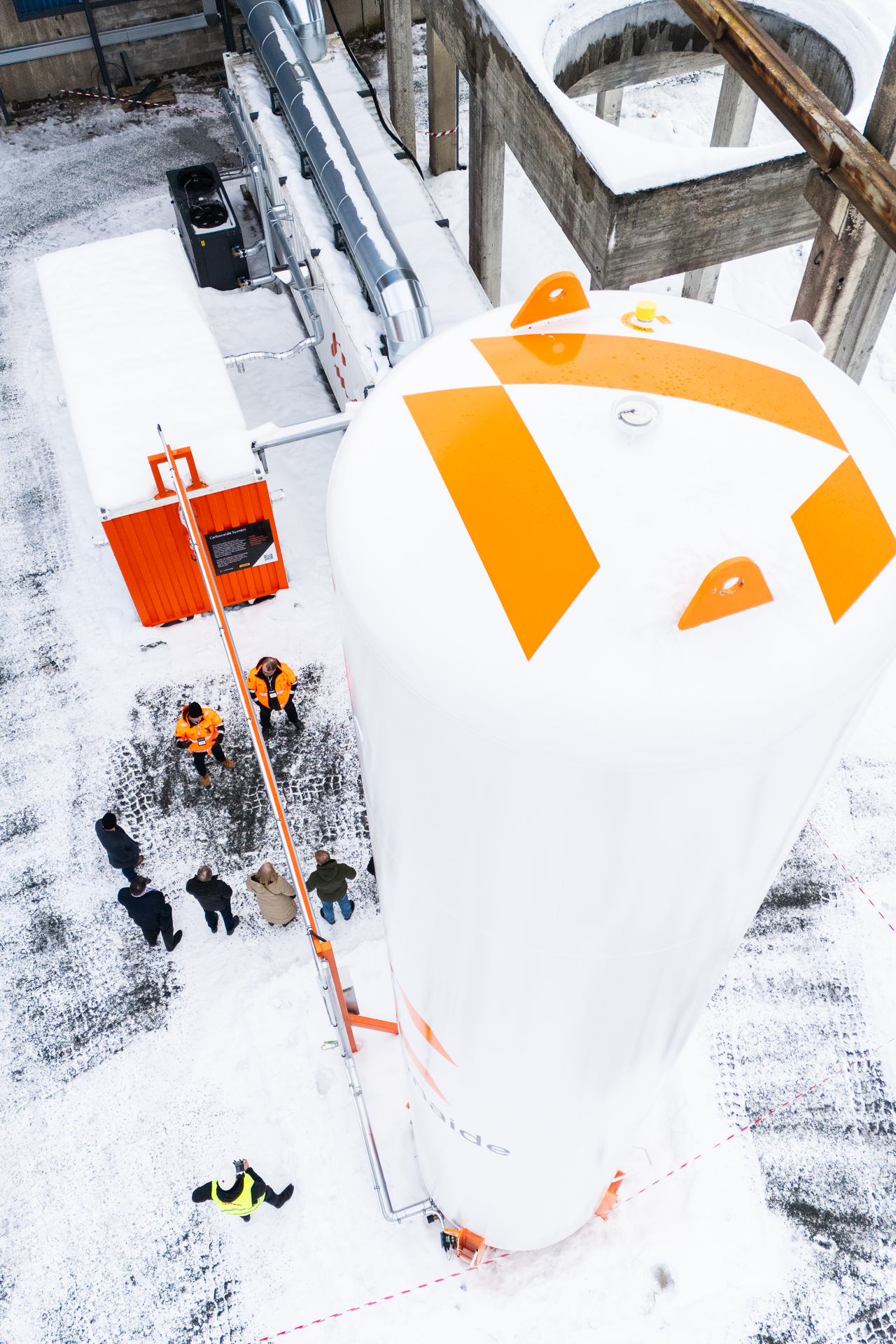
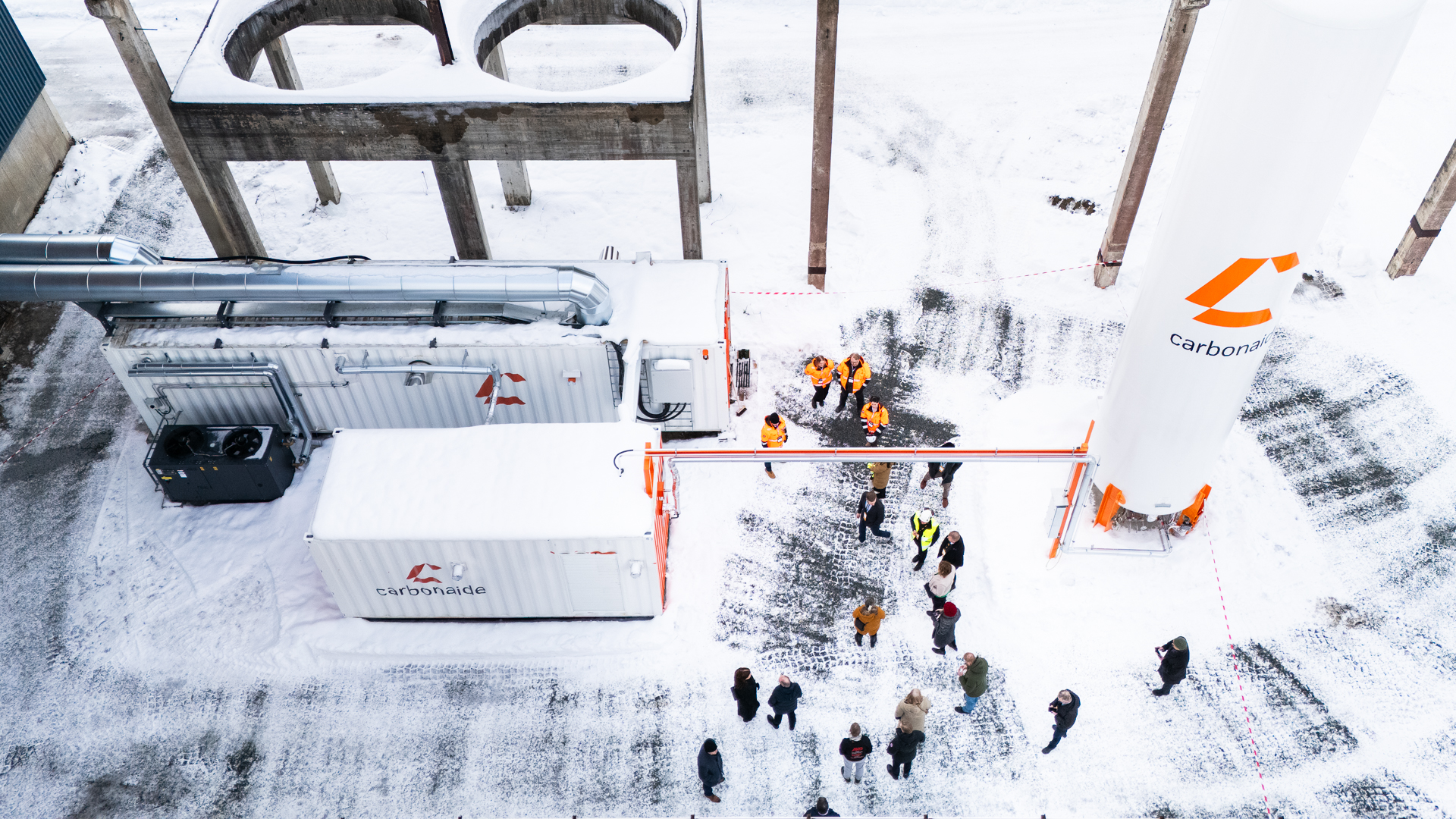
The integration process typically involves three components: a process module that manages CO₂ flow and instrumentation, a CO₂ supply module connected to an external storage tank or local delivery system, and the modified curing chambers themselves. A software platform then manages the process in real time, controlling CO₂ concentration, monitoring mineralisation rates, and generating the data needed for carbon reporting and certification.
For factories being built from scratch, CO₂ curing can be designed into the facility from the outset, which simplifies chamber specifications and process layout. Either way, the technology operates at atmospheric pressure, which removes the need for high-pressure equipment and the associated safety and engineering complexity that would otherwise make factory integration more difficult.
What are the throughput limits of CO₂ curing at production scale?
At production scale, the throughput of CO₂ curing is primarily governed by the number and size of curing chambers, the CO₂ supply capacity, and the cycle time achievable for each product type. These are engineering parameters that can be scaled by adding capacity rather than fundamental constraints of the technology itself.
Commercially operational facilities have demonstrated that CO₂ curing can be run continuously across multiple product lines. The Carbonaide process, for example, has been in commercial use in Finland since early 2024, with end-products already present on multiple construction sites. This confirms that the technology is not limited to laboratory or pilot conditions but functions within normal precast production environments.
One practical consideration is CO₂ sourcing. Running CO₂ curing at high volumes requires a reliable supply of carbon dioxide, typically sourced from industrial capture streams. Producers need to factor in logistics and storage when planning capacity. The Carbonaide Service Platform supports CO₂ flow management across multiple chambers simultaneously, which helps producers optimise usage and avoid supply bottlenecks as production scales up.
How does CO₂ curing compare to traditional steam curing for precast output?
CO₂ curing and steam curing both accelerate early-age strength development in precast concrete, but they work through different mechanisms and have different implications for production economics and emissions. Steam curing raises the temperature to speed up cement hydration, which is effective but energy-intensive and produces no reduction in the carbon footprint of the concrete itself. CO₂ curing accelerates strength development through carbonation chemistry rather than heat, and simultaneously mineralises CO₂ permanently into the concrete structure.
Energy consumption and operating costs
Steam curing requires continuous heat input throughout the curing cycle, which represents a significant and ongoing energy cost. CO₂ curing operates at atmospheric pressure and ambient or near-ambient temperature, which substantially reduces the energy demand of the curing process. For precast producers managing energy costs across large production volumes, this difference in operating expenditure is a relevant factor when comparing the two approaches.
Emissions and carbon footprint
Steam curing does not reduce the carbon footprint of the concrete product; it only accelerates production. CO₂ curing, by contrast, mineralises carbon dioxide into the concrete matrix permanently, reducing the net carbon footprint of each cubic metre produced. When combined with cement content reductions and the use of SCMs such as steel slag, the carbon footprint of the finished product can move into negative territory, meaning more CO₂ is stored in the product than is emitted during its manufacture. This distinction is increasingly relevant as precast producers face pressure to provide environmental product declarations and reduce embodied carbon in their supply chains.
How Carbonaide supports precast concrete producers
Carbonaide provides a complete solution for precast concrete manufacturers looking to adopt CO₂ curing at production scale. The offering is designed to address the practical requirements of factory integration, process control, and carbon documentation in one package.
- Carbonaide CO₂ Curing System: Hardware for CO₂ flow management and curing chamber integration, available for new facilities or as a retrofit for existing chambers, designed and delivered with full project management support.
- Carbonaide Service Platform: Cloud-based software that manages CO₂ flow in real time, tracks mineralisation rates, and generates the data needed for carbon credit verification and environmental product declarations.
- Carbonaide Care: Lifecycle support covering maintenance, calibration, and ongoing technical assistance to keep production running without interruption.
- CO₂ sourcing support: Where needed, Carbonaide can assist producers in connecting with CO₂ supply partners, reducing the logistics burden of setting up a reliable carbon dioxide supply chain.
The technology has been commercially operational since early 2024 and is compatible with existing precast production standards, meaning adoption does not require regulatory change or a departure from established quality frameworks.