
Decarbonization creates real market opportunities for concrete producers by opening access to new customer segments, enabling carbon credit revenue, reducing production costs, and strengthening competitive positioning. As procurement standards tighten and construction clients face their own emissions targets, producers who can demonstrate a lower carbon footprint gain a measurable commercial edge. The sections below address the most common questions producers ask when evaluating decarbonization as a business decision.
What market pressures are pushing concrete producers toward decarbonization?
Concrete producers face growing pressure from multiple directions: stricter procurement requirements, client sustainability commitments, emerging carbon pricing mechanisms, and the increasing use of Environmental Product Declarations (EPDs) as a selection criterion. These pressures are not speculative. They are already reshaping purchasing decisions across the construction sector, particularly in public infrastructure and large commercial projects.
The construction industry is responsible for a significant share of global greenhouse gas emissions, and concrete sits at the center of that challenge as the most widely used construction material. Regulators, developers, and institutional clients are responding by setting emissions reduction targets that flow down through the supply chain. Concrete producers who cannot provide verified carbon footprint data or demonstrate progress toward lower emissions risk being excluded from tenders.
In the Nordics and across much of Europe, this shift is already visible. Public procurement bodies are beginning to specify maximum carbon footprint thresholds for concrete products. Private developers working toward net-zero building certifications are asking suppliers for EPD documentation as a standard part of the procurement process. These requirements are not waiting for future legislation. They are arriving now, and producers without a decarbonization strategy are already at a disadvantage.
How does lower-carbon concrete open access to new customer segments?
Lower-carbon concrete gives producers access to customer segments that are actively seeking verified, low-emission building materials. These include green-certified construction projects, public infrastructure programs with carbon requirements, and large developers with corporate net-zero commitments. Producers who can supply concrete with a documented, reduced carbon footprint can compete in markets that were previously inaccessible.
Many construction projects now require building materials to meet specific environmental criteria as a condition of financing, certification, or procurement. Green building rating systems and low-carbon construction programs increasingly specify that structural materials must meet defined carbon footprint thresholds. A precast producer who can provide concrete with a substantially reduced or even carbon-negative footprint can qualify for these projects where a conventional supplier cannot.
This is not a niche market. Infrastructure investment programs, housing developments, and commercial construction projects across Europe are incorporating carbon requirements into their specifications. Producers with CO2 mineralisation capability can position their products as a direct response to these requirements, giving sales teams a concrete differentiator to bring to procurement conversations.
Can concrete producers generate revenue from carbon credits?
Yes. Concrete producers who use CO2 mineralisation in their curing process can generate carbon credits by permanently storing CO2 as carbonate minerals within their products. These credits can be sold on voluntary carbon markets to companies seeking high-integrity carbon dioxide removal (CDR) to address their own emissions. This creates a revenue stream that runs alongside normal production activity.
The carbon credit opportunity depends on the quality and verifiability of the storage claim. Not all carbon credits are equal. Buyers in the voluntary carbon market are increasingly focused on durable CDR credits: those where the carbon is stored permanently, the removal is independently verified, and the claim meets strict additionality requirements.
CO2 mineralisation in concrete meets these criteria. When CO2 is cured into precast concrete under controlled conditions, it converts to carbonate minerals that remain stable for centuries. The process is measurable, the storage is permanent, and the activity is not currently required by regulation, which satisfies additionality requirements. Carbonaide’s CDR credits are certified under Isometric’s module for CO2 storage via carbonation in the built environment, providing independent verification that buyers require.
For producers, this means that a portion of the value created during the curing process can be captured as carbon credit revenue rather than left unrealized. The commercial model allows producers to either apply stored carbon toward reducing the reported carbon footprint of their products, or sell the credits separately. The Carbonaide Service Platform handles the measurement, documentation, and certification process needed to support this.
What cost advantages does decarbonization technology bring to production?
CO2 curing technology reduces production costs primarily by lowering cement consumption. Cement is the most expensive input in concrete production, and reducing the required cement content directly reduces material costs. CO2 curing also shortens curing time, which increases throughput and improves capacity utilization without requiring additional capital investment in curing infrastructure.
The cost reduction from cement savings is straightforward. During CO2 curing, carbon dioxide reacts with calcium compounds in the concrete mix, accelerating strength development and densifying the microstructure. This allows producers to achieve the required mechanical properties with less cement than a conventionally cured product would need. Depending on the product type and mix design, cement replacement can be substantial.
CO2 curing also enables the use of alternative binders and supplementary cementitious materials (SCMs) such as steel slag, which are typically lower in cost than Portland cement. Some of these materials are otherwise difficult to use effectively under normal curing conditions but become viable when CO2 is introduced. This expands the range of cost-effective mix designs available to producers.
On the production side, faster curing means faster cycle times. Curing chambers can be turned around more quickly, increasing the number of production cycles possible within a given period. For producers operating near capacity, this can meaningfully increase output without requiring new facilities. The combination of lower material costs and higher throughput creates a business case that stands independently of any carbon credit or market access benefit.
How does carbon-negative concrete affect a producer’s competitive positioning?
Carbon-negative concrete positions a producer as a supplier capable of meeting the most demanding environmental specifications in the market. When a product’s calculated carbon footprint falls below zero, it becomes a credible response to clients seeking to offset emissions elsewhere in their projects. This is a differentiated market position that most conventional producers cannot match.
Achieving a negative carbon footprint requires combining CO2 mineralisation with industrial byproducts such as steel slag or other alternative binders. When these materials replace a large proportion of Portland cement and CO2 is mineralised into the product during curing, the net carbon balance of the product can turn negative. The Carbonaide method produces concrete with a calculated carbon footprint of approximately minus 60 kilograms per cubic metre, compared to conventional concrete, which carries a footprint of roughly 250 to 300 kilograms per cubic metre.
From a competitive standpoint, this matters in two ways. First, it allows a producer to supply projects where carbon footprint limits would otherwise exclude conventional concrete entirely. Second, it provides a verifiable, documented claim that can be communicated through EPDs and procurement documentation, giving sales teams a factual basis for differentiation rather than a general sustainability message.
Producers who can demonstrate carbon-negative products are also better positioned as carbon pricing and reporting requirements evolve. Building a track record and a verified production history now creates an asset that becomes more valuable as the regulatory environment tightens.
When should a concrete producer start investing in decarbonization?
Concrete producers who supply markets where EPD requirements, carbon footprint thresholds, or green procurement criteria are already present should consider investment now. Producers in markets where these requirements are emerging should treat early investment as a way to build capability before competitive pressure peaks. Waiting until requirements become mandatory typically means entering the market late, with less time to optimize processes and establish a track record.
The business case for CO2 curing does not depend entirely on future regulation. The cost reductions from cement savings and faster production cycles generate returns that can be calculated against current production volumes and cement prices. Carbon credit revenue adds to this, and market access benefits compound over time as more procurement programs specify carbon requirements.
There is also a practical argument for acting before the market becomes crowded. Producers who invest early develop operational experience, refine their mix designs, and build relationships with CDR credit buyers while supply is still limited. As more producers adopt CO2 curing technology, the market access advantage narrows. The producers who moved early will have established customer relationships, verified production histories, and optimized processes that later entrants will need time to replicate.
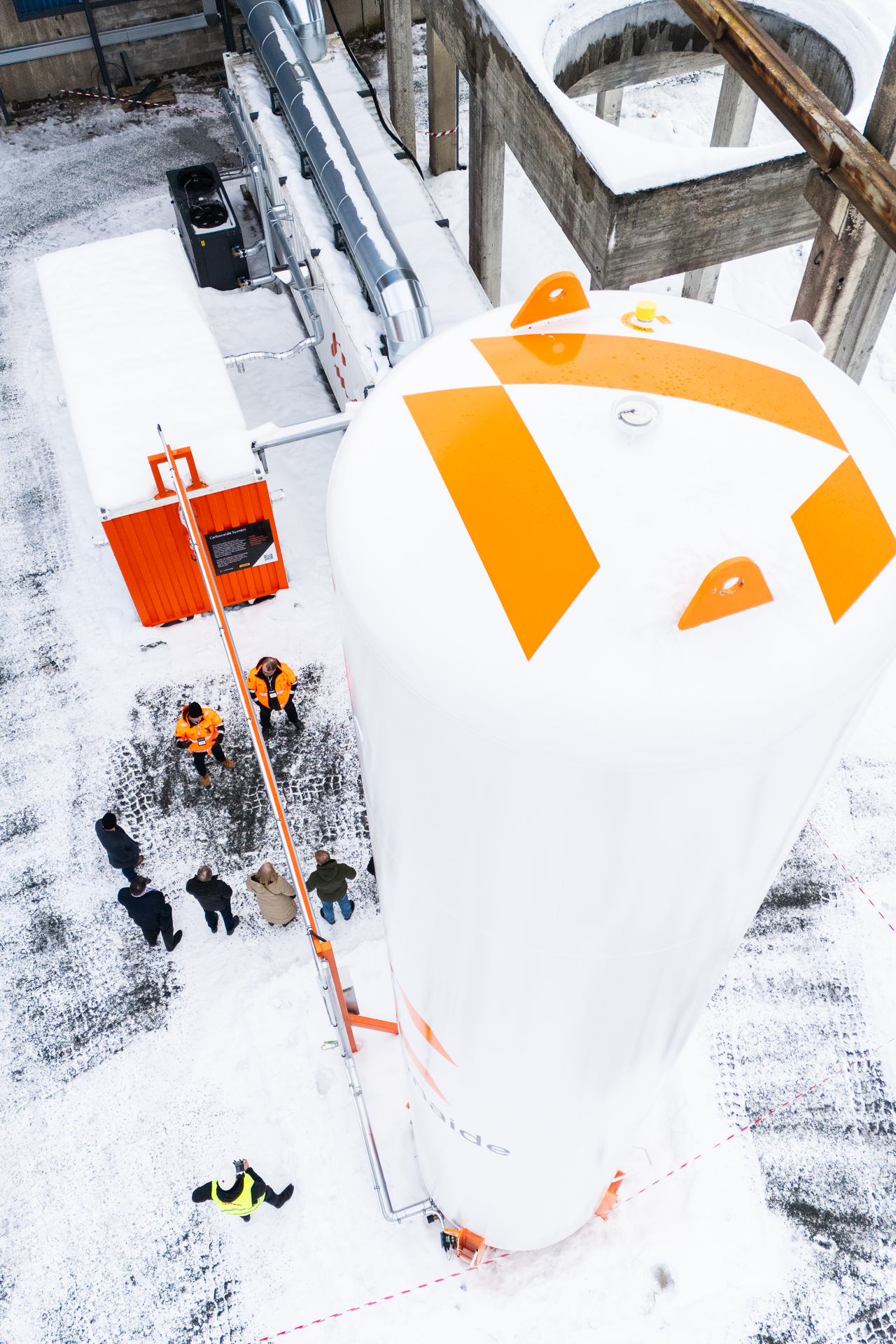
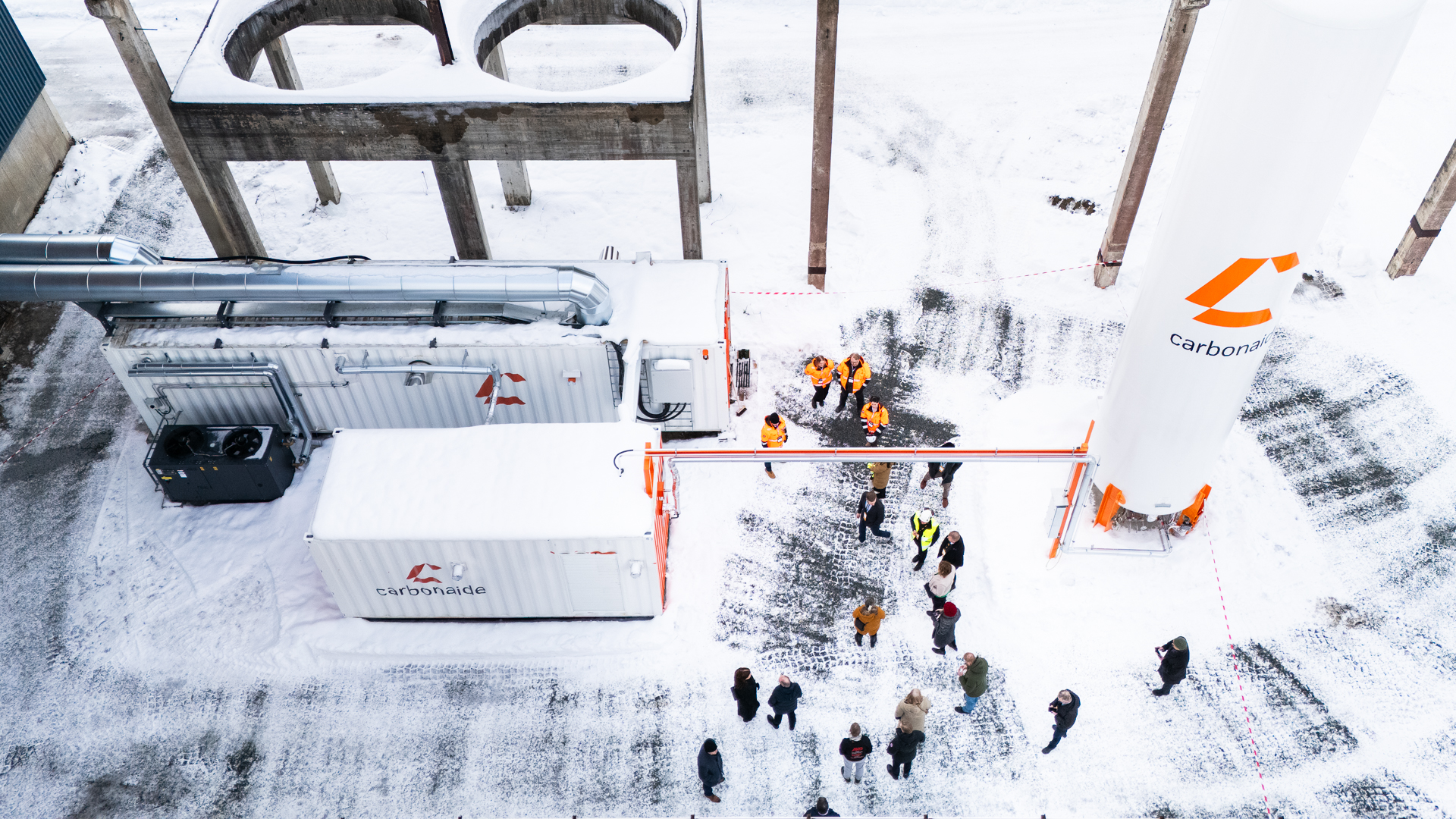
For precast producers specifically, the integration of CO2 curing into existing curing chamber infrastructure is achievable without rebuilding production facilities. The Carbonaide CO2 Curing System is designed to retrofit into existing factory setups, which reduces the capital barrier to entry and shortens the time from investment decision to operational production.
How Carbonaide supports concrete producers in capturing these opportunities
Carbonaide provides a complete solution for precast concrete producers looking to reduce emissions, lower production costs, and generate carbon credit revenue from the same process. The offering covers the hardware, software, and support needed to run CO2 curing at production scale.
- Carbonaide CO2 Curing System: Hardware for CO2 flow management and curing chamber integration, designed for both new facilities and retrofits of existing infrastructure.
- Carbonaide Service Platform: Cloud-based software that manages CO2 flow, measures mineralisation in real time, and produces the documentation needed for EPD updates and carbon credit certification.
- Carbon credit management: Support for verifying and certifying stored CO2 as durable CDR credits, certified under Isometric’s framework, enabling producers to sell credits on voluntary carbon markets.
- Carbonaide Care: Lifecycle support covering setup, maintenance, calibration, and ongoing operational assistance.
Carbonaide’s technology has been in commercial use in Finland since early 2024, with end products already present on multiple construction sites. The company operates in partnership with Elematic, a globally recognized provider of precast technologies, to bring production-scale CO2 curing to precast manufacturers across international markets.