

Technology is transforming concrete production through digital monitoring systems, automated manufacturing processes, and innovative curing methods. These construction technology innovations are improving concrete quality, and making concrete products more sustainable and faster to produce. Modern concrete manufacturing technology includes cloud-based platforms, smart sensors, and carbon utilisation systems that permanently store CO2 in building materials.
What new technologies are actually changing how concrete gets made?
The concrete industry is experiencing fast technological transformation through several innovations that are change the manufacturing processes:
- Digital monitoring systems – Smart sensors and cloud-based platforms track temperature, humidity, curing progress, and material properties in real time, enabling instant process adjustments for optimal results
- Automated production lines – Robotic systems handle material mixing, placement, and curing with precision that eliminates human error and maintains consistent quality standards across all production runs
- CO2 curing technology – Carbon dioxide treatment systems reduce traditional cement requirements while permanently storing CO2 within concrete structures, creating stronger materials that serve as carbon sinks
These interconnected technologies create a smart manufacturing system that delivers superior concrete quality while dramatically reducing environmental impact. The integration of digital monitoring with automated systems enables manufacturers to achieve consistency, while optimising critical production parameters and reducing emissions.
How is carbon dioxide being used to make concrete better?
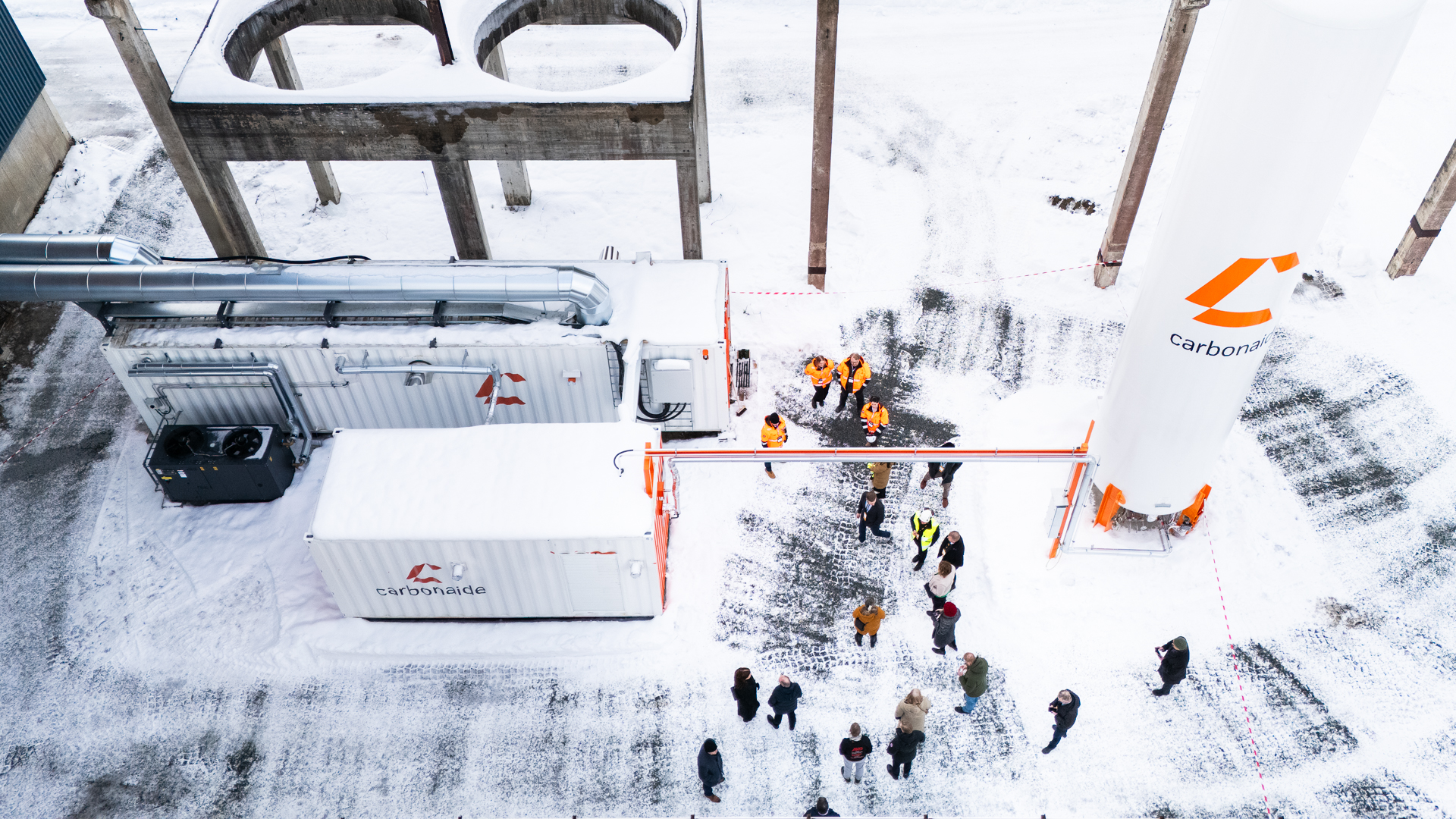
CO2 curing technology mineralises carbon dioxide directly into concrete structures during production, reducing the need for cement while creating low-carbon concrete products. This process permanently stores CO2 as stable carbonates within the material, transforming concrete from a carbon emitter into a carbon sink.
The mineralisation process works by introducing CO2 during the curing phase, where it reacts with cement compounds to form stable minerals. These reactions strengthen the internal structure of concrete while reducing the amount of cement needed. The stored CO2 becomes a permanent part of the material structure with zero risk of leakage.
This technology delivers multiple benefits beyond carbon storage. The CO2 curing process accelerates concrete hardening, reducing production time and removing bottlenecks. The chemical reactions also improve concrete density and strength, creating low-emission building materials without losing compatibility with industry standards.
When combined with new materials such as steel slag and SCMs that replace traditional Portland cement, CO2 curing can produce concrete with net-negative carbon footprints.
Why are concrete manufacturers incresing automation of production systems?
The shift toward automated production systems is driven by compelling advantages:
- Consistent quality control – Maintaining specifications without variation, ensuring precise material ratios and uniform density
- Enhanced production efficiency – Automated systems operate continuously without breaks and coordinate multiple production lines simultaneously
- Cost reduction – Reduced labour requirements and minimised material waste through precise control systems lower operational costs
- Technology integration capability – Automated systems can precisely control CO2 flow, monitor mineralisation reactions, and adjust parameters in real time to optimize technology benefits
Automation creates a competitive advantage that extends beyond immediate cost savings. Manufacturers gain the ability to integrate cutting-edge sustainable technologies like CO2 curing while maintaining superior product quality and operational reliability, positioning them for long-term success in an increasingly environmentally conscious market.
What does the future hold for low-emission concrete production?
Concrete production is evolving toward comprehensive environmental solutions that will fundamentally reshape the construction industry:
- Carbon-negative products – Advanced CO2 storage technologies combined with industrial byproducts like slag and ash will create concrete that removes more carbon from the atmosphere than it produces
- AI-driven optimisation platforms – Artificial intelligence systems will predict optimal mix designs, manage material requirements, and coordinate EPD and LCA calculations across multiple facilities
- Alternative material innovations – New materials, such as geopolymers and new additives, offer specialised properties for specific applications while reducing environmental impact
- Digital supply chain integration – Real-time connectivity will enable carbon footprint tracking throughout building lifecycles and support environmental reporting requirements
These innovations represent a fundamental shift from traditional concrete production toward an integrated ecosystem of sustainable technologies. The convergence of carbon storage, digital optimisation, and alternative materials will create a construction industry that actively contributes to environmental restoration rather than degradation, setting new standards for responsible manufacturing across all sectors.
We are developing technology that transforms concrete production from a major emission source into a carbon sink. Our CO2 curing systems work with existing concrete factories, providing manufacturers with a practical path toward sustainable production while improving their products and reducing costs. The future of concrete lies in permanent carbon storage within the building materials themselves.
If you are interested in learning more, contact our team of experts today.