
A low-carbon precast roadmap for 2030 starts with one core decision: which decarbonization technologies to adopt, in what order, and how to verify the results. For most precast producers, the path combines cement reduction through alternative binders and SCMs, CO₂ mineralisation during curing, and carbon credit generation from permanently stored carbon. The sections below answer the most common questions precast manufacturers are asking as they plan their transition.
What technologies are driving precast concrete decarbonization by 2030?
The technologies driving precast concrete decarbonization by 2030 fall into three broad categories: reducing cement content through supplementary cementitious materials (SCMs) and alternative binders, optimizing production processes such as carbon dioxide curing, and digitally measuring and verifying emissions reductions. No single technology solves the entire problem, but these approaches work well in combination.
SCMs such as ground granulated blast furnace slag and fly ash have been used in precast production for decades. They replace a portion of Portland cement in the mix, which directly cuts the embodied carbon of the product. The challenge is that SCMs still require cement for activation and are only available in certain regions in meaningful volumes.
Carbon dioxide curing is a more recent development. During curing, CO₂ is introduced into sealed chambers, where it reacts with calcium compounds in the fresh concrete, forming stable carbonate minerals. This mineralisation process serves two purposes at once: it accelerates strength development, which allows cement content to be reduced further, and it permanently stores carbon within the concrete product itself.
Digital platforms that measure CO₂ flow, track mineralisation rates, and generate verified carbon data are also becoming a core part of the technology stack. Without accurate measurement, emission reductions cannot be reported, certified, or converted into carbon credits. This data infrastructure is increasingly what separates credible decarbonization programs from aspirational ones.
How much can precast manufacturers realistically cut their carbon footprint?
Precast manufacturers can realistically achieve significant reductions in their carbon footprint by 2030, with the exact amount depending on their starting mix design, the binders available locally, and whether CO₂ mineralisation is part of the process. Combining cement reduction with carbon dioxide curing can move some products from a positive carbon footprint to a net-negative one.
Cement is the dominant source of emissions in precast concrete, so reducing its share of the mix is the highest-impact action available. Replacing a portion of cement with slag or other SCMs cuts the emissions from raw materials directly. When CO₂ curing is added to the process, two additional mechanisms come into play: the mineralisation itself stores carbon permanently, and improved early strength development allows even further cement reduction without compromising product performance.
When industrial byproducts such as steel slag are used as a significant share of the binder and paired with CO₂ mineralisation, some product types can reach a net-negative carbon footprint, meaning more carbon is stored than emitted during production. This outcome is not universal across all precast products, but it is achievable for a meaningful range of applications, particularly lightweight elements and pavement products.
The realistic ceiling for most producers by 2030 is determined by what binders are available at scale in their region, how much of their production runs through separate curing chambers, and how quickly they can validate new mix designs against existing product standards.
What is the difference between carbon reduction and carbon mineralization in concrete?
Carbon reduction in concrete refers to lowering the amount of CO₂ emitted during production, primarily by using less cement. Carbon mineralisation is a separate process in which CO₂ is actively captured and converted into stable carbonate minerals inside the concrete structure, permanently storing it. Reduction cuts emissions; mineralisation removes and stores them.
These two mechanisms are complementary and can happen simultaneously during CO₂ curing. When CO₂ is introduced into a curing chamber, the gas reacts with calcium ions from the cement and SCMs to form calcium carbonate. This is mineralisation: the CO₂ is no longer a gas but a solid mineral locked into the concrete matrix. It does not escape when the concrete is demolished or recycled.
Carbon reduction, by contrast, is about what does not happen. Using slag instead of Portland cement means less CO₂ is released during raw material processing. Using a plasticizer to lower the water-to-cement ratio means less cement is needed for the same workability. These are upstream interventions that prevent emissions.
For a precast producer building a 2030 roadmap, the distinction matters because the two approaches are measured and reported differently. Emission reductions appear in the product’s environmental product declaration (EPD) as avoided emissions. Mineralised carbon can be independently verified and certified as carbon dioxide removal (CDR), which opens access to carbon credit markets. Understanding which mechanism is generating which result is important for accurate reporting and for choosing the right verification pathway.
How does CO₂ curing fit into an existing precast production line?
CO₂ curing integrates into an existing precast production line by modifying the curing chamber to become gas-tight and connecting it to a CO₂ supply and a process control system. The concrete casting, moulding, and demoulding processes remain unchanged. The curing stage is where the change occurs, making it one of the less disruptive upgrades available to precast producers.
Most precast factories already use enclosed curing chambers to control temperature and humidity. Retrofitting these chambers for CO₂ curing involves sealing them to prevent gas escape, adding a CO₂ supply module, and installing instrumentation to monitor and control gas flow throughout the curing cycle. The chamber modifications are specific to each facility, but the underlying principle is consistent across production setups.
The process control layer is equally important. Managing CO₂ concentration, timing, and flow rate requires precision to achieve consistent mineralisation results across product batches. This is handled through software that monitors the curing environment in real time and records the data needed for carbon accounting and certification.
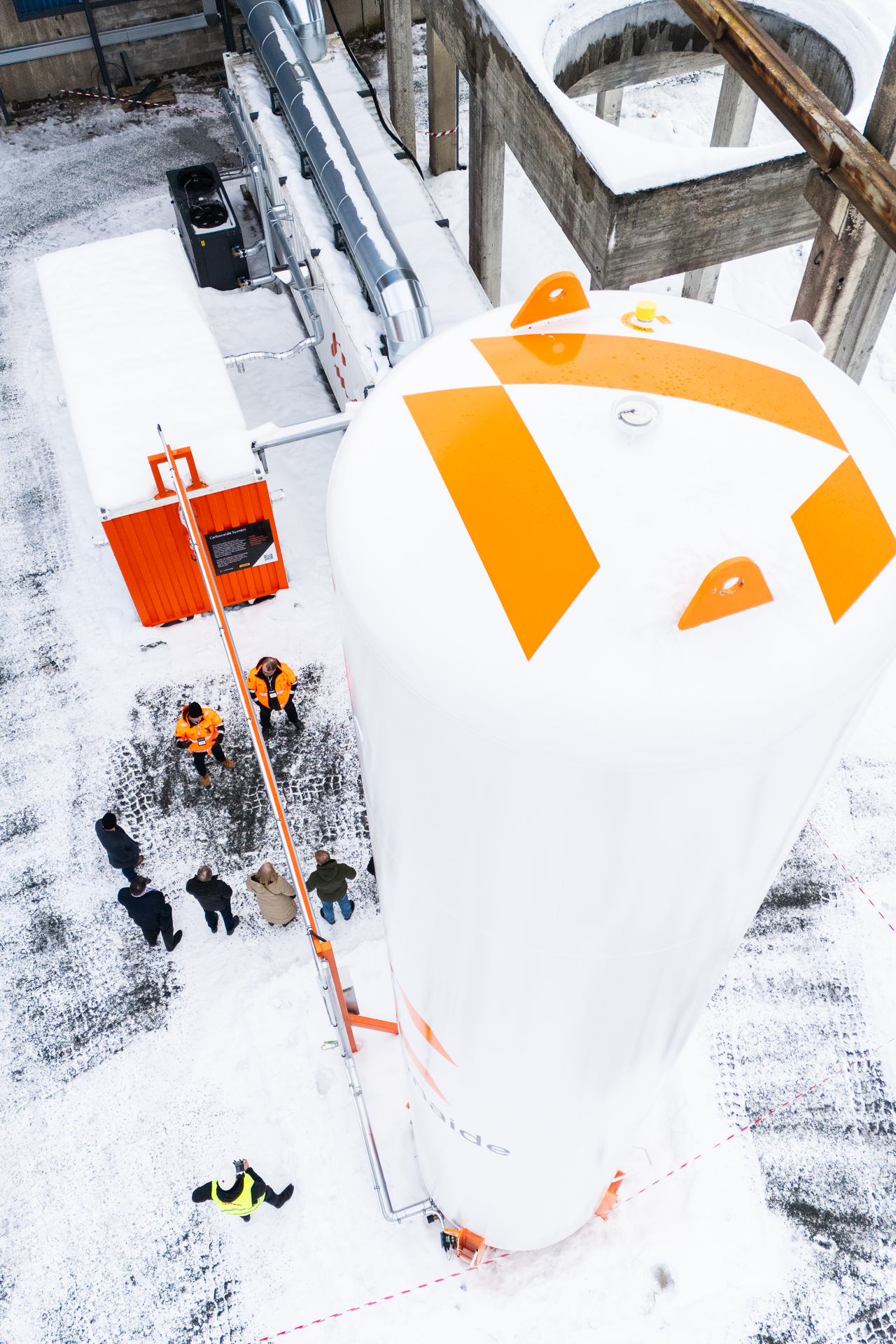
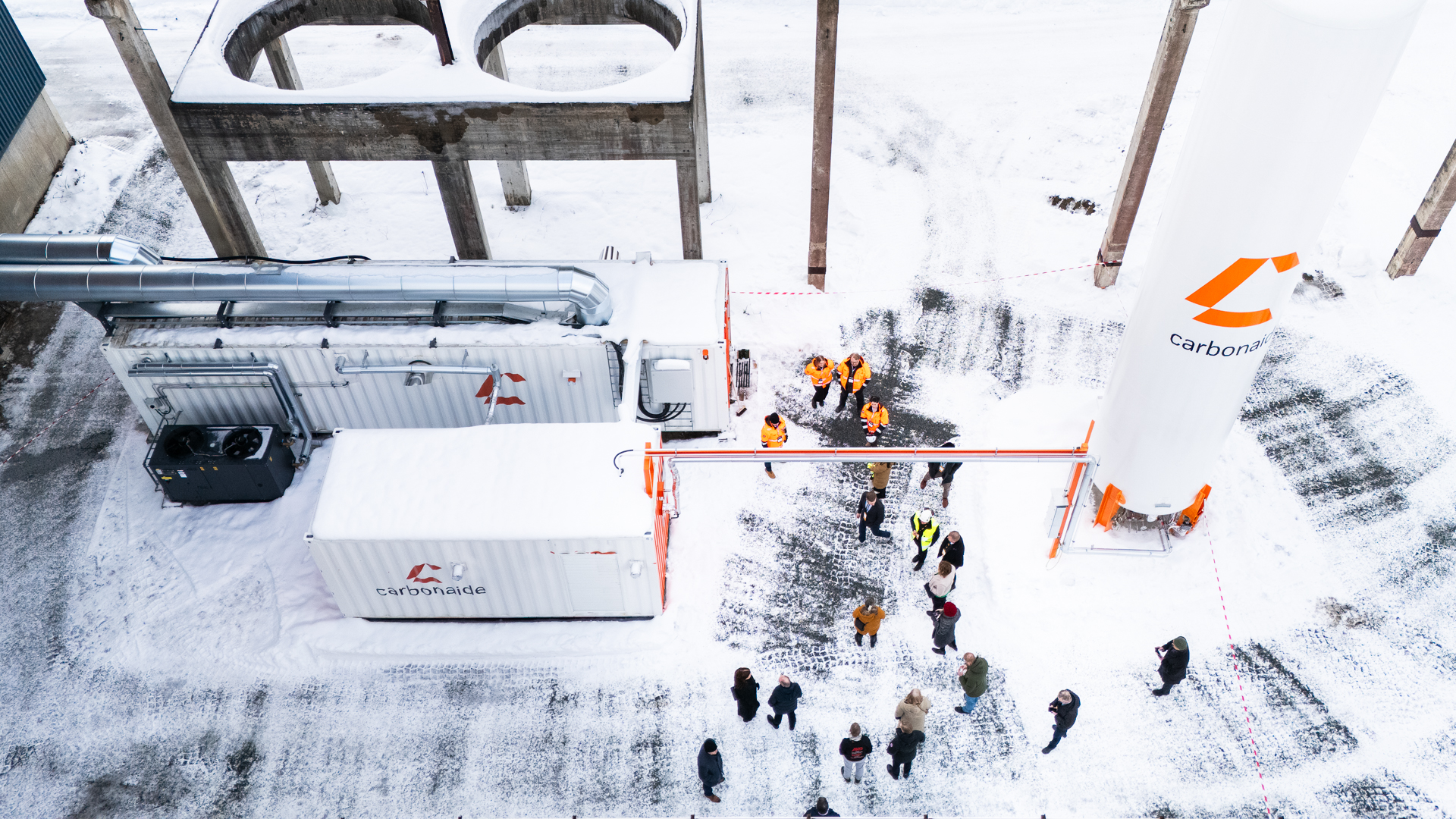
The Carbonaide CO₂ Curing System is designed specifically for this type of integration, whether into new facilities or existing factory curing chambers. It includes the process module, CO₂ supply connection, chamber integration, and links to the Carbonaide Service Platform for data management. The result is that precast producers can adopt CO₂ curing without redesigning their production workflow, which matters for maintaining throughput and meeting delivery schedules during the transition.
What role do carbon credits play in a precast decarbonization strategy?
Carbon credits give precast producers a way to generate revenue from the CO₂ they permanently store in concrete products, creating a financial return that helps offset the cost of decarbonization investments. Credits derived from CO₂ mineralisation in concrete qualify as durable carbon dioxide removal, which commands stronger demand and higher value in voluntary carbon markets than many offset-based credits.
Not all carbon credits are equal. Credits from avoidance projects, such as protecting forests that might otherwise be cut down, do not remove carbon that is already in the atmosphere. Mineralisation-based credits do: they represent CO₂ that has been physically captured and converted into a mineral that will not re-enter the atmosphere for over a thousand years, even if the concrete is eventually demolished and the rubble is crushed.
This permanence is what makes concrete mineralisation credits attractive to buyers with serious net-zero commitments. Organisations looking to neutralise hard-to-abate emissions need removal credits, not avoidance credits, and the supply of high-integrity durable CDR is currently limited relative to demand.
For precast producers, carbon credits serve two strategic functions. First, they provide a revenue stream that improves the business case for CO₂ curing investments. Second, they position the producer as a supplier of a verified climate service, not just a building material. Carbonaide’s CDR credits are independently verified and certified under Isometric’s module for CO₂ storage via carbonation in the built environment, providing the documentation that buyers and regulators increasingly require.
Which milestones should a precast producer target on the path to 2030?
A precast producer targeting meaningful decarbonization by 2030 should work through four sequential milestones: establishing a baseline carbon footprint for key products, trialling alternative binders and SCMs in the existing mix design, integrating CO₂ curing into at least one production line, and establishing verified carbon data reporting. Each step builds on the previous one.
Establish a verified emissions baseline
Before any reduction strategy can be measured, producers need accurate data on the current carbon footprint of their main product lines. This means calculating embodied emissions from raw materials, particularly cement, and documenting the data in a format that can be updated as the mix design changes. An EPD provides a recognised framework for this, and it creates the reference point against which future improvements are measured.
Optimise the mix design with SCMs and alternative binders
Reducing cement content is the most direct path to lower emissions, and it does not require new capital equipment. Working with slag, limestone filler, or other locally available SCMs to replace a portion of Portland cement is a practical starting point for most producers. The mix design work needs to be validated against product standards, which takes time, so starting early in the roadmap makes sense.
Integrate CO₂ curing into production
Once the mix design is optimised, adding carbon dioxide curing to the process unlocks further cement reduction and generates permanently stored carbon. This is the step that moves a producer from emission reduction into carbon removal territory. Planning for chamber modifications, CO₂ supply logistics, and software integration should begin well before the target commissioning date.
Verify, certify, and report
The final milestone is turning the data generated by the CO₂ curing process into certified outputs: updated EPDs, carbon storage documentation, and where relevant, certified CDR credits. This reporting infrastructure is what makes the decarbonization effort credible to clients, regulators, and carbon market buyers. Building this capability before 2030 positions producers to meet the reporting requirements that are already emerging across European construction markets.