
Carbon-negative concrete is becoming a procurement requirement in some markets, and the trend is accelerating. Regulatory frameworks in Europe and beyond are tightening requirements around embodied carbon in construction, making it increasingly likely that procurement specifications will move from voluntary green building standards toward mandatory carbon thresholds. Concrete manufacturers and precast producers who understand where this is heading can position themselves well ahead of the shift.
What regulations are pushing low-carbon concrete into procurement?
Several regulatory frameworks are already creating pressure on the concrete sector to reduce embodied carbon, even where explicit procurement mandates do not yet exist. The European Union’s Level(s) framework, the Corporate Sustainability Reporting Directive, and national green public procurement policies are all moving in the same direction: requiring measurable evidence of carbon performance from building materials.
In practice, this means that public sector clients in a growing number of countries are beginning to include carbon performance criteria in tender documents. Rather than specifying only structural performance, procurement teams are starting to ask for Environmental Product Declarations (EPDs) as a baseline, and in some cases are setting upper limits on the carbon footprint of materials used in publicly funded projects.
The EU’s Construction Products Regulation revision is also significant. It is expected to introduce mandatory sustainability requirements for construction products, which would directly affect how concrete is specified and purchased across European markets. While the full regulatory picture is still developing, the direction is clear: embodied carbon in concrete will increasingly be a procurement factor rather than a voluntary consideration.
How is embodied carbon measured in concrete products?
Embodied carbon in concrete products is measured through Life Cycle Assessment (LCA), which quantifies greenhouse gas emissions associated with raw material extraction, production, transport, and end of life. The results are typically expressed in kilograms of CO2 equivalent per cubic metre or per functional unit of the product, and are communicated through an Environmental Product Declaration.
EPDs are standardised documents that follow ISO 14025 and the European standard EN 15804. They allow buyers to compare the carbon footprint of concrete products from different manufacturers on a consistent basis. For procurement purposes, EPDs are the primary tool used to verify carbon performance claims.
Within the LCA boundary, the emissions associated with cement production typically represent the largest share of a concrete product’s carbon footprint. This is why technologies that reduce cement content or permanently store CO2 within the concrete matrix can have a significant effect on the EPD result. When CO2 is mineralised into the concrete during the curing process, that stored carbon can be counted as a reduction in the product’s net carbon footprint, provided the measurement and verification methodology meets recognised standards.
Verification is an important word here. For carbon storage claims to be credible in procurement contexts, they must be quantified through gas flux measurement, confirmed by laboratory testing, and ideally certified by an independent third party. Without this layer of verification, carbon performance claims carry limited weight in formal procurement processes.
Which construction markets are already requiring low-carbon materials?
The Netherlands, Sweden, Denmark, and Finland are among the most advanced markets when it comes to incorporating carbon performance into construction procurement. Public sector clients in these countries have been early adopters of EPD requirements and, in some cases, have introduced carbon budget limits for publicly funded buildings and infrastructure projects.
In the Netherlands, the MPG (Milieuprestatie Gebouwen) system sets a mandatory environmental performance threshold for new buildings, which directly incentivises the use of lower-carbon materials. Sweden has introduced a mandatory climate declaration for new buildings, requiring developers to calculate and report the carbon footprint of the building structure. While Sweden’s current system focuses on reporting rather than limiting, the expectation is that threshold requirements will follow.
In the United Kingdom, the government has committed to requiring whole-life carbon assessments for major public projects. Several large infrastructure programmes already include embodied carbon targets in their specifications.
Outside Europe, markets such as Singapore and parts of North America are also developing green building standards and procurement frameworks that give weight to embodied carbon. The pace varies considerably by region, but the general pattern is consistent: markets that introduced voluntary EPD requirements a few years ago are now moving toward mandatory thresholds.
What’s the difference between low-carbon, carbon-neutral, and carbon-negative concrete?
Low-carbon concrete, carbon-neutral concrete, and carbon-negative concrete describe different levels of carbon performance, and the distinction matters significantly in procurement contexts. Low-carbon concrete has a reduced carbon footprint compared to conventional production, typically achieved through cement substitution or process improvements. Carbon-neutral concrete reaches a net zero carbon footprint across its life cycle. Carbon-negative concrete goes further: it removes more CO2 from the atmosphere than it emits during production.
Low-carbon concrete
Low-carbon concrete is produced by reducing the amount of Portland cement in the mix, often by replacing a portion with Supplementary Cementitious Materials such as slag or fly ash. These materials have lower embodied carbon than cement clinker, so substituting them reduces the overall carbon footprint of the product. The term is relative rather than absolute: a product described as low-carbon should ideally be compared against a reference product using a consistent methodology, such as an EPD.
Carbon-neutral and carbon-negative concrete
Carbon-neutral concrete achieves a net zero carbon footprint, which in practice requires either very high levels of cement substitution, the use of renewable energy in production, or the inclusion of carbon removal credits to offset remaining emissions. Carbon-negative concrete goes a step further by permanently storing more CO2 than is emitted during its production. This is achievable when CO2 mineralisation is combined with significant cement replacement using alternative binders such as steel slag. When CO2 is cured into the concrete matrix and converted into stable carbonates, that carbon is permanently stored in the product, reducing the net carbon footprint below zero. The Carbonaide method can produce concrete with a net-negative carbon footprint when the process is paired with suitable alternative binders, and the carbon storage is verified and documented through the Carbonaide Service Platform.
For procurement purposes, the distinction between these categories is increasingly relevant. A specification that requires only “low-carbon” materials leaves significant room for interpretation. Specifications that reference EPD thresholds or carbon storage certification are more precise and harder to meet with marginal improvements alone.
Should concrete manufacturers prepare for carbon-negative procurement now?
Concrete manufacturers should start preparing now rather than waiting for formal mandates. The regulatory trajectory in Europe and other leading markets points clearly toward tighter carbon requirements in procurement, and the lead time for implementing CO2 mineralisation technology is not short. Manufacturers who begin the process now will be better positioned when clients and regulators start asking for verifiable carbon performance data.
There are practical reasons to act early beyond regulatory compliance. Manufacturers who can demonstrate carbon-negative production gain a competitive advantage in tenders where carbon performance is already a criterion. They also build the operational experience, measurement infrastructure, and certification documentation that formal procurement requirements will eventually demand.
Several concrete producers in the Nordic markets are already using carbon dioxide curing commercially. Their experience shows that the technology integrates well with existing precast production processes and that the benefits extend beyond carbon performance: reduced cement content lowers material costs, and faster curing increases production throughput.
The path to carbon-negative procurement readiness involves three practical steps for precast producers:
- Establishing baseline EPDs for current product ranges, so that improvements can be measured and documented
- Evaluating the feasibility of CO2 mineralisation technology for existing curing chambers, which in many cases can be retrofitted rather than replaced
- Building relationships with CO2 suppliers and carbon credit verification bodies, since the full value of carbon-negative production depends on a functioning supply chain and credible certification
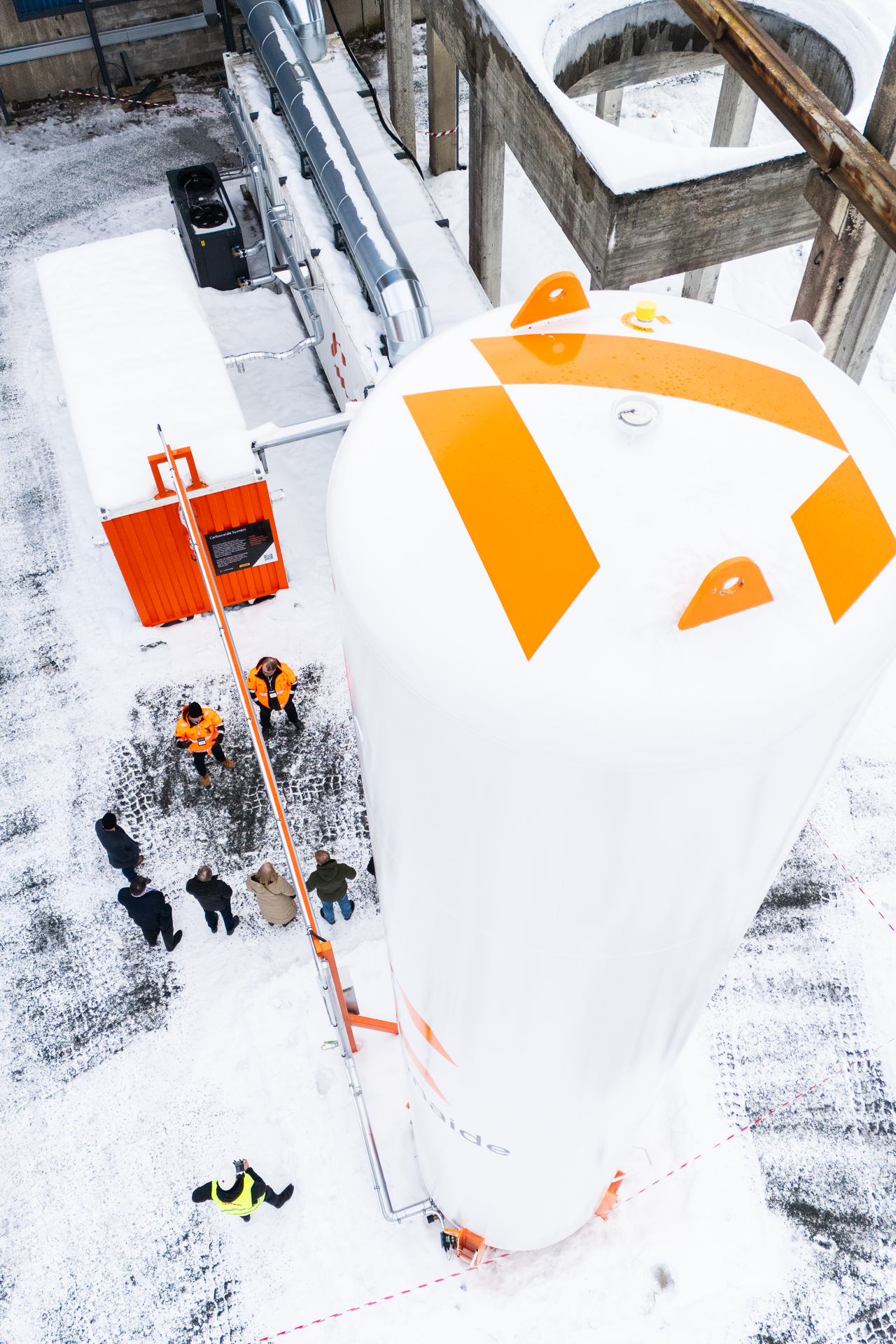
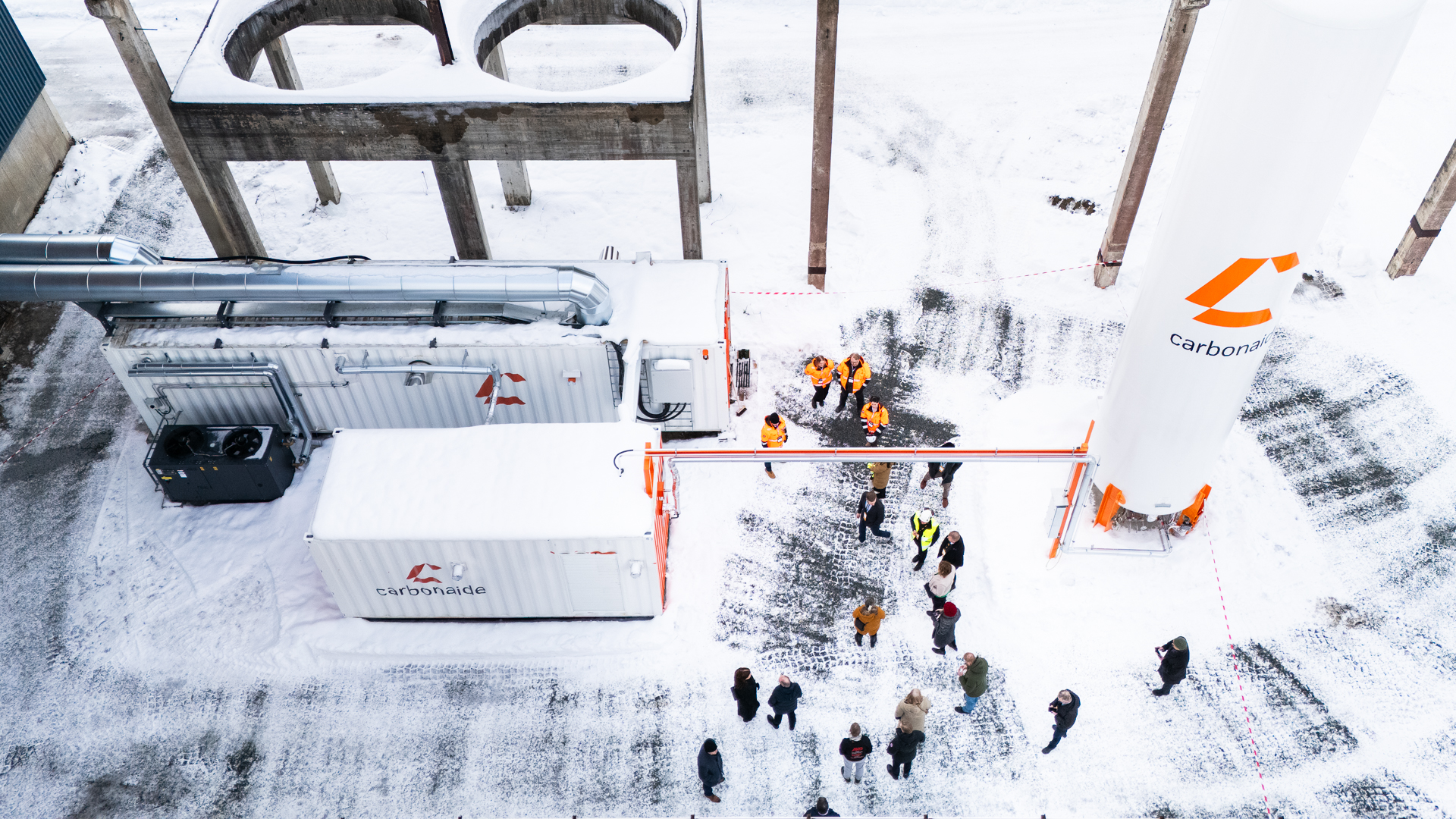
The Carbonaide CO2 Curing System is designed to integrate with new facilities or retrofit into existing curing chambers, which reduces the barrier to adoption for manufacturers who want to start building carbon performance capability without rebuilding their production lines. The system measures and documents CO2 mineralisation in real time, providing the kind of verified data that procurement specifications are beginning to require.
Waiting for procurement mandates to arrive before preparing is a risk. The manufacturers who will meet future carbon-negative requirements most confidently are those who treat the next few years as the time to build the operational capability, not the time to watch and wait.