

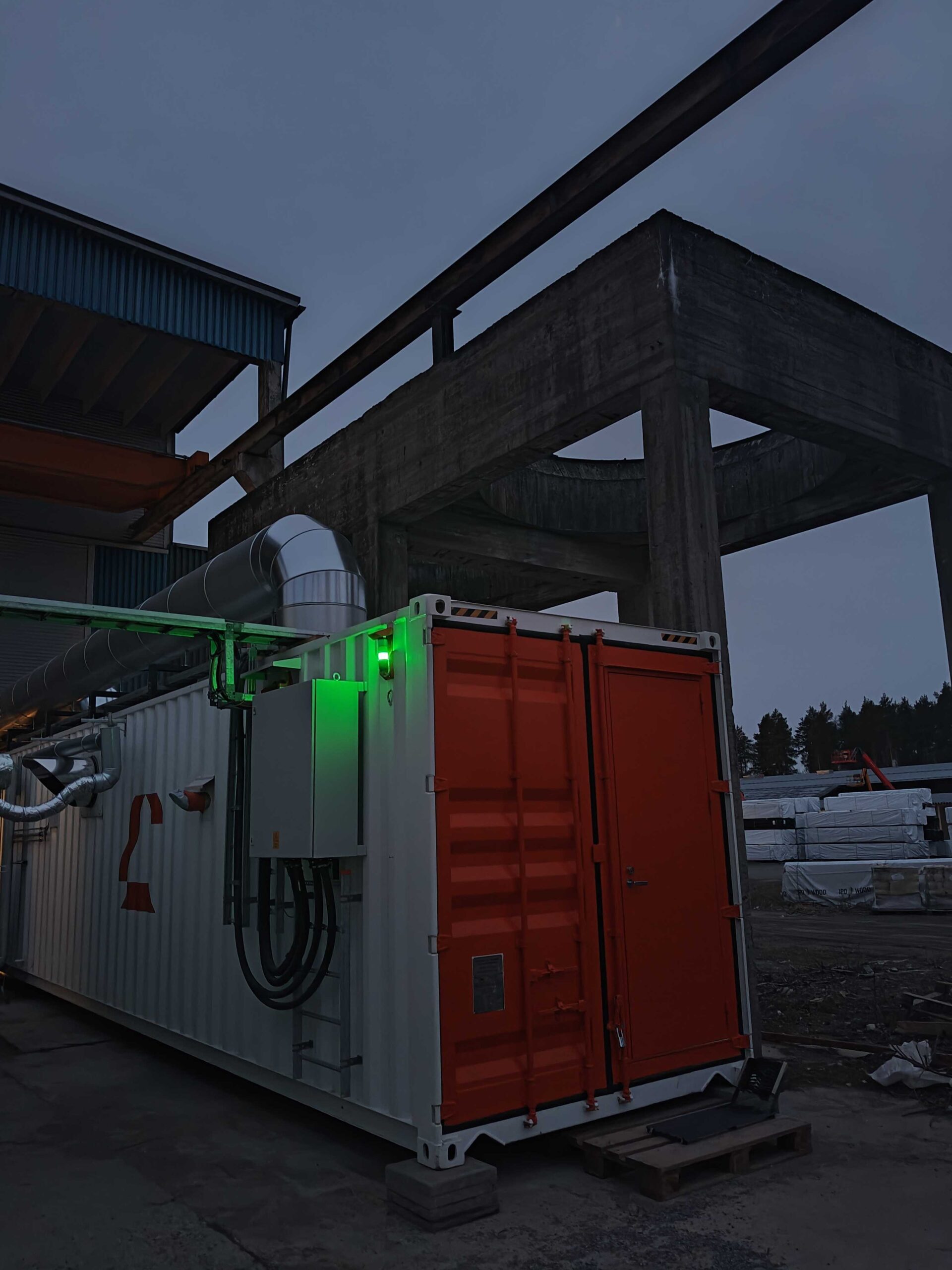
Carbon dioxide curing and CO₂ mineralization are often associated with large, greenfield concrete plants and major CAPEX decisions. In practice, this is not the case. Most concrete product factories already have the core infrastructure needed to utilize and store CO₂ through mineralization. With a well‑planned retrofit, existing curing chambers can be upgraded into a controlled carbon storage solution without changing the upstream production process.
In this blog post, I will explain what a retrofit typically involves, where the real constraints are, and when building a new curing chamber may be the more practical option.
Green concrete is not a paint job
Low-carbon concrete is sometimes treated as a label rather than a production method. Carbon dioxide curing changes this. When CO2 is introduced into fresh concrete under controlled conditions, it reacts with calcium combounds in the cement to form stable carbonates. This mineralization process results in permanent storage of CO2 inside the concrete product.
For plant directors and operations managers, this means green concrete is not theoretical. It is an operational upgrade with measurable results.
From a technical perspective, this approach offers three clear benefits:
Concrete can store globally meaningful amounts of CO2
Concrete is produced in very large volumes. Even moderate CO2 uptake per unit translates into significant permanent storage at scale.
A positive and verifiable carbon footprint impact
CO2 mineralization can be measured, monitored, and reported per production batch. This supports emission reductions and carbon credit management based on production data.
Proven technology that can be retrofitted
Carbon dioxide curing systems by Carbonaide are based on well‑understood reactions and industrial equipment. These solutions are designed for industrial use and can be integrated into existing curing chambers.
Retrofitting existing concrete curing chambers
In most cases, existing concrete factories can be retrofitted for carbon dioxide curing. The retrofit is mainly limited to the curing chamber area and does not affect casting, reinforcement, or material handling upstream.
Typical characteristics of a retrofit project include:
No changes to the production process outside the curing chamber
Mold filling, compaction, and demolding remain unchanged. The CO2 curing system operates entirely inside the curing chamber. This allows the production of standard products (without CO2 treatment) to continue during commissioning, startup, and testing of the carbon dioxide curing system.
Small external footprint
Equipment outside the curing chamber, such as CO2 flow management and gas units, requires limited space. In practice, this fits well within existing factory layouts, where material handling already dominates space use.
Minimal automation changes
Factory automation typically requires only minor updates. The Carbonaide HMI controls the carbonation process and integrates with existing systems without disrupting production logic.
Full production data control
The Carbonaide Service Platform ties recipes, process parameters and measured data to each individual production batch and rack. This provides traceability for quality control, reporting, and continuous optimization of the mineralization process.
Other practical considerations for CO2 retrofit projects
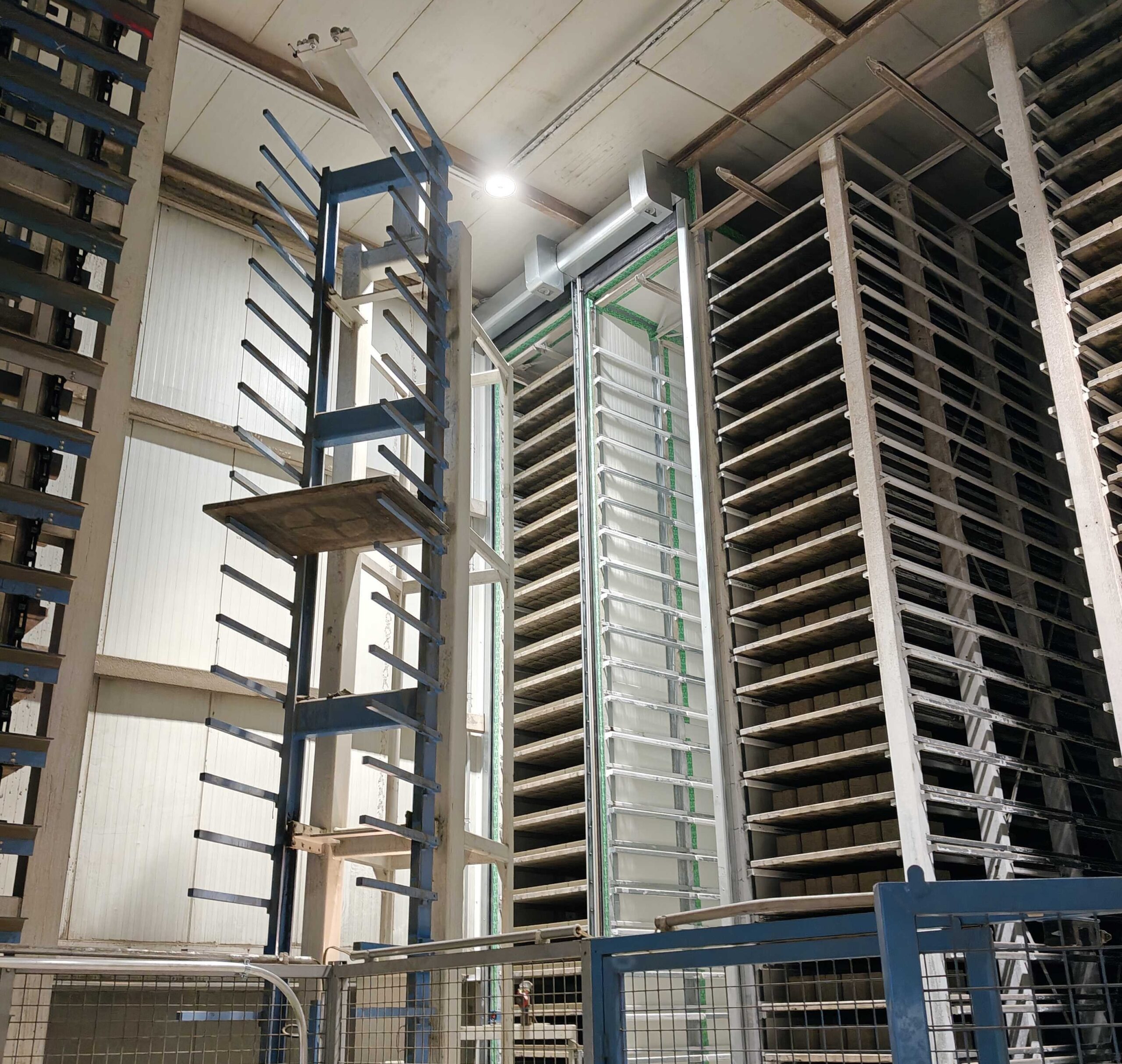
Based on my own experience from curing system installations, one common physical constraint in retrofit projects is the space available around and between existing curing racks. Gas‑tight compartmentalization requires sufficient room for sealing, partitioning, and controlled airflow paths.
In most cases, this can be addressed with lightweight structures, sealing solutions, and careful airflow design. These measures are well understood and routinely applied in industrial environments, but they should be assessed early in the project to avoid late design changes.
Sufficient space is also required above or in front of the curing chamber door to accommodate the machinery for a gas‑tight lifting door.
For efficient operation, the installation should be designed so that the process gas ducting is kept short and as straight as possible. The same applies to the supply lines of liquid and gaseous CO2. Compact layouts improve system efficiency and simplify maintenance when key components are close to each other.
Retrofit vs. new curing chambers
Retrofitting an existing curing chamber is usually the preferred option. It minimizes disruption, limits investment size, and makes use of existing infrastructure. However, there are situations where building a new curing chamber may be more feasible.
The choice between a retrofit and a new curing chamber is therefore a technical and economic decision based on building condition, layout, and long‑term reliability, not on the feasibility of CO2 curing itself.
Reasons why I would consider a new chamber as an option:
End of lifecycle of the existing building shell
If the existing curing chamber structure is nearing the end of its service life, achieving reliable gas‑tightness can be complex and costly. In these cases, rebuilding the chamber can be the simpler and more robust solution.
Requirement for gas‑tight design from the start
New curing chambers can be designed specifically for carbon dioxide curing, with defined sealing, controlled airflow, and predictable gas distribution. This decreases the need for manual work during the project.
Use of well‑proven construction methods
New chambers can be built using prefabricated steel–insulation–steel elements or concrete structures with insulation layers on the outside walls of the chamber array. These are standard construction methods with known performance.
Reuse of existing racks
Existing curing racks can often be reused with minor modifications, keeping investment and installation time under control.
What this means for the concrete industry
Carbon dioxide curing and CO2 mineralization are not limited to new factories. Most existing concrete product plants can utilize and store CO2 with modest retrofits based on well‑proven construction techniques.
To summarize, here are my main conclusions from working with CO2 system installations and ramp-ups during the past months:
- Existing concrete factories can take advantage of CO2 mineralization
- Retrofit projects are limited in scope and technically manageable
- Green concrete based on permanent CO2 storage is available today
Carbon dioxide curing is not waiting for new factories. It fits into current production environments and delivers measurable results now.

About Carbonaide
Carbonaide makes carbon-negative concrete economically viable. With the Carbonaide CO₂ solution, concrete manufacturers can utilise carbon dioxide to improve their products and store carbon permanently.