
Before adopting carbon mineralization, concrete manufacturers need to gather data across four main areas: mix design composition, current curing process parameters, CO₂ supply availability, and baseline carbon footprint figures. This production data determines whether a facility is technically compatible with CO₂ curing, how the system should be sized, and what emission reductions are realistically achievable. The sections below walk through each data category in detail.
What concrete mix data matters most for CO₂ curing compatibility?
The most important concrete mix data for CO₂ curing compatibility is the cement content and binder composition of each product type. Carbon dioxide reacts with calcium compounds in the binder during curing, so the type and quantity of cementitious material directly determine how much CO₂ can be mineralized and how the process will affect product performance.
Manufacturers should document the following mix parameters for each product in their portfolio:
- Total cement content per cubic metre, broken down by cement type
- The presence and proportion of Supplementary Cementitious Materials (SCMs) such as slag or fly ash
- Water-to-binder ratio
- Admixture types in use, particularly plasticizers and any accelerators
- Aggregate type and grading
Binder composition is especially relevant because different materials respond differently to CO₂ exposure. Slag, for example, can be activated by CO₂ and may allow significant cement replacement. Products that already use SCMs as partial binders often present strong starting points for carbon dioxide curing, since the process can extend the range of usable alternative binders further. Products with very low cement content, on the other hand, may require closer evaluation to confirm that CO₂ mineralization rates will be meaningful.
Documenting the full mix design for each product type, rather than working from averages, gives a much clearer picture of compatibility across a production line.
How does current curing process data affect the transition to carbon mineralization?
Current curing process data affects the transition to carbon mineralization because the CO₂ curing system integrates directly into existing curing infrastructure. The physical characteristics of the curing chambers, the temperature and humidity profiles used, and the timing of the curing cycle all determine how the Carbonaide CO₂ Curing System would be configured and what modifications the chambers may require.
Relevant curing process data to collect includes:
- Chamber dimensions and the number of chambers in operation
- Whether chambers are already enclosed and gas-tight, or require modification
- Standard curing temperatures and humidity levels by product type
- Duration of the curing cycle from casting to demoulding
- Current energy inputs for heating or steam curing
Curing chamber sealing is a practical factor that often comes up early in readiness assessments. CO₂ curing requires a controlled atmosphere, so chambers that are currently open or only partially enclosed will need modification before the process can run effectively. Knowing the current state of the chambers in advance allows the integration work to be planned accurately.
Curing cycle timing also matters because CO₂ curing can shorten the time needed to reach demoulding strength. Manufacturers who understand their current cycle durations are better positioned to evaluate how production throughput might change after adoption.
What CO₂ source and supply data is required before starting?
Before starting carbon mineralization, manufacturers need to establish whether a reliable CO₂ supply is available near the facility and at what purity, volume, and delivery format. CO₂ curing requires a consistent supply of carbon dioxide in sufficient quantities to maintain the mineralization process across curing cycles, so supply logistics are a practical prerequisite alongside the technical readiness of the facility itself.
The key supply data points to gather are:
- Proximity to industrial CO₂ sources or existing gas supply infrastructure
- Available CO₂ purity grades from local suppliers
- Typical delivery volumes and frequency options
- On-site storage capacity and whether a dedicated CO₂ tank can be accommodated
- Whether liquid CO₂ delivery or pipeline supply is feasible at the site
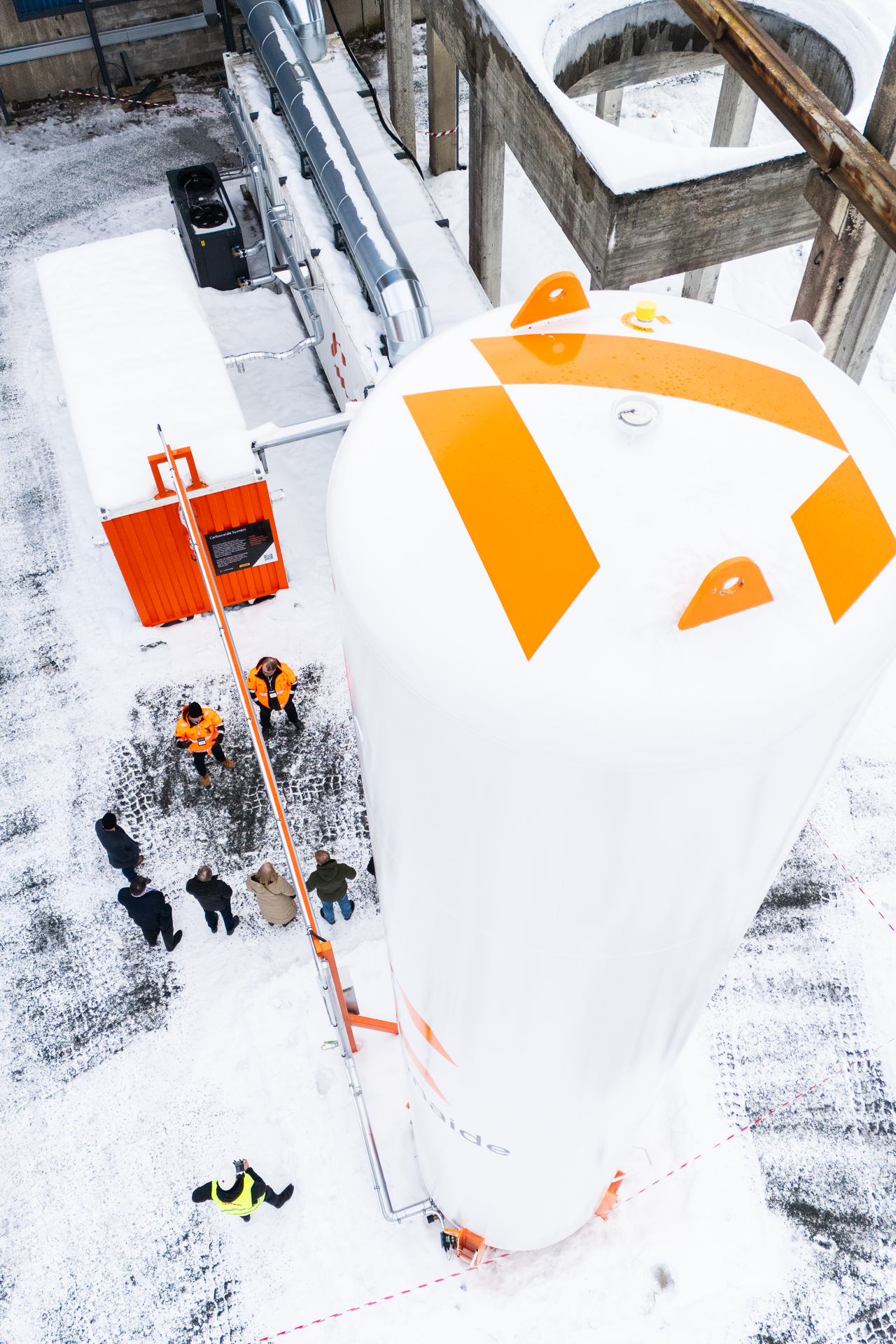
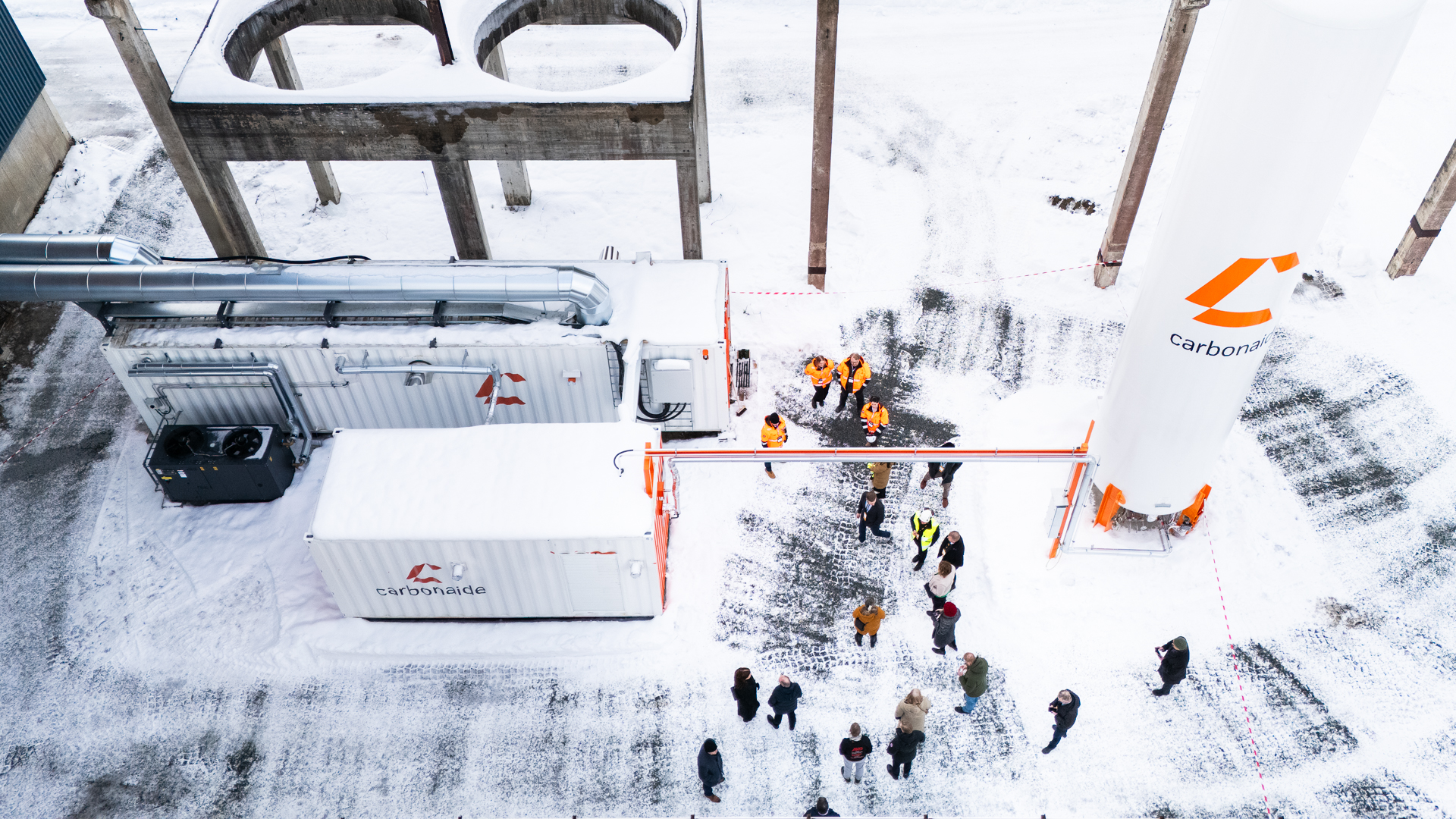
CO₂ for curing is typically stored in liquid form in a tank located outside the curing chamber, with a vaporizer converting it to gas before introduction to the chamber. Manufacturers that already handle industrial gases on site will find this step more straightforward. For those without existing gas infrastructure, understanding local supply options early prevents delays later in the adoption process.
The origin of the CO₂ also has implications for carbon accounting. Using captured industrial CO₂ rather than newly produced CO₂ strengthens the environmental case and supports carbon credit verification. Documenting the intended CO₂ source from the outset makes later reporting and certification more straightforward.
Which production volume metrics determine system sizing?
Production volume metrics that determine system sizing include the total volume of concrete produced per day, the number of curing chamber cycles run, and the proportion of the product range that will go through CO₂ curing. These figures directly influence the capacity of the CO₂ supply system, the process module specifications, and the software configuration needed to manage CO₂ flow across the operation.
Manufacturers should document:
- Daily and annual production volume in cubic metres
- Number of curing cycles per chamber per day
- Average batch size per cycle
- The share of production that will initially be converted to CO₂ curing
- Expected production growth over the coming years
System sizing is not only about meeting current demand. A facility planning to scale production or expand its product range will benefit from sizing the CO₂ system with headroom built in. Undersizing the system creates constraints that limit the volume of CO₂ that can be mineralized per day, which in turn limits both the production benefits and the carbon storage outcomes.
Volume data also feeds directly into return-on-investment calculations. Cement savings per cubic metre, combined with total production volume, translate into concrete financial figures that help manufacturers evaluate the business case before committing to the investment.
What carbon footprint baseline data should manufacturers capture first?
The carbon footprint baseline data manufacturers should capture first is the current CO₂ emissions per cubic metre of concrete produced, broken down by raw material inputs, energy use, and transport. This baseline is the reference point against which all future emission reductions from carbon dioxide curing will be measured, and it is also required for credible Environmental Product Declarations (EPDs) and carbon credit certification.
A useful baseline dataset includes:
- Emissions factor for each cement type used, sourced from supplier declarations or industry databases
- Total cement consumption per product type and per production period
- Energy consumption for curing, including steam or electric heating
- Transport-related emissions for key raw materials where data is available
- Any existing EPD data for current products
Cement is typically the dominant source of emissions in precast concrete production, so accurate cement consumption records are the most important starting point. Manufacturers who already track cement use by product type are well placed to construct a meaningful baseline quickly. Those who track only aggregate totals will need to add product-level granularity to their data collection.
Capturing this baseline before adoption also creates a clean before-and-after comparison. This matters not just for internal reporting but for external verification. Carbon credit certification requires documented evidence that the mineralized CO₂ represents genuine additional storage beyond what would have occurred without the process.
How do manufacturers use this data to evaluate readiness for carbon mineralization?
Manufacturers use production data to evaluate readiness for carbon mineralization by mapping their current operations against the technical and logistical requirements of CO₂ curing. The data gathered across mix design, curing infrastructure, CO₂ supply, production volumes, and carbon footprint baselines gives a structured picture of where a facility stands and what steps are needed before adoption.
A practical readiness evaluation typically works through the following questions:
- Do the product mix designs contain sufficient calcium-bearing binder material to support meaningful CO₂ mineralization?
- Are the curing chambers enclosed or adaptable to create a controlled CO₂ atmosphere?
- Is a reliable CO₂ supply available locally at the required purity and volume?
- Is production volume sufficient to justify the investment in a CO₂ curing system, based on projected cement savings and carbon storage revenues?
- Is baseline carbon footprint data documented in enough detail to support future EPD updates and carbon credit verification?
Not every facility will be fully ready across all five areas from the outset. In practice, the data collection process often reveals specific gaps, such as chambers that need sealing work or product lines where cement content is lower than expected, that can be addressed before system installation begins. Identifying these gaps early avoids delays during commissioning.
The Carbonaide CO₂ Curing System and Carbonaide Service Platform are designed to integrate with existing precast production environments, so the readiness evaluation is not a pass-or-fail exercise. It is a planning tool that helps manufacturers sequence the steps toward adoption in a practical order. Facilities with strong data across all five areas can move quickly. Those with gaps in one or two areas can use the assessment to prioritize what to address first.
Gathering this data before any commercial conversations also puts manufacturers in a stronger position when discussing system sizing, expected returns, and carbon credit potential with technology providers. The more complete the production data, the more accurate the projections on both sides of the investment decision.