
Concrete manufacturers can balance sustainability targets with production efficiency by adopting processes that deliver both outcomes simultaneously, rather than trading one off against the other. Carbon dioxide curing is one such process: it reduces cement content, shortens curing time, and permanently stores CO₂ in the concrete product in a single production step. The sections below address the most common questions manufacturers raise when evaluating this approach.
Why do sustainability and production efficiency seem like opposites?
Sustainability and production efficiency appear to conflict because most emission reduction measures ask manufacturers to change something that already works: swap a proven material, slow a process, or add a step that costs time and money. When the only tools available are substitution or reduction, every environmental gain feels like a production compromise.
This perception is accurate for many approaches. Replacing Portland cement with supplementary cementitious materials (SCMs) such as slag or fly ash can reduce emissions, but it may also affect early-age strength development, which in turn affects demoulding schedules and throughput. Adding a separate carbon capture step at the end of production introduces cost and complexity without improving the product itself.
The conflict dissolves when the emission reduction mechanism also improves the production process. Carbon dioxide curing works this way: CO₂ introduced during the curing phase accelerates strength development, reduces the cement content needed to meet strength requirements, and permanently mineralizes the CO₂ into the concrete structure. The environmental benefit and the production benefit come from the same action. That is why the perceived opposition between sustainability and efficiency is a real challenge with some methods, and not a law of physics.
What does a carbon footprint target actually mean for a concrete manufacturer?
A carbon footprint target for a concrete manufacturer is a defined limit on the amount of CO₂ equivalent emissions associated with producing a unit of concrete, typically expressed per cubic metre of finished product. Meeting that target requires reducing emissions from raw materials, energy use, and transport, or permanently removing CO₂ from the atmosphere through the production process itself.
In practice, the largest single lever available to a precast producer is cement content. Portland cement is the most emission-intensive input in standard concrete production. Reducing the amount of cement required per cubic metre, or replacing a portion of it with lower-emission SCMs, directly lowers the calculated carbon footprint of each product.
Targets also have a verification dimension. A carbon footprint figure only carries weight if it can be measured, documented, and reported in a format that clients, regulators, or carbon market participants will accept. This means manufacturers need not only the process to achieve lower emissions but also the data infrastructure to demonstrate it. Environmental Product Declarations (EPDs) and third-party carbon credit certification are the most common verification formats in the construction sector. A meaningful carbon footprint target therefore includes both a production goal and a reporting obligation.
How does CO₂ curing reduce emissions without slowing production?
CO₂ curing reduces emissions by lowering the cement content required in the concrete mix and by permanently mineralizing CO₂ into the concrete structure during the curing phase. It does not slow production because the CO₂ introduction happens inside the existing curing chamber during the normal curing window, and the chemical reactions involved actually accelerate strength development rather than extending it.
The mechanism works in two stages. In the first hours of curing, CO₂ reacts with calcium from the cement to form ultrafine calcium carbonate particles. These particles act as nucleation sites, giving hydration products more surfaces to grow on and accelerating early-age strength gain. Faster early strength means concrete can be demoulded sooner, which supports rather than disrupts production schedules.
In the days following initial curing, the calcium carbonates formed during the CO₂ curing phase trigger a secondary pozzolanic reaction that continues to build strength. The result is that products cured with CO₂ can meet standard strength requirements with less cement than traditionally cured equivalents, because the CO₂ compensates for the cement reduction through densification of the concrete microstructure.
The net effect on emissions comes from two directions: less cement means lower raw material emissions, and the CO₂ absorbed during curing is permanently stored as carbonate minerals rather than released into the atmosphere. Both reductions are measurable and verifiable, which matters for reporting purposes.
What production efficiency gains come with greener concrete methods?
When carbon dioxide curing is used, concrete manufacturers gain measurable production efficiency improvements alongside the emission reductions. The main gains are shorter curing times, reduced cement consumption, and the ability to use a broader range of SCMs and alternative binders that would not perform adequately under conventional curing conditions.
Shorter curing times translate directly into faster turnover of curing chamber capacity. If a chamber cycle can be shortened, more production batches move through the same equipment in the same period. This is a meaningful throughput gain for precast producers operating at or near curing chamber capacity.
Reduced cement consumption lowers material costs per cubic metre of concrete. Cement is the most expensive raw material in standard concrete production, so even a moderate reduction in required cement content produces a measurable cost saving at production scale. The saving compounds across high-volume output.
The ability to activate otherwise passive materials is a less obvious but important gain. Certain slags that are non-reactive under normal curing conditions become effective binders in the presence of CO₂. This expands the range of available raw materials and, in some cases, opens access to lower-cost or locally available inputs. For manufacturers in regions where industrial byproducts such as steel slag are available, this can represent both a cost advantage and a significant additional reduction in the carbon footprint of the finished product.
How can manufacturers verify and report their carbon reductions?
Manufacturers can verify and report carbon reductions by measuring the CO₂ absorbed during the curing process through gas flux monitoring, confirming the results with laboratory-tested control samples, and documenting the data through a certified reporting framework. The verification process covers both the emission reductions from lower cement use and the negative emissions from permanent CO₂ mineralisation.
For the emission reduction from cement savings, the pathway is straightforward: the reduction in cement content per cubic metre is documented and factored into the product’s EPD calculation. This is already a standard reporting format in the construction sector, and most precast producers are familiar with EPD requirements.
For the negative emissions from CO₂ mineralisation, the verification process is more specific. The CO₂ stored in the concrete must be quantified through gas flux measurement at the curing chamber level, and the results must be independently verified and certified. Carbonaide’s approach to this is handled through the Carbonaide Service Platform, which manages CO₂ flow data, supports carbon credit certification, and provides product-level and batch-level reporting. The platform connects with existing factory management systems where needed, reducing the administrative burden of compliance reporting.
Carbon credits generated through verified CO₂ mineralisation can either be counted as a reduction in the product’s carbon footprint or sold in voluntary carbon markets. The choice depends on the manufacturer’s commercial priorities and the structure of their client contracts.
When is the right time to integrate CO₂ curing into an existing facility?
The right time to integrate CO₂ curing into an existing facility is when the manufacturer has a defined carbon footprint target to meet, a curing chamber that can be modified or sealed, and a production volume that makes the investment economically viable. The technology is designed to retrofit existing curing chambers rather than requiring new construction, which means the timing is driven by business readiness rather than infrastructure replacement cycles.
Several practical signals indicate readiness. Client demand for verified low-carbon products is one: if procurement teams are asking for EPDs with specific footprint thresholds, or if tenders are beginning to weight environmental performance, the commercial case for investment becomes concrete. Regulatory direction is another: as carbon reporting requirements in the construction sector become more specific, manufacturers who have already built the measurement and verification infrastructure will be better positioned than those who wait.
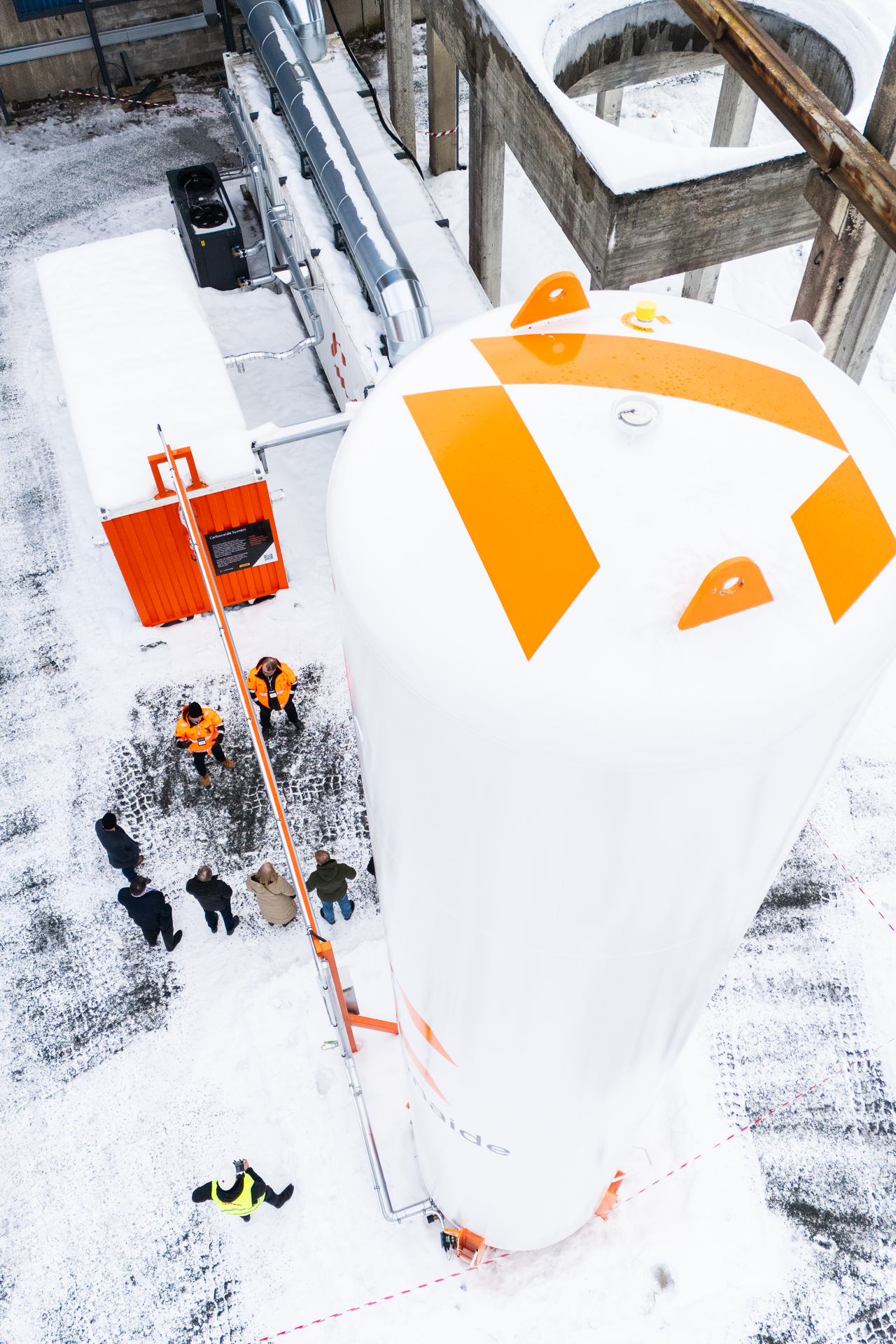
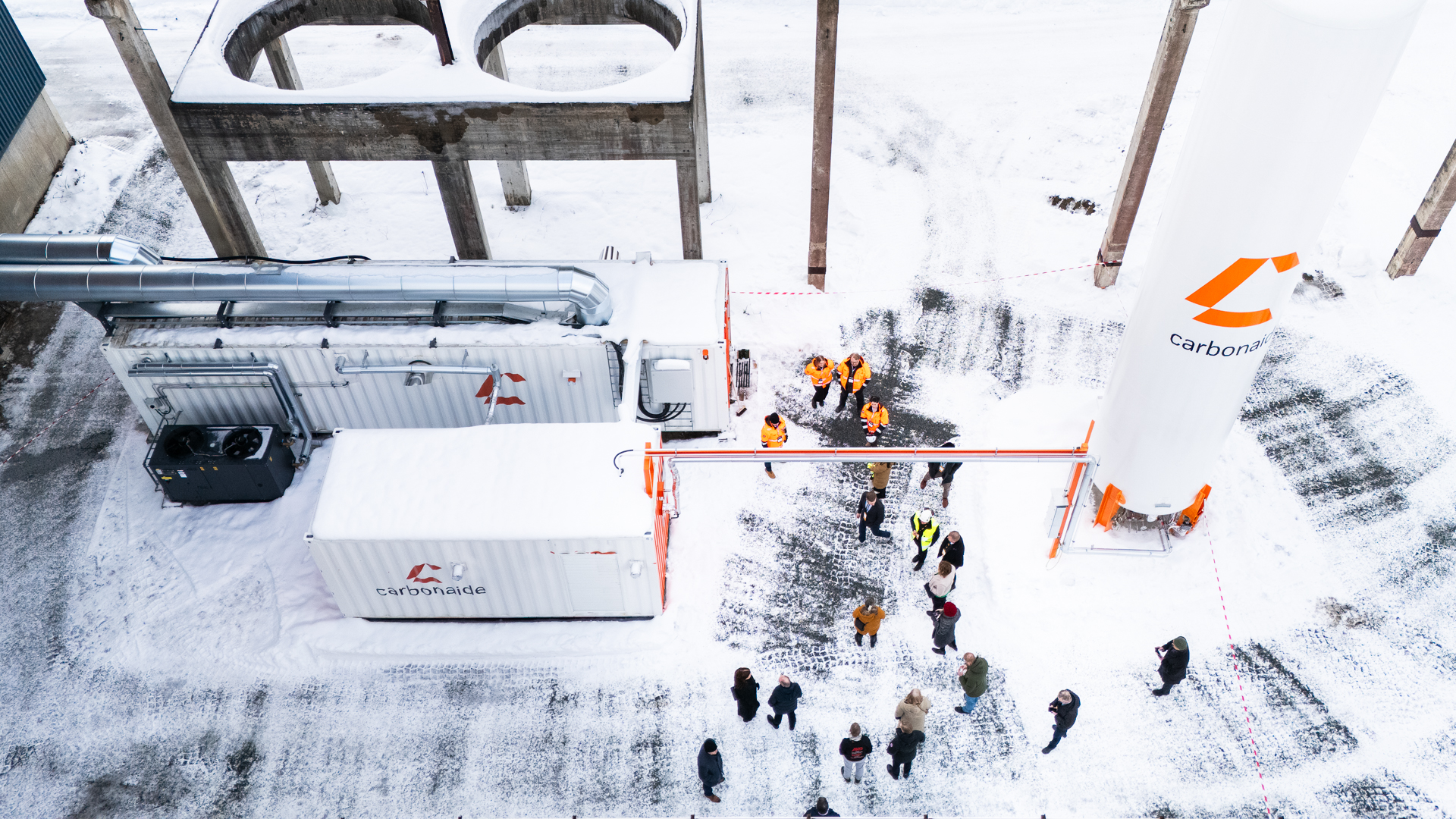
From an operational perspective, the integration process involves modifying existing curing chambers to make them gas-tight, connecting a CO₂ supply module, installing the process control hardware, and commissioning the software platform. Carbonaide supports this process from design and planning through to setup, calibration, and ongoing maintenance through Carbonaide Care. The integration does not require halting production for an extended period, and the system can be scaled as production volume grows.
Manufacturers who are planning a facility upgrade or a new curing chamber installation are in a particularly efficient position to integrate CO₂ curing from the outset, since the chamber specifications can be designed for the process rather than modified after the fact. For those with existing facilities, the retrofit path is well established and does not depend on replacing major equipment.
How Carbonaide supports manufacturers in meeting both targets
Carbonaide provides concrete manufacturers with a complete solution for carbon dioxide curing, covering hardware, software, and lifecycle support in a single offering. The core components work together to address both the production and the reporting dimensions of sustainability targets:
- Carbonaide CO₂ Curing System: Hardware for CO₂ flow management and curing chamber integration, designed for both new facilities and retrofits. The system enables cement content reduction and CO₂ mineralisation within the existing production process.
- Carbonaide Service Platform: Cloud-based software that manages CO₂ flow in real time, measures mineralised CO₂ at the chamber and product level, and supports carbon credit verification and EPD reporting. The platform reduces the administrative workload of compliance reporting.
- Carbonaide Care: Lifecycle support covering project management, setup, annual maintenance, and calibration. Available in Basic and Premium packages depending on the level of support required.
- CO₂ sourcing and carbon credit management: Where needed, Carbonaide can support CO₂ logistics through its partner network and manage carbon credit certification in collaboration with CDR partners.
The combination of these components means that concrete manufacturers do not need to coordinate separate suppliers for hardware, software, and verification. The system is designed so that the production efficiency gains and the emission reductions are measured and documented through the same infrastructure, making it straightforward to report both to clients and to carbon market participants.