
Carbon mineralization supports SCM-rich concrete mixes by activating materials that would otherwise remain chemically passive, enabling higher SCM replacement rates without sacrificing the mechanical performance that concrete manufacturers require. The CO₂ introduced during the curing phase reacts directly with calcium-bearing compounds in supplementary cementitious materials, forming stable carbonate minerals that densify the concrete matrix and compensate for the reduced cement content. The sections below address the most common questions concrete producers ask when evaluating CO₂ curing for SCM-rich mix designs.
What happens to SCMs during CO₂ curing?
During CO₂ curing, supplementary cementitious materials interact with carbon dioxide through two distinct mechanisms: direct carbonation of reactive phases and activation of otherwise passive mineral compounds. These reactions form calcium carbonate and other carbonate minerals within the concrete matrix, contributing to microstructure densification independently of the standard cement hydration pathway.
In mixes containing slag, fly ash, or calcium-rich industrial byproducts, the CO₂ introduced during curing dissolves in the pore solution and reacts with available calcium ions. This produces ultrafine carbonate precipitates that fill pore spaces and create nucleation sites for further hydration products. The result is a denser, more stable microstructure than what standard moist or steam curing typically achieves with the same SCM content.
The reaction also liberates water during carbonate-forming reactions, which remains available for continued cement hydration in the hours and days following the initial CO₂ curing period. This means the strength development of SCM-rich mixes continues after the curing chamber cycle ends, often yielding better 28-day results than early-age measurements alone would suggest.
Why do SCM-rich mixes struggle with conventional curing?
SCM-rich concrete mixes underperform in conventional curing because most supplementary cementitious materials are latently reactive: they depend on calcium hydroxide released by Portland cement hydration to trigger their own binding reactions. When SCM replacement rates are high, there is less cement present to generate that activation chemistry, which slows early strength development and can leave a significant portion of the SCM unreacted.
This limitation is most visible in the first 24 hours of production. Precast concrete manufacturers rely on early demoulding strength to maintain production schedules, and SCM-rich mixes often fail to reach the required threshold without either extended curing times or elevated temperatures. Both responses add cost and energy consumption, which partially offsets the emission reductions that motivated the SCM substitution in the first place.
Steam curing can accelerate early strength in SCM mixes, but it introduces thermal gradients, increases energy use, and can negatively affect long-term durability by disrupting the microstructure during the sensitive early hardening phase. Conventional ambient curing, on the other hand, simply does not provide enough activation energy for high-SCM mixes to develop strength at production-relevant timescales.
How does carbon mineralization reduce cement content in concrete?
Carbon mineralization reduces cement content in concrete by providing an alternative pathway for early strength development and microstructure densification that does not depend on Portland cement hydration alone. When CO₂ is introduced during curing, it reacts with calcium-bearing phases to form carbonate minerals that strengthen the concrete matrix, allowing producers to lower the cement fraction without compromising performance targets.
Three mechanisms work together to make this possible:
- Faster early hardening: CO₂ accelerates the dissolution of cement particles and provides carbonate nucleation sites, which speeds up initial strength gain. This reduces the need for excess cement that producers typically add to ensure adequate early-age strength for demoulding.
- Microstructure densification: Carbonate minerals occupy more molar volume than the hydroxide compounds they replace, filling pore spaces and creating a denser matrix. A denser matrix achieves equivalent mechanical performance with a lower binder content.
- SCM activation: CO₂ curing activates certain SCMs that are non-reactive under conventional conditions, effectively increasing the proportion of the mix that contributes to binding. This allows a higher share of the total binder to come from lower-emission materials rather than Portland cement.
The degree of cement reduction achievable depends on product-specific requirements, the SCM type used, and the curing conditions. Precast producers manufacturing elements with lower structural demands can achieve higher substitution rates than those producing heavily loaded structural components.
Can carbon mineralization make SCM concrete carbon-negative?
Yes, carbon mineralization can make SCM-rich concrete carbon-negative when the process combines substantial cement reduction with meaningful CO₂ uptake during curing. The carbon footprint of the finished product reflects both the emissions avoided by using less Portland cement and the CO₂ permanently stored as carbonate minerals within the concrete structure.
Portland cement production is the dominant source of emissions in conventional concrete manufacturing. Replacing a significant portion of cement with slag or other SCMs reduces the embodied carbon of the raw material inputs considerably. When CO₂ curing is applied on top of that reduced-cement mix, the process mineralizes additional CO₂ into the concrete, converting it from a gas that would otherwise enter the atmosphere into a stable solid carbonate compound.
The combination of these two effects, fewer emissions from raw materials and permanent CO₂ storage in the product, can shift the calculated carbon footprint of the concrete from positive to negative. Mixes that pair CO₂ curing with high slag content represent the most favorable conditions for achieving carbon-negative outcomes, because slag carries lower embodied emissions than Portland cement and responds well to carbonation chemistry.
It is worth noting that carbon-negative status depends on the full production system: the source of the CO₂ used, the energy consumed during curing, and the specific mix design all factor into the final calculation. Verification of carbon storage through measurement and certification is necessary to substantiate carbon-negative claims in product declarations or carbon credit applications.
What types of SCMs work best with CO₂ curing?
Calcium-rich SCMs respond most effectively to CO₂ curing because the carbonation reactions that drive microstructure densification and activation depend on the availability of calcium ions. Ground granulated blast furnace slag is the most widely studied and practically relevant SCM for CO₂ curing applications, particularly in precast concrete production.
Slag performs well for several reasons. It contains significant amounts of calcium silicate phases that react with CO₂ to form stable carbonate minerals. It also contains gamma-dicalcium silicate, a compound that is non-reactive under conventional curing conditions but becomes an effective binder when CO₂ is present. This means CO₂ curing can unlock binding capacity in slag fractions that would otherwise contribute nothing to concrete strength.
Other calcium-bearing industrial byproducts with similar mineralogy, such as certain steel and iron process residues, show comparable behavior. The key factor is calcium content and the presence of mineral phases that are thermodynamically favorable for carbonation reactions under the temperature and pressure conditions of the curing process.
Fly ash behaves differently. Class C fly ash, which contains more calcium, responds better to CO₂ curing than Class F fly ash, which is predominantly siliceous. Silica fume and natural pozzolans contribute less to carbonation reactions directly, though they still benefit from the improved early-age conditions that CO₂ curing creates in the broader mix.
How is CO₂ uptake measured and verified in mineralized concrete?
CO₂ uptake in mineralized concrete is measured through gas flux monitoring during the curing process, which tracks the difference between CO₂ introduced into the curing chamber and CO₂ remaining in the chamber atmosphere after the curing cycle. The difference represents the CO₂ that has been absorbed and mineralized into the concrete. Laboratory analysis of control samples confirms the accuracy of these process measurements.
Accurate measurement is important for two reasons. First, it provides the data needed to optimize the curing process and ensure consistent CO₂ uptake across production batches. Second, it generates the documentation required for carbon reporting in environmental product declarations and for carbon credit certification in voluntary carbon markets.
Verification of permanent storage requires demonstrating that the CO₂ has been converted into stable carbonate minerals rather than simply absorbed into pore water. Analytical techniques used in laboratory confirmation include thermogravimetric analysis and X-ray diffraction, which identify the specific carbonate compounds formed and confirm their stability.
The Carbonaide Service Platform manages this measurement and documentation process as part of the CO₂ curing operation. The platform records CO₂ flow data in real time, generates batch-level carbon storage reports, and supports the certification workflows required for carbon credit issuance. Independent certification under recognized standards, such as Isometric’s module for CO₂ storage via carbonation in the built environment, provides third-party verification of the stored amounts, which is necessary for claims to be credible in both commercial and regulatory contexts.
How Carbonaide supports CO₂ curing for SCM-rich mixes
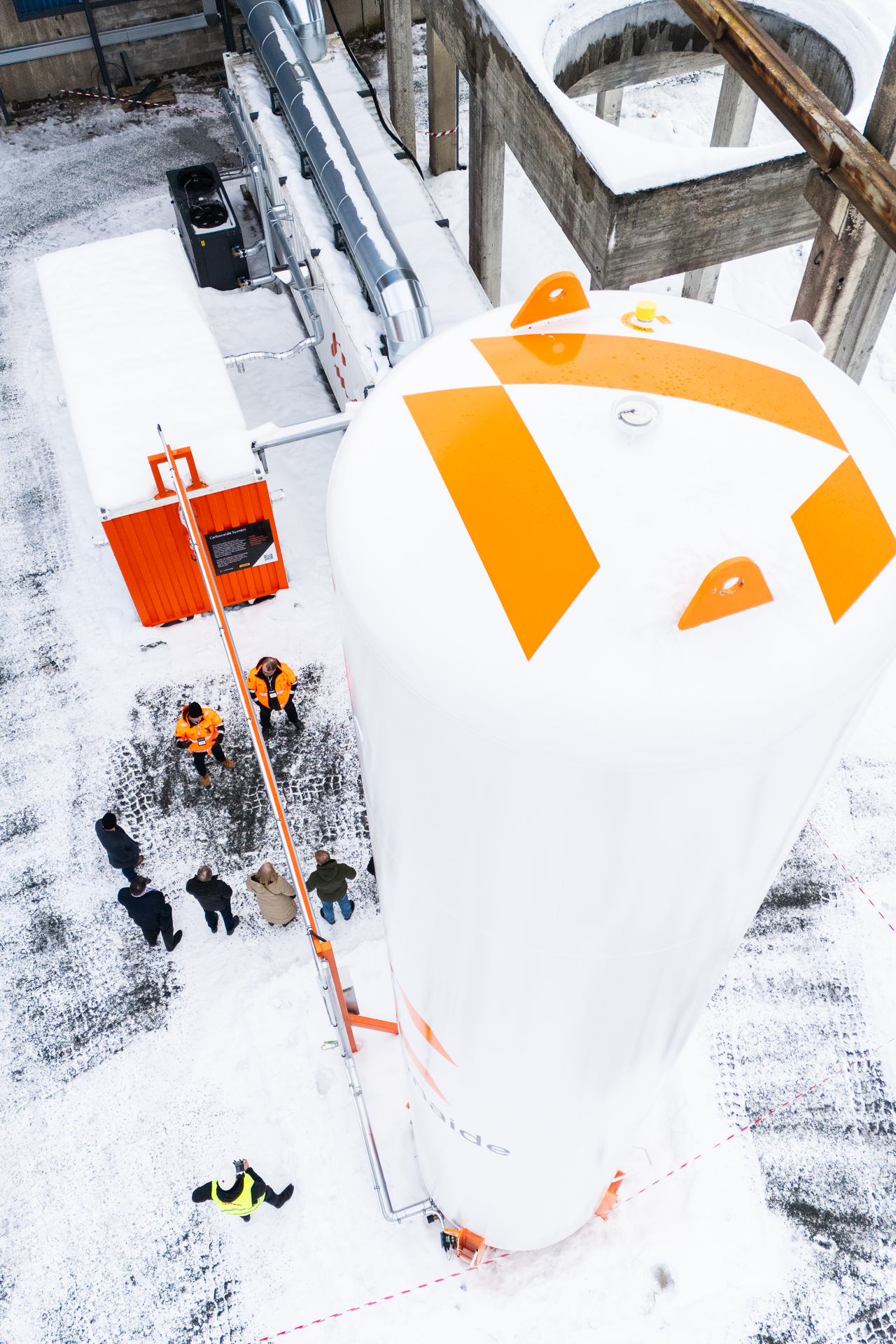
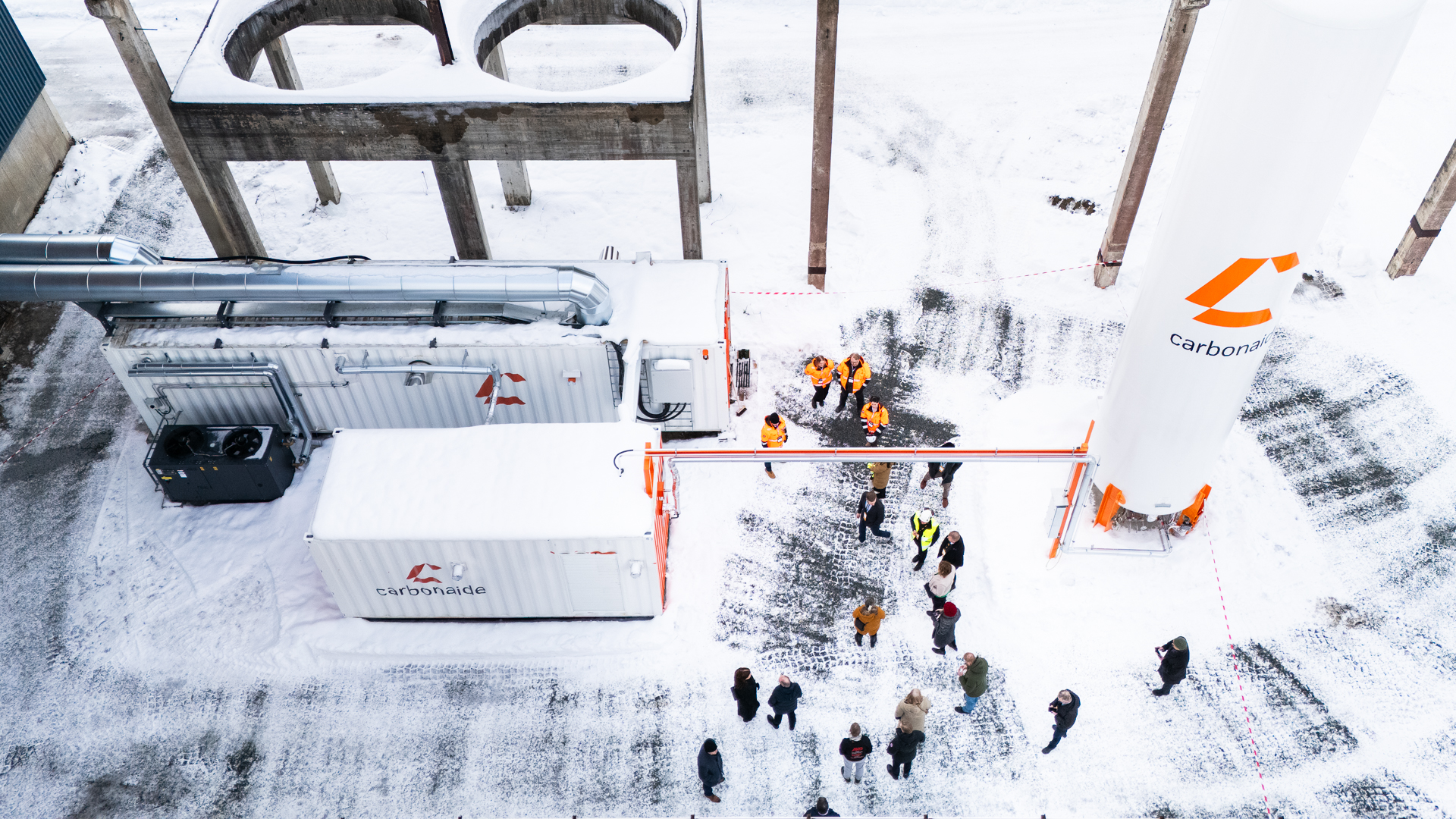
Carbonaide provides concrete manufacturers with the hardware, software, and support needed to implement CO₂ curing for SCM-rich mix designs at production scale. The solution is designed for precast concrete facilities and can be integrated into new curing chambers or retrofitted into existing ones.
- Carbonaide CO₂ Curing System: Delivers precise CO₂ flow management within the curing chamber, creating the controlled atmosphere that SCM-rich mixes need for consistent carbonation and early strength development.
- Carbonaide Service Platform: Monitors and optimizes CO₂ uptake in real time, generates the carbon storage data needed for environmental product declarations, and supports carbon credit certification for permanently mineralized CO₂.
- Carbonaide Care: Provides lifecycle support from initial setup and calibration through ongoing maintenance, ensuring reliable operation across production cycles.
For concrete producers working with slag-rich or high-SCM mix designs, the Carbonaide system offers a path to reduce cement content, improve early-age strength development, and generate verified carbon storage data, all within the existing production workflow.