
Carbon storage verification in concrete relies on direct gas flux measurement combined with independent third-party certification. Sensors monitor how much CO₂ enters the curing chamber and how much remains after the mineralization process, with the difference representing the CO₂ permanently bound into the concrete structure as carbonate minerals. The following sections address the most common questions about how this verification process works, from measurement methods to carbon credit issuance.
How is CO₂ permanently stored inside concrete confirmed?
CO₂ storage in concrete is confirmed through gas flux measurement during the curing process. Sensors track the volume of carbon dioxide introduced into a sealed curing chamber and the volume that exits, allowing the system to calculate how much CO₂ has been mineralized into the concrete. Laboratory-tested control samples independently validate the accuracy of these measurements.
The underlying chemistry makes this measurable and verifiable. During carbon dioxide curing, CO₂ reacts with calcium ions released from cement and supplementary cementitious materials to form stable carbonate minerals, primarily calcium carbonate. These carbonates become part of the concrete’s microstructure. Because the reaction takes place in a gas-tight curing chamber under controlled conditions, the amount of CO₂ consumed by the mineralization process can be tracked with precision.
Control samples taken from production batches are tested in the laboratory to confirm that the software-calculated values align with physical measurements of carbonate content in the hardened concrete. This dual approach, combining real-time process data with physical sample analysis, gives concrete manufacturers a robust and defensible record of how much CO₂ has been stored in each production batch.
What standards and protocols govern carbon storage measurement in concrete?
Carbon storage measurement in concrete is governed by emerging but increasingly formalized protocols within the carbon removal and carbon market sectors. The most relevant frameworks focus on quantification methodology, additionality, and permanence, as these are the three properties that distinguish genuine carbon dioxide removal from other emission reduction claims.
Additionality is a core requirement: the CO₂ mineralization process must go beyond what existing regulations or standard practice require. Because carbon dioxide curing is not mandated by any current policy or building code, projects that store CO₂ in concrete through this method can demonstrate genuine additionality. This is important for participation in voluntary carbon markets, where buyers expect proof that the stored carbon would not have been removed from the atmosphere under a business-as-usual scenario.
Permanence standards require that stored CO₂ remains bound for a defined period, typically measured in centuries. Carbonate minerals formed during CO₂ mineralization are chemically stable and do not revert to gaseous CO₂ under normal environmental conditions, including concrete demolition and recycling. This characteristic allows CO₂ stored in concrete to meet the permanence thresholds required by rigorous carbon removal certification bodies.
Quantification protocols specify how the stored CO₂ is measured, reported, and audited. Gas flux measurement during curing, combined with laboratory verification of control samples, forms the measurement foundation. Certification bodies then apply their own audit procedures on top of this process data.
How do carbon credits get issued for concrete CO₂ storage?
Carbon credits for CO₂ stored in concrete are issued through independent certification bodies that audit the measurement data, verify additionality and permanence, and issue durable carbon dioxide removal credits. The credits represent a verified quantity of CO₂ that has been permanently mineralized into concrete and will not return to the atmosphere.
The certification process typically involves several steps:
- Process data from the curing operation, including gas flux measurements and production records, is submitted to the certifying body.
- The certifier audits the data against its methodology, checking that measurement protocols were followed and that the claimed CO₂ quantities are plausible given the production parameters.
- Laboratory sample results are reviewed to confirm alignment with process data.
- Once verified, the certifier issues durable carbon dioxide removal credits corresponding to the confirmed stored volume.
Carbonaide’s CO₂ mineralization projects are certified under Isometric’s module for CO₂ storage via carbonation in the built environment, which is one of the more rigorous certification frameworks currently available for this category of carbon removal. Credits issued under this framework are classified as durable CDR credits, distinguishing them from shorter-lived or less verifiable offset types.
Concrete manufacturers that store CO₂ through the mineralization process can use these credits in two ways: they can count the stored carbon as a reduction in the product’s declared carbon footprint, or they can sell the credits to third parties in voluntary carbon markets.
What’s the difference between carbon storage in concrete and carbon offsetting?
Carbon storage in concrete through mineralization is a form of carbon dioxide removal, where CO₂ is physically extracted from a gas stream and permanently bound into a solid material. Carbon offsetting, by contrast, typically refers to funding activities elsewhere that avoid or reduce emissions, such as protecting a forest or installing renewable energy, without physically removing CO₂ from the atmosphere.
The distinction matters because offsetting does not reduce the total amount of CO₂ in the atmosphere: it compensates for emissions in one place by preventing emissions elsewhere. Carbon dioxide removal through mineralization actually takes CO₂ that would otherwise remain in the atmosphere and converts it into a stable solid form that persists for well over a thousand years.
For buyers of carbon credits, this difference is significant. Regulators, corporate sustainability frameworks, and carbon market standards are increasingly distinguishing between avoidance-based offsets and genuine removal credits. Durable CDR credits, such as those generated by CO₂ mineralization in concrete, are considered more credible for net-zero claims because they address the stock of atmospheric CO₂ rather than merely slowing its growth.
Concrete manufacturers that participate in CO₂ mineralization can position their products not as carbon-neutral through offsetting, but as carbon-negative through physical removal, which is a materially different and more defensible environmental claim.
Who verifies the carbon footprint claims of CO₂-cured concrete products?
Carbon footprint claims for CO₂-cured concrete products are verified by independent third-party certification bodies that audit both the process data and the underlying measurement methodology. No manufacturer can self-certify carbon storage claims for the purposes of carbon credit issuance or verified environmental product declarations.
Verification operates at two levels. At the product level, Environmental Product Declarations provide a standardized format for reporting the carbon footprint of construction materials. These declarations draw on measured data from the production process and are audited by accredited verifiers. CO₂ stored through mineralization can be included in EPD calculations, reducing or eliminating the declared carbon footprint of the concrete product.
At the carbon credit level, certification bodies such as Isometric apply their own methodologies and audit procedures to verify that the claimed CO₂ removal is real, additional, and permanent. This independent verification step is what allows the credits to be traded in voluntary carbon markets and used for corporate climate commitments.
The Carbonaide Service Platform supports this verification process by centralizing all process data, carbon storage records, and certification documentation in one place, reducing the administrative burden on concrete manufacturers while ensuring that the data submitted to certifiers is complete and traceable.
Can CO₂ stored in concrete ever leak back into the atmosphere?
CO₂ stored in concrete through mineralization does not leak back into the atmosphere. The mineralization process converts gaseous CO₂ into solid carbonate minerals, primarily calcium carbonate, which are chemically stable under all conditions encountered during the normal life of a concrete product, including demolition and recycling.
This is a meaningful distinction from other forms of carbon storage. Biological storage methods, such as forests or soil carbon, are subject to reversal through fire, disease, land use change, or decomposition. Carbonate minerals formed during CO₂ curing do not decompose, burn, or revert to gaseous CO₂ under ambient conditions. The storage is therefore classified as permanent, with a timeframe exceeding a thousand years.
Even when concrete products reach the end of their service life and are demolished, the carbonate minerals remain stable. Crushed concrete retains its carbonated structure, and the CO₂ does not re-enter the atmosphere during crushing, processing, or reuse as aggregate. This permanence is one of the properties that certification bodies examine when issuing durable CDR credits for CO₂ stored in concrete, and it is a key reason why mineralization-based carbon removal is treated differently from offset-based approaches in emerging carbon market regulations.
How Carbonaide supports carbon storage verification
Carbonaide provides concrete manufacturers with the measurement infrastructure, software, and certification support needed to verify and report CO₂ storage accurately. The solution addresses the full verification chain, from real-time process measurement to independent certification.
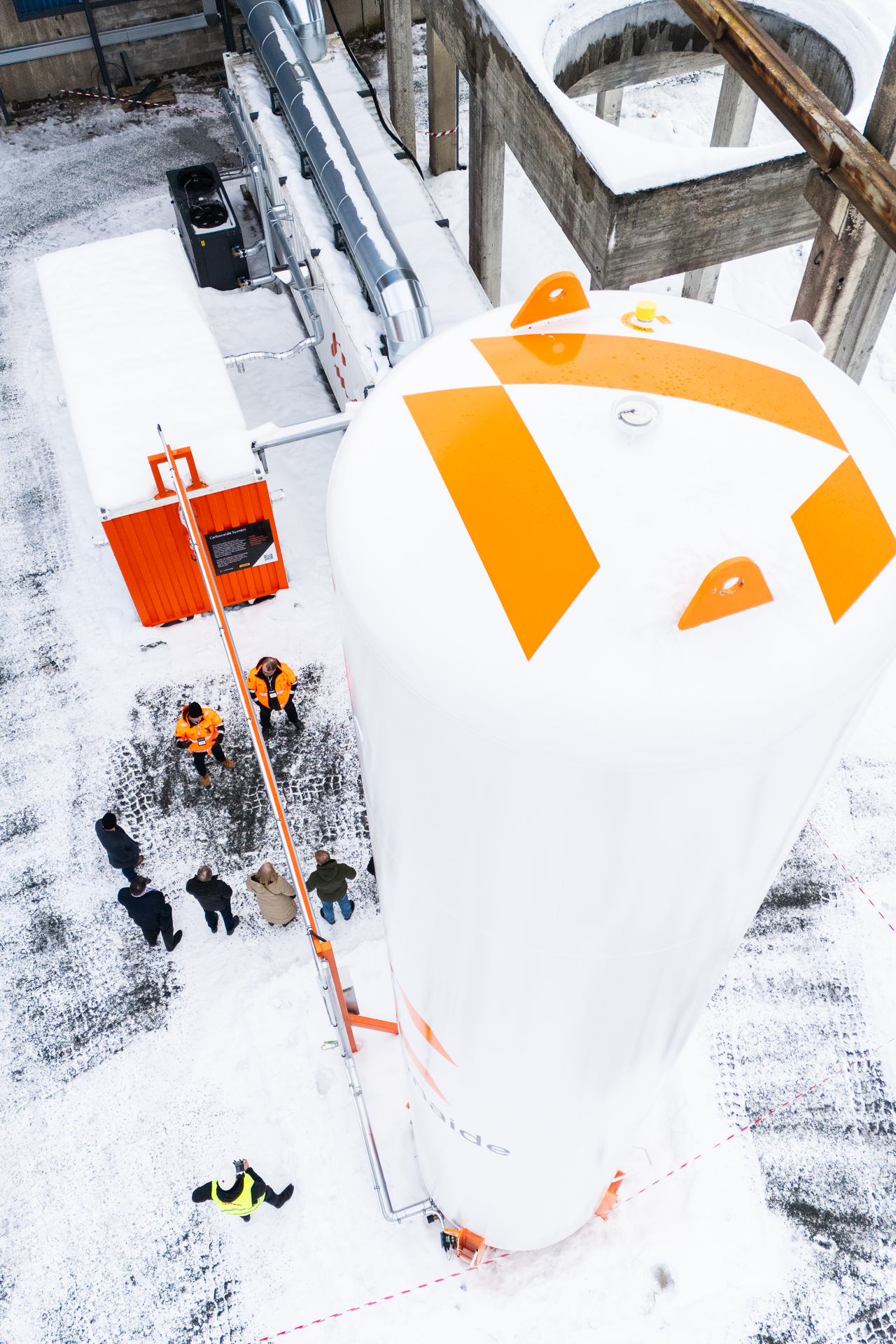
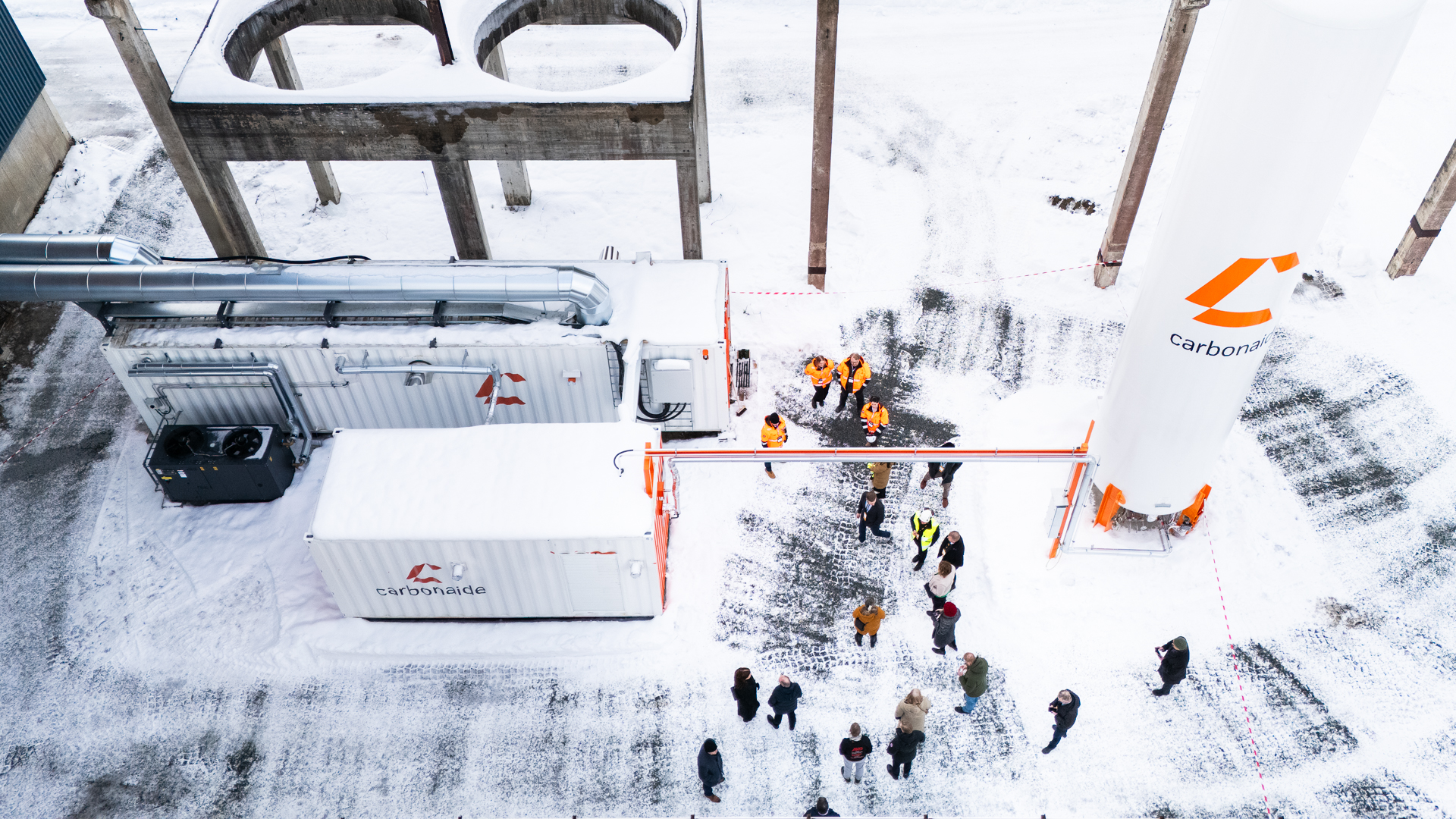
- Gas flux measurement: The Carbonaide CO₂ Curing System includes a process module with precision instrumentation that quantifies how much CO₂ is mineralized during each curing cycle.
- Software-based data management: The Carbonaide Service Platform centralizes all carbon storage data, supports compliance with carbon market regulations, and generates the documentation needed for EPD updates and credit certification.
- Independent certification: Carbonaide’s projects are certified under Isometric’s module for CO₂ storage via carbonation in the built environment, providing third-party verification of stored CO₂ quantities.
- Carbon credit management: Carbonaide supports customers in managing the full carbon credit lifecycle, from data collection through to issuance and reporting, including integration with CDR partners for credit sales in voluntary markets.
The result is a verified, auditable record of CO₂ permanently stored in each batch of concrete products, giving manufacturers a credible basis for environmental product claims and participation in carbon markets.