
Yes, existing curing chambers can be retrofitted for carbon dioxide curing. The process involves modifying the chamber to achieve gas-tight conditions, integrating CO₂ supply and distribution equipment, and connecting process control software to manage and measure CO₂ flow. For most precast concrete producers, retrofitting an existing chamber is a practical and cost-effective path to adopting carbon dioxide curing without building new infrastructure from scratch.
The feasibility of a retrofit depends on the condition, size, and construction of the existing chamber, but a wide range of standard curing setups can be adapted. The sections below walk through the key questions concrete manufacturers typically ask before committing to a retrofit project.
What does retrofitting a curing chamber for CO₂ curing actually involve?
Retrofitting a curing chamber for CO₂ curing means modifying an existing concrete curing space so that carbon dioxide can be introduced, controlled, and measured during the hardening phase. The core work involves sealing the chamber to prevent CO₂ leakage, installing CO₂ supply and distribution infrastructure, and integrating process control hardware and software. The goal is to create conditions where CO₂ mineralisation can take place reliably and at scale.
In practice, a retrofit project covers several interconnected elements:
- Chamber sealing and modifications: The existing chamber structure is assessed and modified to achieve the gas-tight conditions required for effective CO₂ curing. Doors, joints, and ventilation points are addressed to prevent gas loss and ensure consistent CO₂ concentration during the curing cycle.
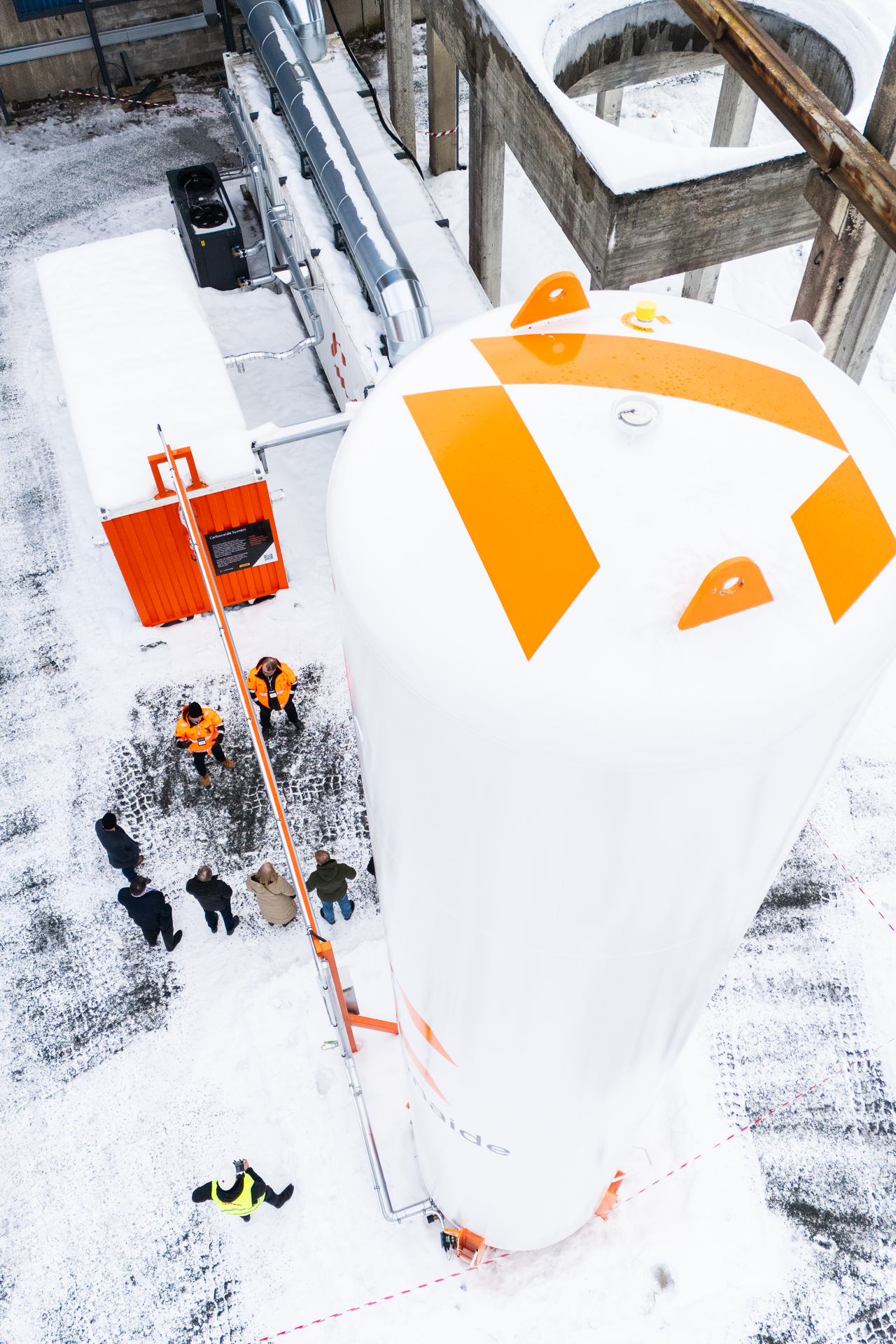
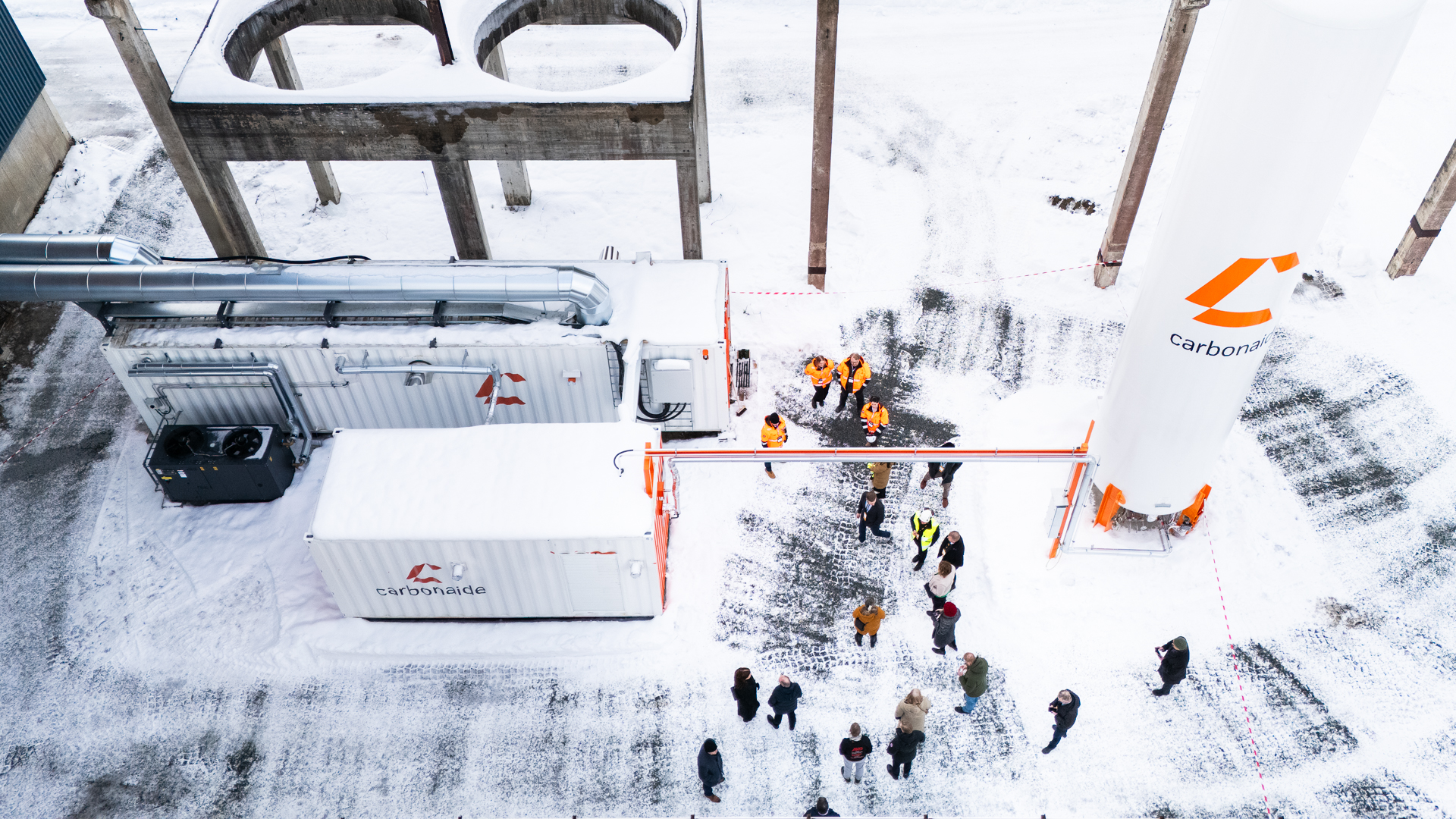
- CO₂ supply integration: A CO₂ supply module is connected to the chamber. This typically involves an external CO₂ storage tank in liquid form and a vaporiser unit that converts it to gas before introduction into the chamber.
- Process module installation: A dedicated process module with instrumentation handles the precise management of CO₂ flow, pressure, and concentration. This is the hardware that enables accurate, repeatable CO₂ mineralisation.
- Software platform connection: The chamber is connected to a cloud-based software platform that monitors, manages, and records CO₂ flow in real time. This data supports both process optimisation and carbon credit verification.
The retrofit does not require replacing the entire curing setup. The existing chamber structure, including walls, floor, and ceiling, typically remains in place. What changes is the level of control and the ability to introduce CO₂ as an active part of the curing process rather than simply maintaining temperature and humidity.
What types of existing curing chambers are compatible with CO₂ curing?
Most standard precast concrete curing chambers used in factory production are compatible with CO₂ curing retrofits. Chambers built from concrete, steel, or a combination of both can generally be adapted, provided they have sufficient structural integrity to support the sealing modifications required. The most important compatibility factor is whether the chamber can be made adequately gas-tight, not the material it is made from.
The following chamber types are commonly encountered in retrofit assessments:
- Tunnel curing chambers: Long, enclosed chambers used in continuous production lines. These can be retrofitted with gas-tight doors at entry and exit points and CO₂ injection systems integrated along the chamber length.
- Batch curing chambers: Enclosed spaces where concrete products are placed, cured, and removed in discrete cycles. These are often the most straightforward to retrofit because they are already designed to be closed environments.
- Steam curing chambers: Chambers previously used for heat and steam curing can frequently be adapted for carbon dioxide curing, as they already incorporate sealing features and temperature control infrastructure that can be repurposed.
Chambers that are heavily degraded, structurally compromised, or too large to seal efficiently may require more significant modification work before a retrofit is viable. A technical assessment of the existing chamber is always the starting point for any retrofit project, and this evaluation determines what modifications are needed and whether the chamber is a strong candidate for adaptation.
How long does it take to retrofit a curing chamber for CO₂ curing?
The timeline for a curing chamber retrofit varies depending on the condition of the existing chamber, the complexity of the required modifications, and the logistics of equipment delivery and installation. A straightforward retrofit of a well-maintained batch curing chamber in a precast facility typically takes several months from initial planning to operational start-up. More complex projects involving larger chambers or more extensive structural modifications will take longer.
The retrofit process generally moves through distinct phases:
- Technical assessment and design: The existing chamber is evaluated, and a detailed specification for the required modifications is produced. This phase also includes planning the CO₂ supply integration and process module placement.
- Equipment manufacturing and procurement: The process module, CO₂ supply equipment, and any custom components are manufactured or sourced. Lead times for specialised industrial equipment affect overall project duration.
- Chamber modification work: Physical changes to the chamber, including sealing, structural adjustments, and installation of CO₂ distribution infrastructure, are carried out on site.
- System installation and commissioning: The process module and software platform are installed and tested. Commissioning involves verifying that CO₂ flow management, measurement accuracy, and safety systems all function as specified.
- Trial production runs: Before full commercial operation begins, trial runs confirm that the retrofitted chamber delivers the expected CO₂ mineralisation results under actual production conditions.
Production downtime during the retrofit is a practical concern for precast manufacturers. Careful scheduling of the modification work around existing production commitments can reduce disruption, and an experienced project team will plan the installation sequence with this in mind.
What are the production benefits of retrofitting versus building a new CO₂ curing system?
Retrofitting an existing curing chamber for carbon dioxide curing offers a faster and lower-cost path to production than constructing a new dedicated facility. The existing chamber structure, site infrastructure, and production workflows are already in place, which reduces both capital expenditure and the time needed before the system is commercially operational. For most precast producers, retrofitting is the more practical route.
Building a new CO₂ curing system from the ground up makes sense in specific circumstances: when existing chambers are too deteriorated to retrofit cost-effectively, when a producer is expanding capacity and needs additional curing space regardless, or when a new facility is being planned and CO₂ curing can be designed in from the start. In those cases, designing the chamber with CO₂ curing requirements built in from the outset can result in a more optimised setup.
From a production performance perspective, both retrofitted and purpose-built chambers can achieve the same core benefits once the system is operational:
- Reduced cement content in the concrete mix, which lowers material costs
- Faster strength development, which can shorten curing cycles and increase throughput
- Permanent mineralisation of CO₂ into the concrete structure, reducing the carbon footprint of finished products
- The ability to use a wider range of supplementary cementitious materials (SCMs) and alternative binders that are not reactive in conventional curing conditions
The decision between retrofitting and new construction is ultimately an economic and logistical one. A detailed assessment of the existing facility, combined with production volume projections and investment calculations, gives concrete manufacturers the information needed to make that decision with confidence.
How is CO₂ flow managed and measured in a retrofitted chamber?
In a retrofitted curing chamber, CO₂ flow is managed and measured through a combination of dedicated process hardware and cloud-based software. The process module installed as part of the retrofit contains instrumentation that controls how CO₂ is introduced into the chamber, monitors concentration levels throughout the curing cycle, and records the amount of CO₂ that is mineralised into the concrete. This data is processed and stored through the connected software platform in real time.
Accurate CO₂ management is important for two distinct reasons. First, it directly affects the quality and consistency of the concrete produced. The mineralisation process requires specific CO₂ concentrations to proceed effectively, and deviations from the target conditions can affect strength development and the degree of cement replacement achieved. Second, the measurement data forms the basis for carbon accounting, including the calculation of emission reductions and, where applicable, the verification of carbon credits.
The Carbonaide Service Platform handles this data management layer. It provides real-time visibility into CO₂ flow across curing operations, supports integration with factory management systems, and generates the documentation required for carbon credit certification. For producers who want to report CO₂ storage per chamber or per product batch, the platform provides that level of detail without requiring manual data collection.
Gas flux measurement through the process module quantifies how much CO₂ has been mineralised during each curing cycle. Laboratory-tested control samples are used to verify the accuracy of the software measurements, ensuring that the reported carbon storage figures reflect actual physical outcomes rather than estimates.
Who should handle the engineering and installation of a curing chamber retrofit?
A curing chamber retrofit for carbon dioxide curing should be handled by a team with direct experience in both CO₂ process engineering and precast concrete production environments. The work spans structural modification, industrial gas handling, instrumentation, and software integration, and errors in any of these areas can affect both production safety and system performance. Engaging a supplier who delivers the full system, including chamber design specifications, process hardware, and software, reduces the coordination burden on the concrete manufacturer.
The engineering and installation process typically involves several parties working in coordination:
- The CO₂ curing system supplier: Responsible for the process module design, CO₂ supply integration, software platform setup, and overall system commissioning. This party also provides the technical specifications that define what chamber modifications are required.
- Chamber modification contractors: Local or specialist contractors carry out the physical construction work, including sealing, structural adjustments, and installation of CO₂ distribution infrastructure, working to the specifications provided by the system supplier.
- CO₂ supply partners: Industrial gas suppliers ensure that a reliable CO₂ source is available at the facility, whether through a dedicated on-site tank or integration with an existing supply chain.
Carbonaide delivers complete CO₂ curing systems for precast concrete producers, covering the full scope from initial design and chamber modification specifications through to installation, commissioning, and ongoing maintenance via Carbonaide Care. The supply partner network can also provide additional hardware components where needed, so concrete manufacturers do not need to source and coordinate multiple independent suppliers. This one-stop approach reduces project complexity and keeps accountability for system performance in one place throughout the project lifecycle.