
Sustainable concrete’s environmental benefits in 2026 focus on transforming the construction industry from a major carbon emitter into a carbon storage solution. New technologies can reduce concrete emissions by up to 50% or even create carbon-negative products through permanent CO₂ mineralisation. These advances address the urgent need to decarbonise construction materials, as the industry accounts for 38% of global greenhouse gas emissions.
What makes concrete sustainable and why does it matter in 2026?
Sustainable concrete uses technologies that reduce environmental impact while maintaining or improving performance compared to traditional concrete. Key approaches include:
- Reduced cement content: Lower cement usage directly decreases CO₂ emissions since cement production is the primary carbon source in concrete
- Industrial waste incorporation: Steel and iron slags replace traditional materials, diverting waste from landfills while reducing virgin material demand
- CO₂ utilisation during production: Carbon dioxide becomes permanently stored within the concrete matrix through mineralisation processes
- Alternative binder systems: Advanced chemical formulations reduce reliance on traditional Portland cement while maintaining structural integrity
These sustainable approaches have become critical because the construction industry faces mounting pressure to achieve net-negative emissions rather than just reducing them. Traditional concrete produces approximately 250–300 kg of CO₂ per cubic metre, making it one of the largest industrial carbon sources globally, while sustainable technologies now offer pathways to transform this environmental liability into a carbon storage asset that addresses both regulatory compliance and rising material costs.
How much can sustainable concrete reduce carbon emissions?
Sustainable concrete technologies deliver significant emission reductions through multiple pathways:
- Direct emission reduction: Up to 50% reduction compared to traditional concrete through optimised cement content and alternative materials
- Carbon-negative potential: Advanced methods achieve carbon-negative footprints of -60 kg CO₂ per cubic metre through permanent CO₂ storage
- CO₂ curing benefits: Reduces required cement content by up to 20% while mineralising captured carbon dioxide directly into the concrete structure
- Industrial waste utilisation: Steel and iron slags become effective binding agents when exposed to CO₂ during carbonation curing, replacing traditional cement
The scale of potential impact extends far beyond individual projects, with widespread adoption potentially addressing 10–20% of the concrete market by 2050 and storing approximately 500 megatons of carbon dioxide annually. This transformation represents a fundamental shift from concrete as a carbon liability to a carbon management solution that simultaneously reduces production costs through decreased cement requirements.
What’s the difference between carbon capture and carbon storage in concrete?
Understanding the distinction between carbon capture and storage reveals why concrete-based solutions offer superior environmental benefits:
- Carbon capture: Temporarily removes CO₂ from atmosphere or industrial sources, requiring ongoing management and carrying risks of eventual release
- Carbon storage in concrete: Permanently mineralises CO₂ into the concrete matrix through irreversible chemical reactions with calcium-based materials
- Chemical permanence: CO₂ becomes chemically bound as calcium carbonate within the concrete structure, eliminating release risks associated with compressed storage systems
- Verification advantages: Concrete mineralisation provides measurable, verifiable carbon sequestration suitable for accurate environmental reporting and carbon credit generation
This permanence makes concrete-based carbon storage particularly valuable for long-term climate goals and regulatory compliance. Unlike temporary storage methods that require ongoing monitoring and maintenance, concrete mineralisation creates permanent chemical bonds that ensure captured CO₂ remains sequestered throughout the structure’s lifecycle, supporting reliable carbon accounting and environmental impact measurement.
How does CO₂ curing technology change concrete production?
CO₂ curing technology fundamentally transforms concrete manufacturing through enhanced chemical processes and operational improvements:
- Accelerated strength development: Creates abundant nucleation sites through calcium carbonate formation, eliminating hydration bottlenecks and reducing production time by up to 25%
- Enhanced material utilisation: Enables previously unusable calcium-rich industrial waste products to become effective binding agents when exposed to CO₂
- Reduced cement requirements: CO₂’s acidic nature increases dissolution rates of cement binders, maintaining performance while decreasing traditional cement content
- Integrated production systems: Smart CO₂ flow management algorithms automatically regulate distribution based on production demands with real-time monitoring for process optimisation
These manufacturing modifications integrate seamlessly with both new facilities and existing concrete production operations, requiring minimal infrastructure changes while delivering substantial performance improvements. The technology enables concrete producers to achieve superior environmental outcomes without compromising production efficiency or product quality, making sustainable concrete production economically viable at industrial scale.
How Carbonaide helps with sustainable concrete production
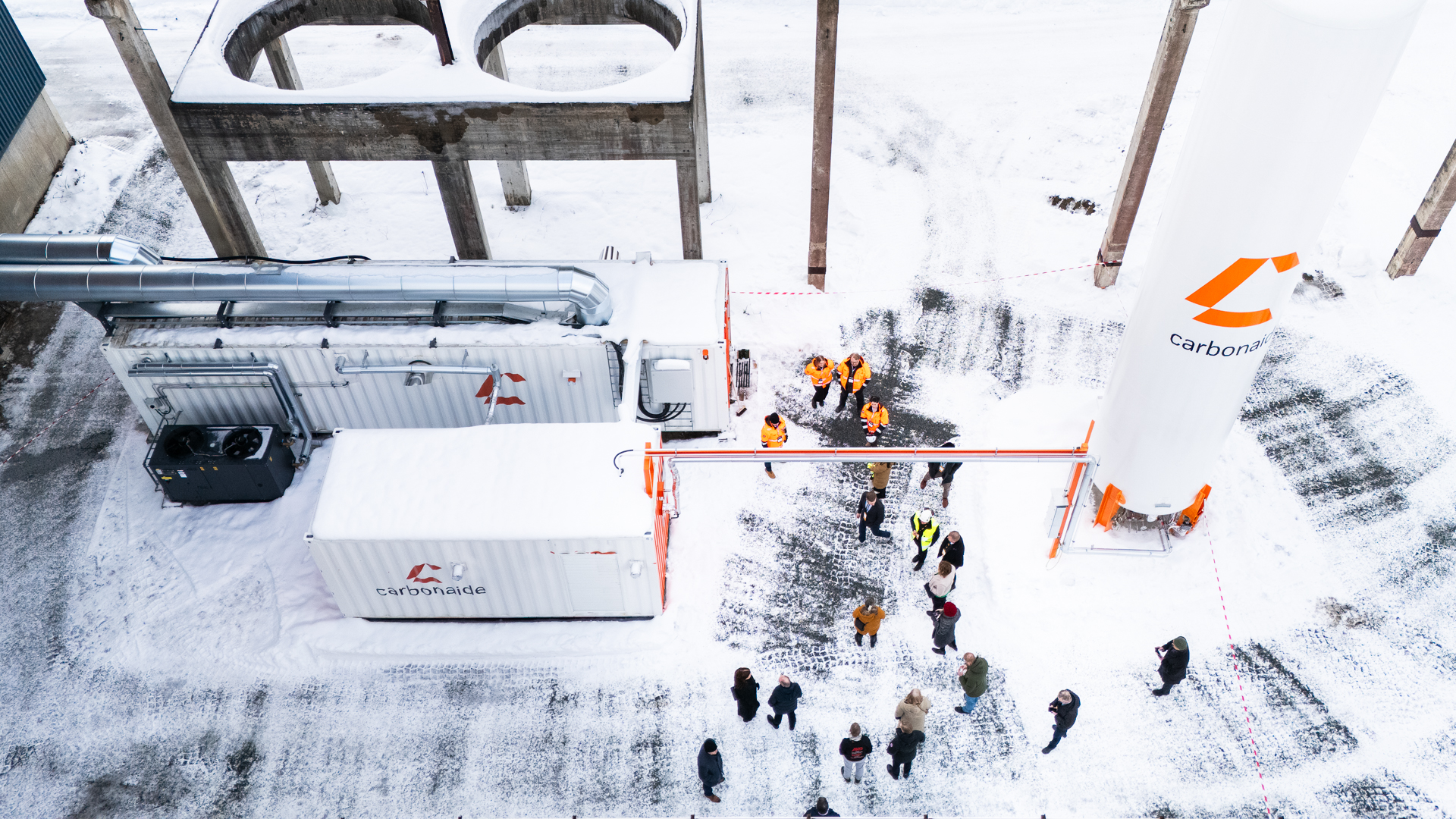
We provide a comprehensive CO₂ curing system that transforms concrete production into a carbon storage solution while delivering operational benefits. Our technology reduces emissions by up to 50%, decreases cement content by 20%, and accelerates curing times by 25%.
Our solution includes three integrated components:
- Carbonaide CO₂ Curing System: Complete hardware solutions with modular units for easy installation in new or existing facilities
- Carbonaide Service Platform: Cloud-based software that manages CO₂ flow, optimises concrete mix designs, and provides real-time analytics for process control
- Carbonaide Care: Comprehensive lifecycle support, including project management, delivery, setup, maintenance, and calibration services
Our platform enables concrete producers to adapt CO₂ curing parameters based on specific priorities, whether maximising carbon storage, emphasising production speed, or optimising cost reduction. The system provides verified carbon sequestration data for environmental reporting and carbon credit generation, supporting the transition towards carbon-negative concrete production at industrial scale.
If you are interested in learning more, contact our team of experts today.