
Low-carbon concrete and carbon-negative concrete are not the same thing. Low-carbon concrete produces fewer emissions than conventional concrete, while carbon-negative concrete goes further: it removes more CO₂ from the atmosphere than the production process releases. The distinction matters because the two categories represent fundamentally different climate outcomes, not just different points on the same scale.
For concrete manufacturers and construction companies working toward decarbonisation targets, understanding where a product sits on this spectrum determines what environmental claims can be made, what carbon accounting rules apply, and what technologies are needed to achieve it. The sections below work through the most common questions around measuring, classifying, and producing concrete at both ends of this range.
How is the carbon footprint of concrete actually measured?
The carbon footprint of concrete is measured using a life cycle assessment (LCA), which calculates the total greenhouse gas emissions associated with producing one cubic metre of concrete. The assessment typically covers raw material extraction, cement manufacturing, transportation, mixing, and curing. The result is expressed in kilograms of CO₂ equivalent per cubic metre of finished product.
Cement manufacturing dominates this calculation. Portland cement production requires heating limestone to very high temperatures, a process that releases CO₂ both from burning fuel and from the chemical decomposition of limestone itself. Because cement is the most emission-intensive ingredient in concrete, any meaningful reduction in the carbon footprint of concrete starts with reducing cement content or replacing it with lower-emission alternatives.
LCA results are typically published in Environmental Product Declarations (EPDs), which follow standardised methodology so that different concrete products can be compared on equal terms. An EPD shows the carbon footprint across defined life cycle stages, making it possible to verify whether a product qualifies as low-carbon or carbon-negative based on the numbers rather than marketing claims alone.
It is worth noting that CO₂ absorbed during the concrete’s service life, a natural process called carbonation, is sometimes included in whole-life assessments. However, for production-stage comparisons, the relevant figure is the embodied carbon at the point of manufacture.
What makes concrete ‘low-carbon’ rather than just standard concrete?
Low-carbon concrete produces significantly fewer greenhouse gas emissions during manufacturing than conventional Portland cement concrete. In practice, this means reducing the amount of Portland cement in the mix, either by using supplementary cementitious materials (SCMs) such as slag or fly ash alongside cement, or by optimising the production process to require less cement for the same structural outcome.
SCMs are industrial byproducts that can partially replace Portland cement in a concrete mix. Slag, a byproduct of steel production, and fly ash, a byproduct of coal combustion, both carry a much lower carbon footprint than Portland cement because the energy-intensive clinker production step is avoided. When SCMs replace a portion of the cement in a mix, the overall emissions per cubic metre fall accordingly.
Process improvements also contribute. Accelerating curing, for example, can allow cement content to be reduced without compromising early-age strength. When concrete gains strength faster, producers do not need to add excess cement as a buffer for slow development, which is a common practice in standard production.
Low-carbon concrete still has a positive carbon footprint: production releases more CO₂ than it removes. The term describes a relative improvement over the conventional baseline, not an absolute environmental outcome. This is an important distinction because it affects how the product can be used in carbon accounting and sustainability reporting.
What does it mean for concrete to be carbon-negative?
Carbon-negative concrete is concrete whose production removes more CO₂ from the atmosphere than it emits. The result is a net-negative carbon footprint, meaning the product functions as a carbon sink rather than a carbon source. Achieving this requires not just reducing emissions but actively storing CO₂ within the material itself through a process called CO₂ mineralisation.
CO₂ mineralisation converts carbon dioxide gas into stable carbonate minerals within the concrete structure. This is not a superficial coating or a temporary absorption: the CO₂ reacts chemically with calcium compounds in the cement to form calcium carbonates, which are permanently locked into the concrete matrix. The stored carbon does not re-enter the atmosphere even if the concrete is later demolished or recycled.
For concrete to reach a carbon-negative footprint, the amount of CO₂ mineralised into the product must exceed the total emissions from cement production and the rest of the manufacturing process. This becomes achievable when CO₂ mineralisation is combined with significant cement reduction, particularly when high-SCM mixes or alternative binders replace the majority of Portland cement. Slag-heavy mixes, for example, carry very low production emissions, so the amount of mineralised CO₂ needed to tip the balance into negative territory is considerably lower than with standard cement-heavy mixes.
Carbon-negative concrete also produces verifiable, durable carbon removal credits. Because the stored CO₂ is mineralised rather than biologically sequestered, the storage is considered permanent on a timescale exceeding a thousand years. This permanence is what distinguishes mineralised CO₂ storage from other carbon removal approaches and makes it eligible for high-integrity carbon credit certification.
What’s the key difference between low-carbon and carbon-negative concrete?
The key difference is the direction of the carbon balance. Low-carbon concrete reduces emissions relative to conventional concrete but still has a positive carbon footprint overall. Carbon-negative concrete has a net-negative carbon footprint, meaning it removes more CO₂ than it emits. Low-carbon concrete improves on the status quo; carbon-negative concrete reverses it.
This distinction has practical consequences for how each product is used in environmental reporting and carbon markets. Low-carbon concrete contributes to emission reduction targets by shrinking the carbon liability of a construction project. Carbon-negative concrete goes further: it can offset emissions from other parts of a project or generate carbon removal credits that can be sold or retired against emissions elsewhere.
The technologies required also differ in degree. Low-carbon concrete typically involves replacing some Portland cement with SCMs and optimising the mix. Carbon-negative concrete requires CO₂ mineralisation in addition to cement reduction, because without active CO₂ storage, the remaining emissions from cement production cannot be overcome by mix design alone.
Another practical difference is verifiability. Claiming low-carbon status requires an LCA showing reduced emissions compared to a reference product. Claiming carbon-negative status additionally requires documenting the amount of CO₂ mineralised into the product, which in turn requires measurement and certification of the mineralisation process itself.
Can any concrete factory switch to carbon-negative production?
Not every concrete factory can immediately switch to carbon-negative production, but precast concrete facilities with dedicated curing chambers are well positioned to do so. Carbon-negative production requires a controlled CO₂ curing environment where carbon dioxide can be introduced at the curing stage and mineralised into the concrete in sufficient quantities. Open-air or ready-mix production does not provide the enclosed conditions needed for this process.
Precast producers work with curing chambers as standard practice, which means the infrastructure for CO₂ curing can often be integrated into existing facilities without rebuilding the factory. The curing chamber needs to be made gas-tight and equipped with a CO₂ supply system and process management instrumentation, but the core production workflow remains largely unchanged.
The mix design also needs to be adapted. Achieving a carbon-negative outcome requires reducing cement content substantially, which typically means introducing SCMs such as slag or other alternative binders. The specific mix depends on the product type, the structural requirements, and the availability of SCM materials locally. Some product types, such as lightweight wall elements or pavement products, are particularly well suited to high SCM substitution rates.
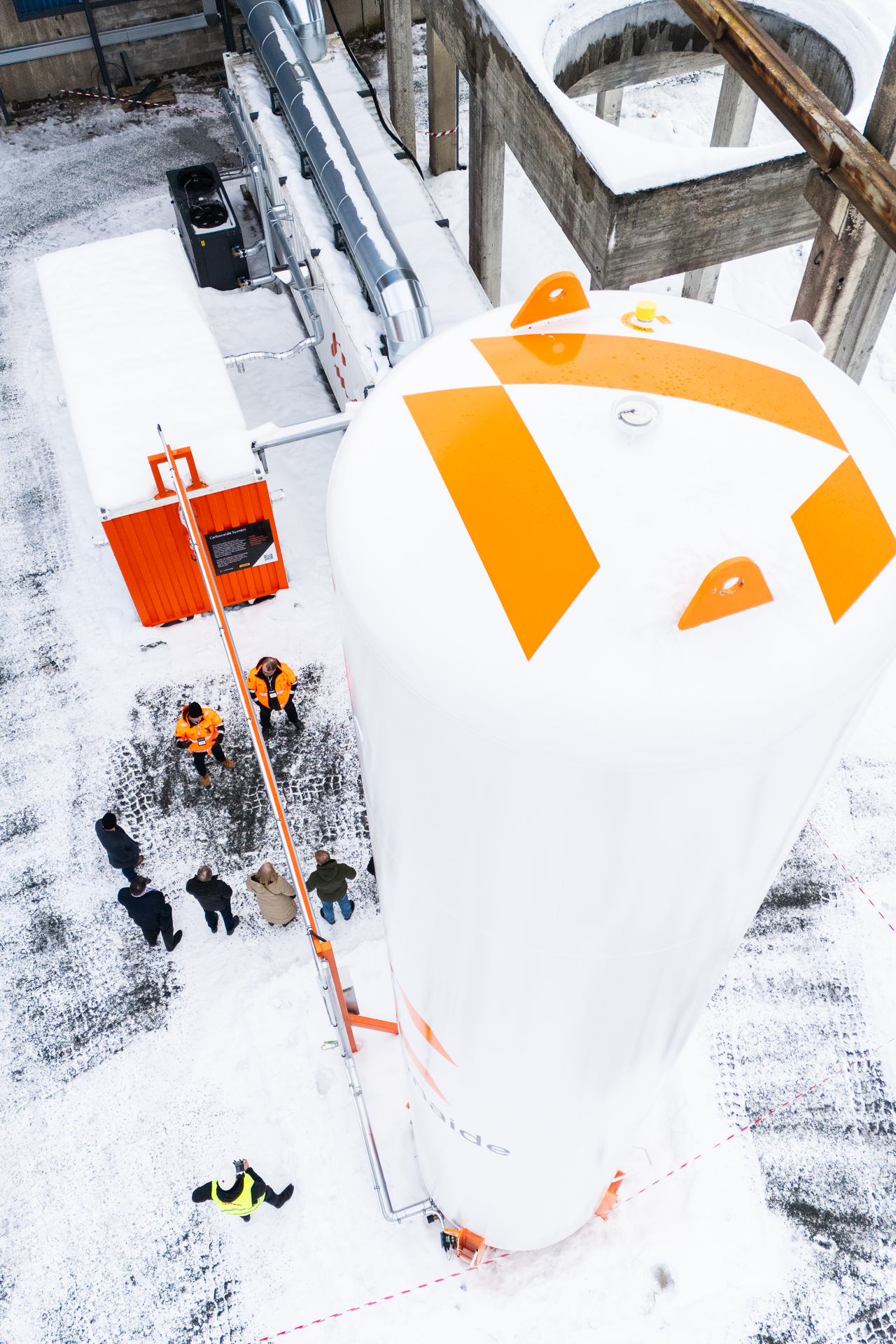
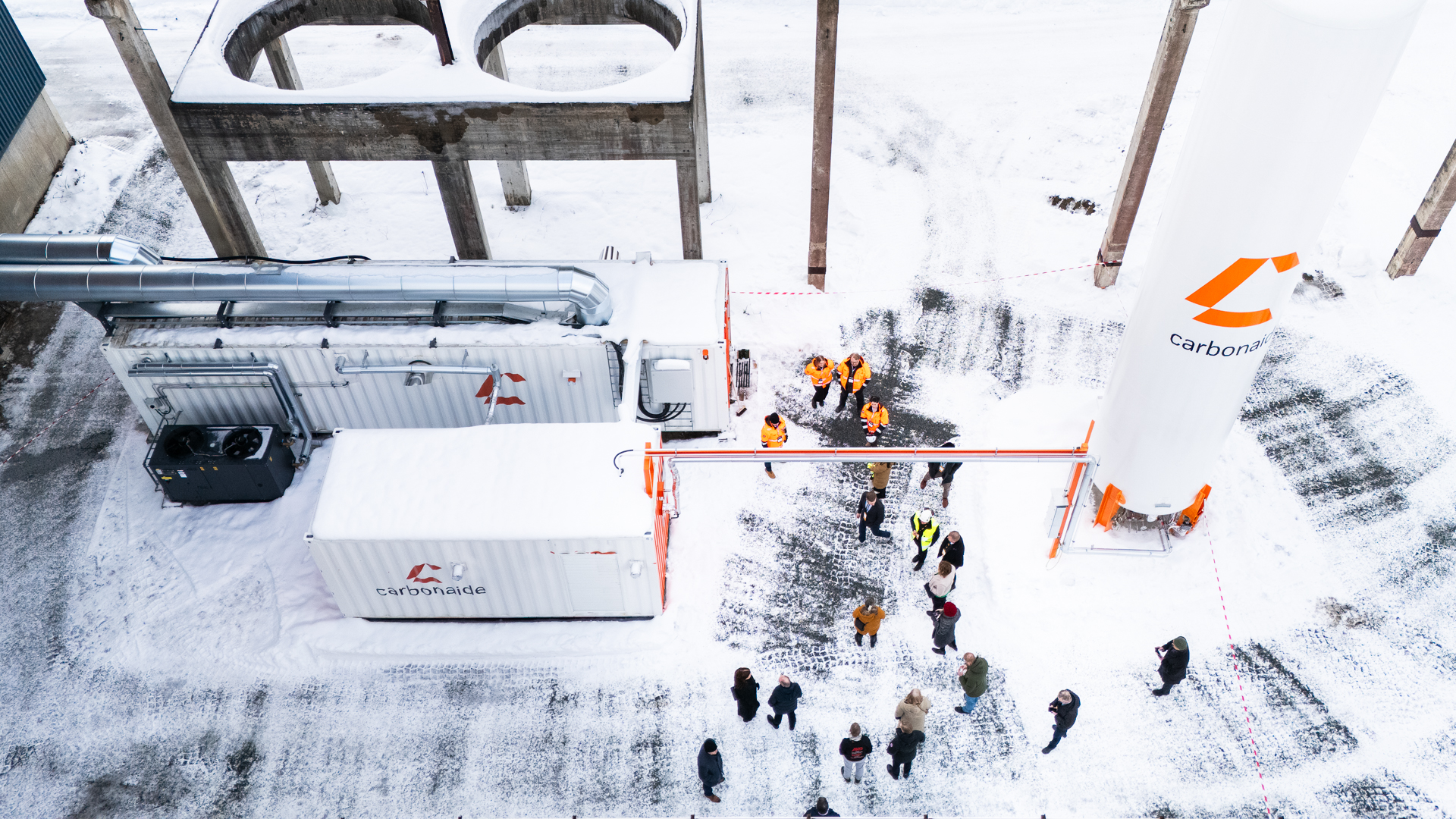
Carbonaide’s CO₂ curing system is designed for exactly this transition. It can be retrofitted to existing curing chambers and works alongside the Carbonaide Service Platform, which manages CO₂ flow, measures mineralisation in real time, and produces the documentation needed for carbon credit certification. Factories that have already invested in curing infrastructure are typically the fastest to adopt and scale carbon-negative production.
Does carbon-negative concrete perform as well as conventional concrete?
Carbon-negative concrete produced through CO₂ mineralisation can meet the same structural performance standards as conventional concrete. The goal of CO₂ curing is not to produce a weaker product with a better carbon label: it is to achieve equivalent or comparable performance with a different production process and a lower, or negative, carbon footprint.
CO₂ mineralisation actually contributes to concrete strength rather than reducing it. The carbonation process densifies the microstructure of the concrete by replacing hydroxides with carbonates, which have a larger molar volume. This densification improves mechanical properties, and products cured with CO₂ often show continued strength gains in the days and weeks following curing as secondary reactions proceed.
The main engineering consideration is that reducing cement content, which is necessary for carbon-negative outcomes, can affect strength if the mix is not carefully designed. This is why SCM selection and mix optimisation matter. Slag, for example, can be activated by the CO₂ curing process in ways that are not possible in standard curing conditions, allowing it to contribute more effectively to strength development than it would otherwise. The result is that cement reduction does not automatically mean strength reduction when the mix is designed with CO₂ curing in mind.
Products manufactured with CO₂ mineralisation are compatible with existing concrete standards and do not require special certification categories or regulatory exceptions. Precast producers can use the same quality control processes and testing regimes that apply to conventional products, which simplifies adoption and removes a common barrier to switching production methods.