
Concrete lifespan varies significantly between traditional and eco-friendly options, with both typically lasting 50–100 years under proper conditions. Traditional Portland cement concrete performs predictably but faces durability challenges from environmental exposure. Eco-friendly concrete alternatives often match or exceed traditional concrete longevity while offering additional environmental benefits. The key factors affecting concrete lifespan include proper curing, material quality, environmental conditions, and maintenance practices.
What actually determines how long concrete lasts?
Several interconnected factors work together to determine concrete durability and lifespan:
- Material quality and mix design – The ratio of cement, aggregates, water, and additives directly affects durability and resistance to environmental stresses
- Environmental exposure conditions – Freeze–thaw cycles, chemical attack, and moisture penetration can significantly accelerate deterioration processes
- Proper curing processes – Adequate moisture and temperature control during early development allows concrete to achieve full strength and density
- Construction practices – Proper compaction, adequate reinforcement cover, and correct joint placement prevent weak points that lead to premature failure
- Ongoing maintenance – Regular sealing of cracks and surface protection prevents water infiltration and chemical damage over time
These factors work synergistically to create concrete’s long-term performance profile. Proper curing creates a denser concrete matrix that better withstands environmental stresses, while quality materials and construction practices establish the foundation for decades of reliable service. Understanding how these elements interact helps predict concrete behavior and plan effective maintenance strategies.
How does traditional concrete perform over decades?
Traditional Portland cement concrete typically lasts 50–100 years, depending on environmental conditions and maintenance quality. Well-designed and properly maintained concrete structures can exceed this range, with some lasting centuries. However, traditional concrete faces predictable degradation patterns that affect its long-term performance.
Common deterioration mechanisms include:
- Carbonation damage – Carbon dioxide penetration lowers concrete pH over 20–50 years, potentially causing reinforcement corrosion
- Chloride penetration – De-icing salts and marine environments introduce chlorides that cause problems within 15–30 years in exposed conditions
- Freeze–thaw cycles – Water expansion during freezing creates physical damage, particularly affecting concrete in northern climates with hundreds of annual cycles
- Chemical attack – Sulfates, acids, and other aggressive chemicals can break down concrete matrix over time
- Alkali-silica reaction – Certain aggregates react with cement alkalis, causing internal expansion and cracking
Despite these challenges, traditional concrete’s performance remains well understood through decades of research and field experience. Chloride penetration from de-icing salts or marine environments poses one of the most significant threats to reinforced concrete structures. This predictable behavior allows engineers to anticipate maintenance needs and design structures with appropriate service life expectations.
What’s different about eco-friendly concrete when it comes to longevity?
Eco-friendly concrete often demonstrates comparable or superior durability to traditional concrete while providing environmental benefits. These sustainable alternatives incorporate various technologies and materials that can enhance long-term performance characteristics.
Key advantages of sustainable concrete options include:
- Reduced permeability – Many eco-friendly formulations create denser matrices that better resist water penetration and chemical attack
- Supplementary cementitious materials – Fly ash, slag, and other materials continue reacting slowly over time, potentially improving properties for years after placement
- Advanced curing technologies – Innovative methods accelerate early strength development while improving long-term durability characteristics
- Recycled aggregate benefits – Properly processed recycled materials can match or exceed virgin aggregate performance
- Carbon sequestration – Some approaches permanently store CO₂, transforming concrete from a carbon source into a carbon sink
These materials often continue reacting slowly over time, creating ongoing improvements in concrete density and strength. This progressive enhancement, combined with reduced environmental impact, makes eco-friendly concrete an attractive option for projects prioritizing both performance and sustainability. The technology continues advancing, with new formulations regularly demonstrating enhanced durability compared to traditional approaches.
Which factors make the biggest difference in concrete lifespan?
While many elements influence concrete durability, certain factors have disproportionate impact on long-term performance:
- Water-to-cement ratio – The single most influential factor, directly affecting porosity and permeability of the final concrete matrix
- Quality curing practices – Proper moisture and temperature control during early development determines final concrete properties and strength
- Environmental exposure severity – Mild, dry climates versus marine environments, freeze–thaw cycles, or chemical exposure dramatically affect lifespan
- Reinforcement cover depth – Adequate concrete cover prevents corrosion-related deterioration, which often causes structural problems before concrete failure
- Construction quality control – Proper consolidation, finishing, and joint construction prevent weak points regardless of material quality
- Preventive maintenance programs – Regular inspection, crack sealing, and surface protection can double concrete lifespan by preventing water infiltration
These critical factors work together to establish concrete’s durability foundation. Lower water-to-cement ratios create the dense, impermeable matrix essential for long-term performance, while proper concrete cover over reinforcement prevents the corrosion issues that typically cause structural problems decades before the concrete itself would fail. Understanding and controlling these key variables during design and construction provides the greatest return on investment for achieving extended concrete service life.
How Carbonaide helps with concrete longevity
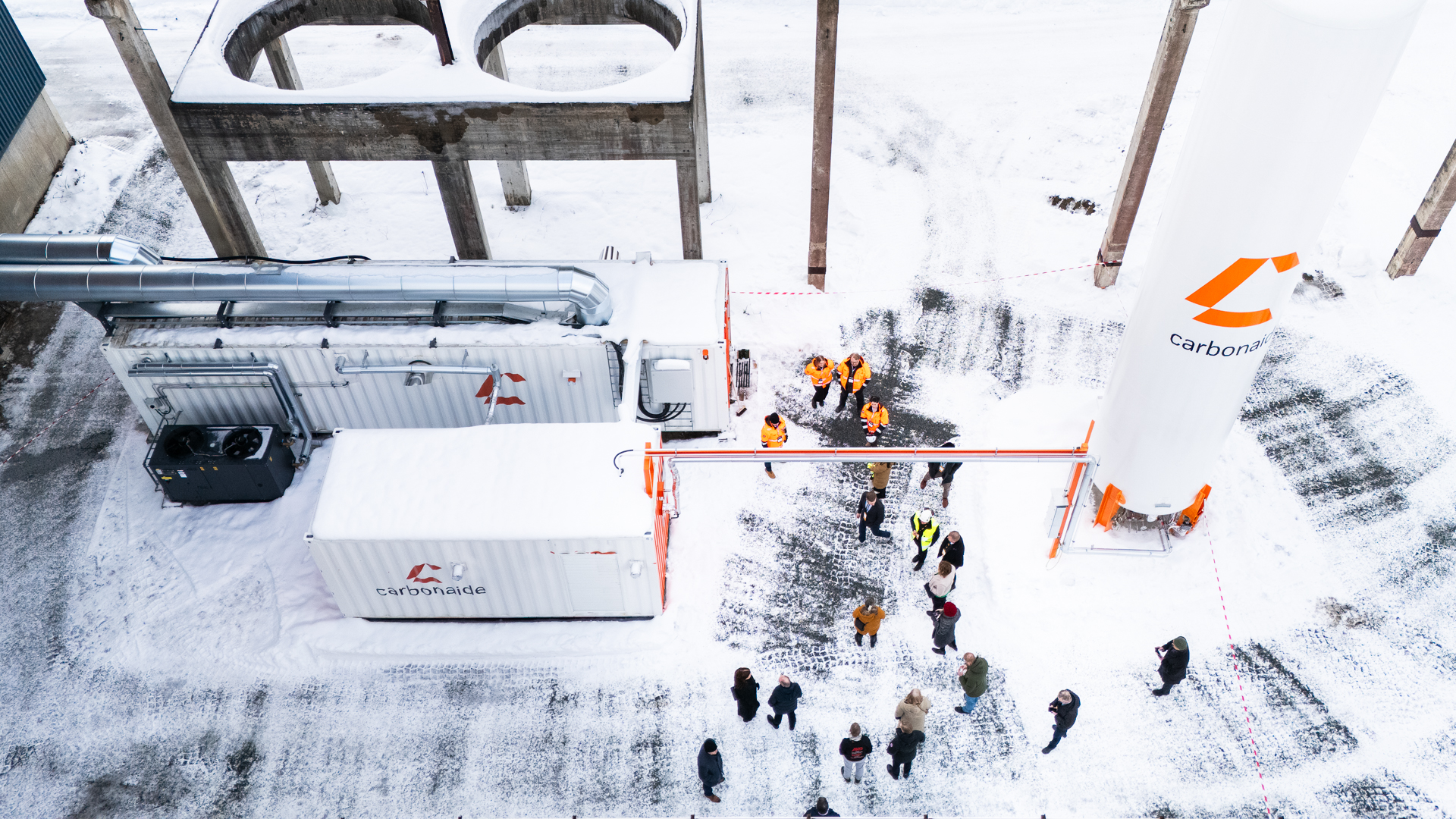
We enhance concrete durability through our CO₂ curing technology, which creates denser, stronger concrete with improved long-term performance characteristics. Our process reduces cement content by up to 20% while maintaining or improving concrete properties, creating a more sustainable product with enhanced durability.
Our technology delivers concrete longevity benefits through:
- Improved concrete density through CO₂ carbonation reactions that fill pore spaces
- Enhanced early strength development that contributes to better long-term performance
- Reduced permeability that better resists water penetration and chemical attack
- Optimized curing processes that ensure proper concrete development for maximum durability
- Real-time monitoring through our Service Platform that ensures consistent quality
The carbonation process permanently stores CO₂ within the concrete matrix while simultaneously improving material properties. This creates concrete that not only matches traditional concrete lifespan expectations but often exceeds them through enhanced density and reduced permeability, all while providing environmental benefits through carbon storage.
If you are interested in learning more, contact our team of experts today.
Related Articles
- How does the EU Taxonomy affect concrete production?
- What is the difference between reducing emissions and removing carbon in concrete production?
- Can bio-based concrete additives improve building performance while reducing environmental impact?
- What does decarbonization mean in the construction industry?
- Why is the construction industry important for climate action?