
Introducing CO₂ curing into a concrete factory requires targeted but manageable operational changes. Concrete manufacturers need to modify their curing chambers, integrate CO₂ supply infrastructure, and connect a software platform to monitor and control the process. The changes are designed to work within existing production setups rather than requiring a complete rebuild. The sections below walk through each aspect of the transition in detail.
How does CO₂ curing actually work in a concrete factory?
Carbon dioxide curing works by introducing CO₂ gas into sealed curing chambers during the early hardening phase of precast concrete production. The CO₂ reacts with calcium ions in the cement, forming stable carbonate minerals within the concrete structure. This mineralisation process accelerates strength development, reduces the amount of cement needed, and permanently stores carbon within the finished product.
In practice, fresh concrete elements are placed inside gas-tight curing chambers where CO₂ concentration, temperature, and timing are precisely controlled. The CO₂ does not simply coat the surface: it penetrates the concrete matrix and becomes chemically bound as carbonates. Because this happens at atmospheric pressure, no high-pressure equipment is required, making the process compatible with standard precast factory environments.
The mineralisation also changes the microstructure of the concrete. Carbonates are larger in molar volume than the hydrates they replace, which densifies the structure and contributes to improved mechanical properties. This means the process delivers production benefits alongside carbon storage, rather than requiring a trade-off between the two.
What equipment changes does CO₂ curing require?
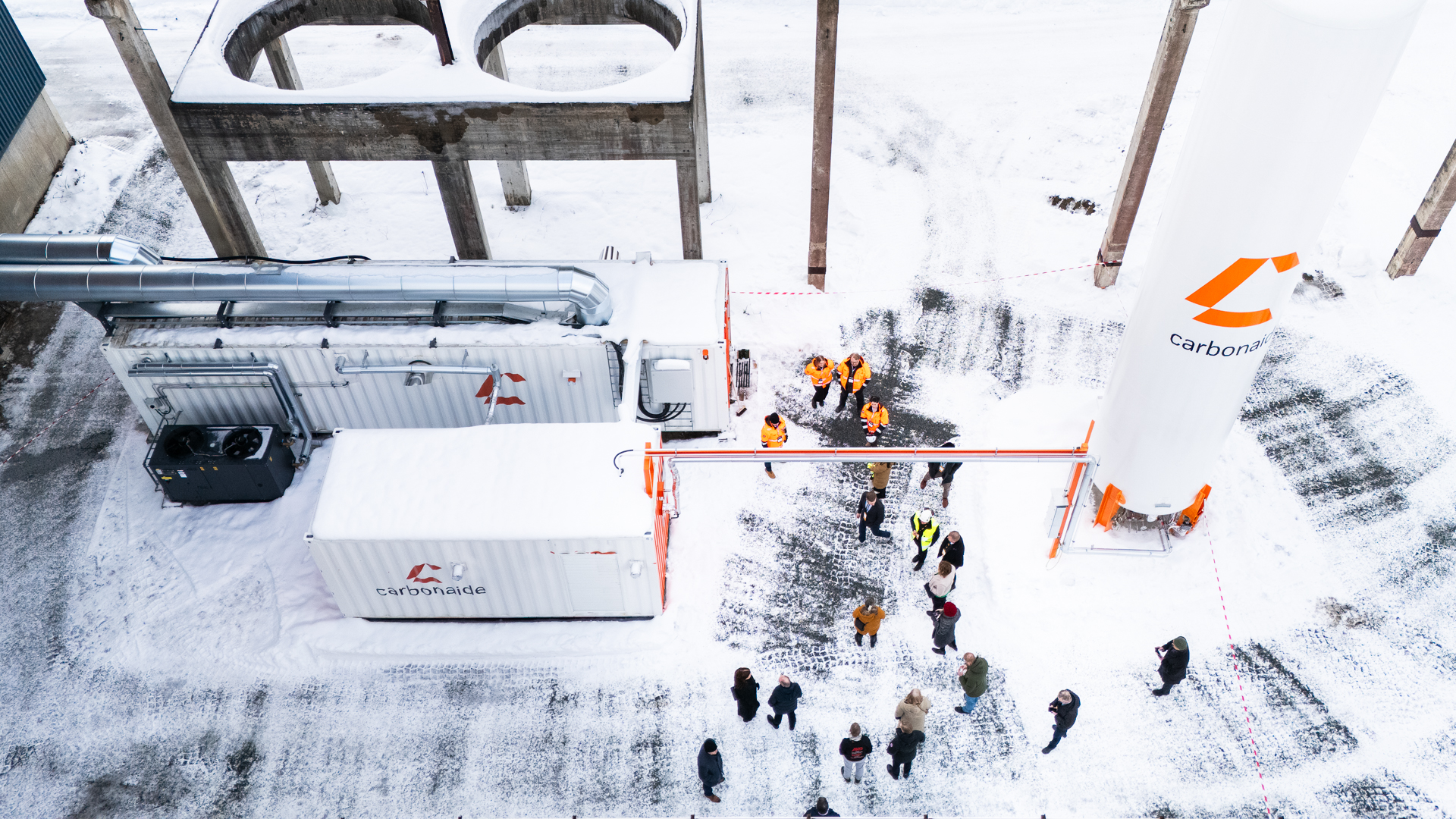
CO₂ curing requires three main equipment additions: a process module for CO₂ flow management, a CO₂ supply module, and modifications to existing curing chambers to make them sufficiently gas-tight. These components work together as an integrated system and can be installed in new facilities or retrofitted into existing ones.
The process module is the core hardware unit. It contains the instrumentation and control equipment needed to manage CO₂ concentration with precision throughout the curing cycle. This level of control is important because the mineralisation rate depends on maintaining the right conditions at the right time.
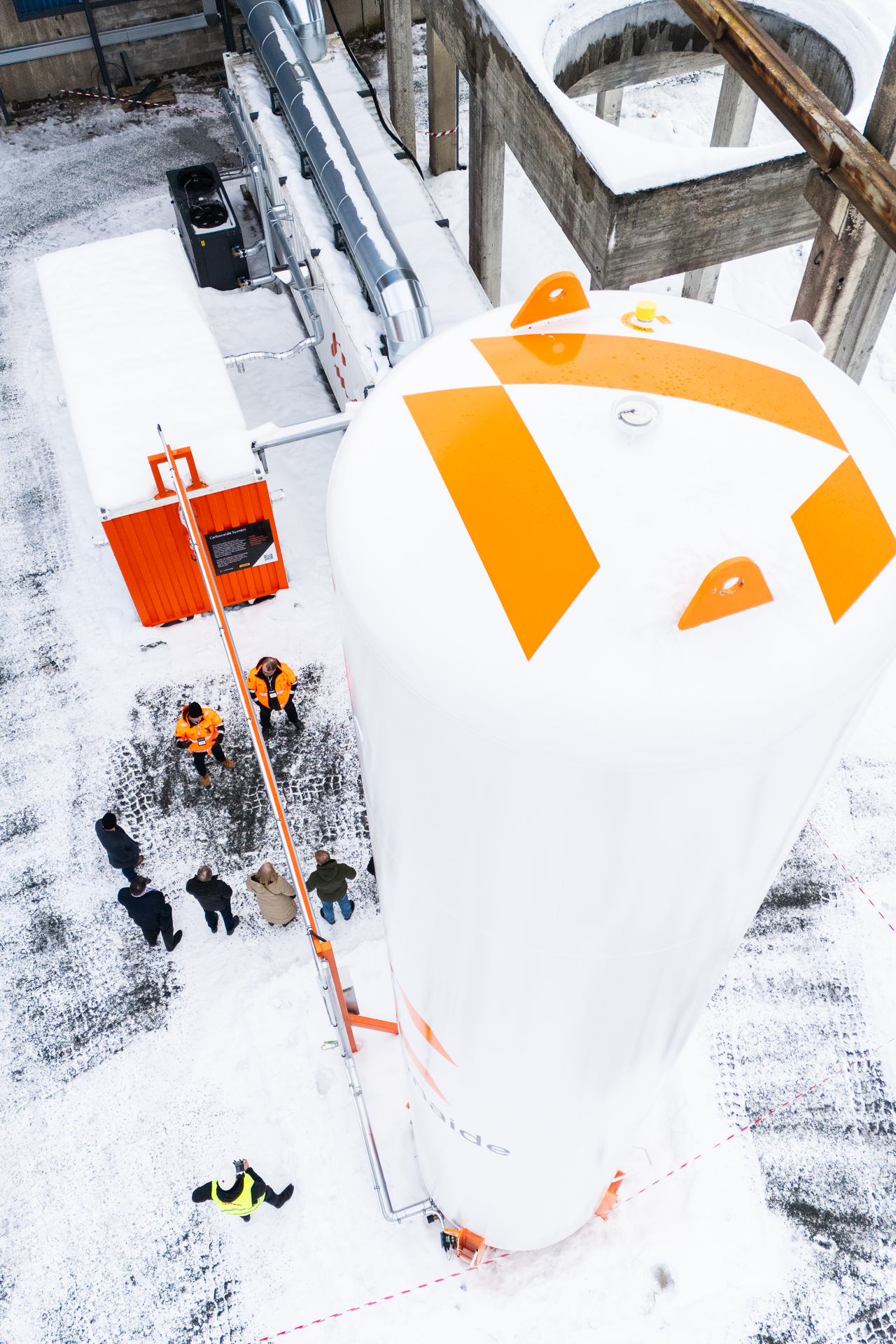
The CO₂ supply module typically consists of a storage tank holding liquid CO₂ and a vaporiser unit that converts it to gas before it enters the curing chamber. The tank is usually positioned outside the production building, which keeps the installation footprint within the factory itself relatively compact.
Chamber modifications are also part of a standard installation. Existing curing chambers are often adapted with sealing improvements and gas management connections so that CO₂ concentration can be maintained and measured accurately. The scope of these modifications depends on the current condition and design of the chambers, and the Carbonaide CO₂ Curing System includes support for specifying and planning these changes as part of the delivery process.
How does CO₂ curing affect production speed and output?
Carbon dioxide curing accelerates concrete strength development, which means products can leave the curing chamber sooner. Faster cycle times allow more production runs within the same working day, increasing overall output capacity without requiring additional floor space or equipment.
The acceleration happens through two mechanisms. In the first hours of curing, CO₂ reacts with calcium to form ultrafine calcium carbonate particles. These act as nucleation sites that give cement hydration products more surfaces to grow on, speeding up the early strength gain. Later in the curing cycle, the acidic nature of CO₂ increases the dissolution rate of cement particles, further accelerating hydration.
Because early strength develops more quickly, concrete products reach handling and demoulding strength in less time. This is particularly relevant for precast producers working with lightweight or low-density elements, where early-age strength is often the limiting factor in determining how quickly a product can move through the production line.
The combined effect is that carbon dioxide curing can meaningfully shorten curing time compared to conventional methods. This translates directly into increased production capacity, which improves the economic case for the investment alongside the emissions benefits.
What staff training or process adjustments are needed?
Introducing CO₂ curing requires production staff to understand how to operate the CO₂ system safely, how to interpret the data from the software platform, and how to adjust the concrete mix design to take advantage of reduced cement content. The learning curve is manageable, particularly when supported by structured onboarding.
Safety is the first area of focus. CO₂ in high concentrations is hazardous in enclosed spaces, so staff working near curing chambers need to understand ventilation requirements, gas detection systems, and emergency procedures. These protocols are standard in industries that handle industrial gases and are incorporated into the system design from the outset.
On the production side, the main process adjustment involves updating mix designs. Because CO₂ curing changes the chemistry of early hardening, the cement content can often be reduced without sacrificing product quality. This requires collaboration between production staff and the concrete laboratory to test and validate new mix formulations for each product type.
The Carbonaide Service Platform provides real-time data on CO₂ flow and mineralisation rates, so production teams gain visibility into the curing process that was not available before. Learning to read and act on this data is part of the operational transition, and it supports both quality control and carbon reporting. Carbonaide Care, the lifecycle support service, covers training, setup, and ongoing calibration to help teams build confidence with the system over time.
How is CO₂ sourced and supplied for the curing process?
The CO₂ used in the curing process is typically industrial-grade carbon dioxide sourced from industrial suppliers and delivered in liquid form to an on-site storage tank. From there, a vaporiser converts it to gas before it enters the curing chamber. Concrete manufacturers do not need to capture or produce the CO₂ themselves.
The most common supply model uses periodic deliveries by tanker truck, similar to how other industrial gases are supplied to manufacturing sites. The storage tank capacity is sized to match production volume, and the Carbonaide CO₂ Curing System includes the supply module as part of its hardware offering.
For concrete producers who want to maximise the environmental benefit of the process, using CO₂ that has been captured from industrial sources is the preferred approach. When captured CO₂ is mineralised into concrete, it is permanently removed from the atmosphere, which is the basis for generating verified carbon removal credits. The source of the CO₂ therefore affects both the carbon accounting and the potential revenue from carbon markets.
Carbonaide can also support customers with CO₂ sourcing and logistics through its partner network, which reduces the complexity of setting up supply arrangements independently.
Can existing concrete plants retrofit CO₂ curing without rebuilding?
Yes. Existing precast concrete plants can adopt CO₂ curing through retrofitting rather than rebuilding. The Carbonaide CO₂ Curing System is specifically designed to integrate with existing curing chambers, and the installation process is planned to minimise disruption to ongoing production.
The key requirement is that the curing chambers must be made sufficiently gas-tight to maintain the CO₂ concentration needed for effective mineralisation. In many cases, existing chambers can be adapted with sealing improvements and connection points for the CO₂ supply and monitoring systems. The extent of the modifications depends on the current chamber design, which is assessed during the planning phase of the project.
The process module and CO₂ supply tank are added as new infrastructure alongside the existing setup rather than replacing it. This means production can continue in other parts of the facility while the installation takes place, and the transition can be phased to suit the factory’s operational schedule.
Retrofitting is the more common path for established precast producers, and the Carbonaide delivery model is built around this reality. From initial design and specification through to commissioning and ongoing maintenance, the full installation is managed as a structured project with defined milestones, giving production managers a clear picture of what the transition involves before committing to it.
How Carbonaide supports the transition to CO₂ curing
Carbonaide provides a complete solution for precast concrete producers looking to introduce carbon dioxide curing into their operations. The offering covers the full scope of what the transition requires:
- Carbonaide CO₂ Curing System: Hardware for CO₂ flow management, including the process module, CO₂ supply module, and support for chamber modifications, available for new facilities or retrofitted into existing ones
- Carbonaide Service Platform: Cloud-based software that manages and optimises CO₂ flow in real time, supports mix design decisions, and handles carbon credit verification and reporting
- Carbonaide Care: Lifecycle support covering project management, installation, training, annual maintenance, and calibration to keep operations running reliably
- CO₂ sourcing support: Access to Carbonaide’s partner network for CO₂ supply and logistics, reducing the burden of setting up supply chains independently
The result is that concrete manufacturers do not need to piece together separate systems from multiple vendors. The operational changes required to introduce CO₂ curing are real, but they are well-defined, and Carbonaide’s delivery model is designed to make the transition straightforward for production teams at any stage of readiness.