
Precast concrete production lines with separate, enclosed curing chambers are best suited for CO₂ curing implementation. The process requires a controlled, gas-tight environment where carbon dioxide concentration can be managed precisely during the early hardening phase. Production lines that already use steam or climate-controlled curing rooms can typically be adapted with relatively straightforward modifications.
The fit between a given production line and CO₂ curing depends on several factors: chamber geometry, product type, production volume, and binder composition. The sections below address the most common questions concrete manufacturers raise when evaluating whether their setup is a good candidate.
Which concrete products benefit most from CO₂ curing?
Precast concrete elements and small concrete products cured in enclosed chambers benefit most from CO₂ curing. These include wall elements, pavement blocks, kerbs, pipes, and other infrastructure products where the production process already involves a defined curing phase in a controlled environment. The enclosed chamber is what makes CO₂ concentration management possible.
Products made with higher cement content tend to show the most measurable response to carbon dioxide curing, because there is more calcium available to react with CO₂ and form stable carbonates. Lightweight wall elements and pavement products are particularly well studied in this context, and both have been produced commercially using the Carbonaide CO₂ Curing System.
The process works across a range of product geometries, from thin-walled elements to dense infrastructure blocks. What matters more than shape is the production method: batch-produced precast items that move through a defined curing cycle are a natural fit. Ready-mix concrete, by contrast, is not suitable because it is placed directly on site without a controlled curing environment.
What production setup does CO₂ curing require?
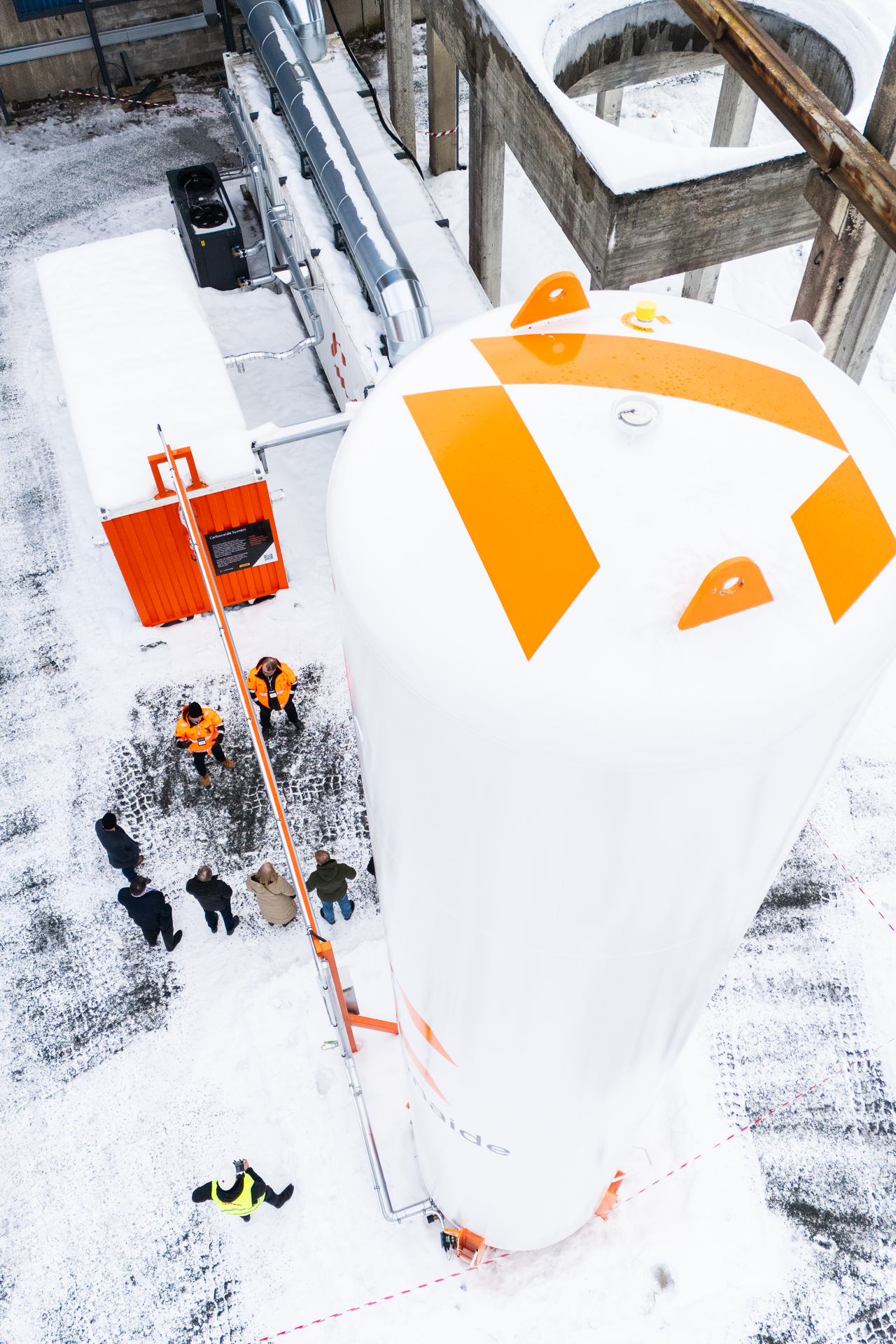
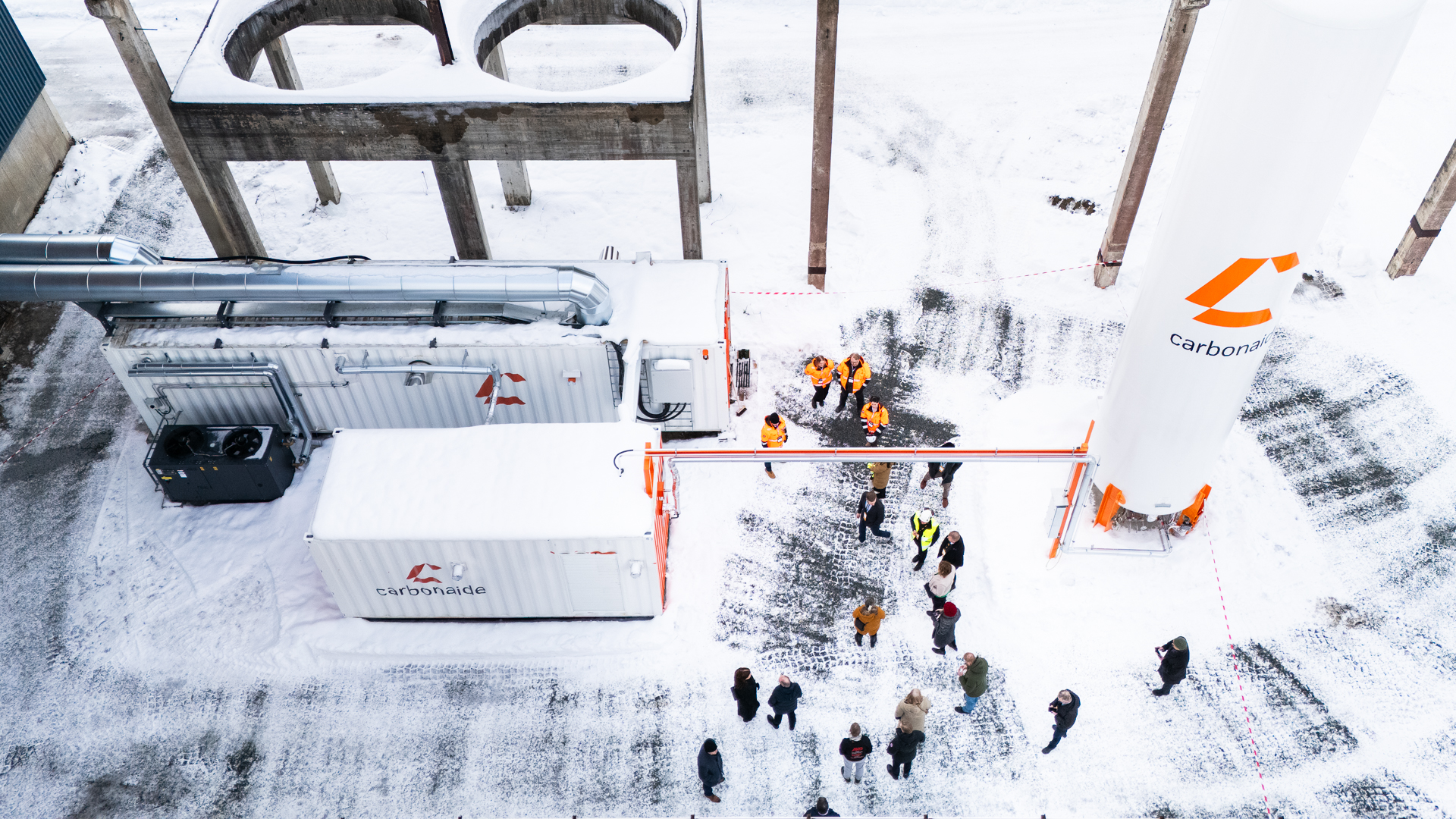
CO₂ curing requires an enclosed curing chamber that can be made gas-tight, a CO₂ supply module, and a process control system to manage gas flow and concentration. The curing chamber does not need to be purpose-built; existing steam curing rooms or climate chambers can often be retrofitted with the necessary sealing and instrumentation.
The core hardware components in a typical installation include:
- A process module with instrumentation for precise CO₂ flow management
- A CO₂ supply module, typically a liquid CO₂ tank with an evaporator unit located outside the chamber
- Modifications to the curing chamber to ensure adequate gas tightness and uniform gas distribution
- Integration with a software platform for real-time process monitoring and carbon storage measurement
The Carbonaide CO₂ Curing System is designed to integrate with both new facilities and existing production lines. In practice, the most significant physical change is often the chamber modification work rather than the addition of new equipment. Chamber design, sealing quality, and gas circulation all affect how efficiently CO₂ is absorbed during curing.
Atmospheric pressure operation is an important characteristic of the process. Unlike some experimental carbon curing approaches that require pressurised vessels, CO₂ curing at atmospheric pressure is compatible with standard concrete factory infrastructure and does not require heavy pressure-rated equipment.
How does production volume affect CO₂ curing suitability?
Higher production volumes generally improve the economic case for CO₂ curing implementation. The hardware investment is largely fixed, so spreading that cost across a larger number of cubic metres of concrete per year reduces the per-unit cost and shortens the payback period. Manufacturers with continuous or high-frequency production cycles are better positioned to capture the full benefit.
That said, production volume alone does not determine suitability. A facility producing a moderate volume of high-value precast elements may still find CO₂ curing worthwhile, particularly if the cement savings and faster curing times translate into meaningful reductions in production costs. The business case depends on the combination of volume, cement price, and the value placed on carbon reduction.
Very low-volume or highly intermittent production is less well suited. If curing chambers sit idle for extended periods, the fixed cost of the system is harder to justify. Manufacturers considering CO₂ curing should evaluate their actual chamber utilisation rate alongside raw production figures.
Can CO₂ curing work alongside alternative binders and industrial byproducts?
CO₂ curing is compatible with a range of alternative binders and industrial byproducts, and in several cases the combination produces stronger results than ordinary Portland cement alone. Steel slag, ground granulated blast furnace slag, and calcium-rich materials have all been used successfully in CO₂ curing processes. Some of these materials, which are non-reactive under normal curing conditions, become active in the presence of CO₂.
Supplementary cementitious materials (SCMs) work alongside cement and require cement for activation. CO₂ curing can increase the proportion of SCMs that can be used without sacrificing early-age strength, because the CO₂ compensates for the slower reactivity of these materials by accelerating strength development through carbonation.
Alternative binders go further: certain slags, when combined with alkali-activating materials, can function without Portland cement entirely. CO₂ curing is compatible with these alkali-activated systems as well. In production terms, this opens the possibility of concrete with a significantly reduced or even net-negative carbon footprint, depending on the binder composition and the source of the CO₂ used.
The practical consideration for manufacturers is material availability. Slag and similar byproducts are not uniformly available in all regions, and sourcing consistency matters for production planning. Where these materials are accessible, combining them with CO₂ curing represents one of the more effective approaches to reducing the carbon footprint of precast concrete products.
What production lines are not well suited for CO₂ curing?
Production lines that lack enclosed curing chambers are not well suited for CO₂ curing. Open-air or ambient curing, where concrete products are left to harden in outdoor or open factory environments, does not provide the controlled atmosphere that CO₂ mineralisation requires. Without the ability to maintain a defined CO₂ concentration around the product, the process cannot function effectively.
Ready-mix concrete production is also outside the scope of CO₂ curing in the way described here. Ready-mix is delivered to construction sites and placed in formwork where curing conditions cannot be controlled by the producer. The mineralisation process depends on managing the gas environment during the early hours of hardening, which is not possible after delivery.
Other production lines that are generally poor candidates include:
- Continuous casting lines where products move through the curing zone on a conveyor without a defined sealed chamber
- Facilities with very short production runs and infrequent chamber use, where the fixed investment is difficult to recover
- Operations where chamber geometry makes uniform gas distribution impractical without significant structural changes
Reinforced concrete elements with dense reinforcement and large cross-sections may also present limitations, not because CO₂ curing is incompatible in principle, but because CO₂ penetration depth is a relevant factor in product design and specification. For most standard precast products, this is not a barrier, but it is worth evaluating for specific product types.
How do manufacturers verify carbon reduction on their production lines?
Carbon reduction from CO₂ curing is verified through gas flux measurement during the curing process, combined with laboratory analysis of control samples. The amount of CO₂ mineralised into the concrete is quantified by measuring the difference between CO₂ introduced into the chamber and CO₂ remaining after the curing cycle. Control samples confirm that the software measurements accurately reflect actual carbonation in the product.
This measurement approach supports several downstream reporting and certification needs:
- Updating environmental product declarations (EPDs) with accurate carbon storage data
- Reporting CO₂ storage per chamber, per product type, and per production batch
- Generating documentation for carbon credit certification under recognised standards
- Demonstrating compliance with carbon market regulations
The Carbonaide Service Platform manages this measurement and reporting process. It connects the real-time data from the curing process with a centralised platform where manufacturers can access carbon storage records, generate reports, and, where applicable, work with carbon removal credit certification. Independent verification is available through certification bodies that assess the permanence and additionality of the stored carbon.
For manufacturers whose primary interest is product-level reporting rather than carbon credit markets, the same data feeds into EPD calculations and procurement documentation. As demand for verified carbon data in construction supply chains grows in 2026, having a traceable, measurement-based record of CO₂ mineralisation is increasingly relevant for both regulatory compliance and commercial positioning.