
Concrete production generates massive CO₂ emissions through two primary mechanisms: the chemical process of cement manufacturing that releases stored carbon from limestone, and the enormous global scale of concrete consumption. As the world’s most-used construction material after water, concrete’s carbon footprint stems from energy-intensive kiln operations and limestone decomposition during cement production, amplified by the billions of tonnes produced annually worldwide.
What makes concrete such a massive source of global CO₂ emissions?
Concrete ranks as the world’s most-used construction material after water, making it responsible for substantial greenhouse gas emissions through both its chemical composition and its massive production scale. Several interconnected factors contribute to concrete’s significant environmental impact:
- Chemical emissions from limestone decomposition: When limestone (calcium carbonate) is heated in cement kilns, it breaks down into lime (calcium oxide) and releases CO₂ directly into the atmosphere through an unavoidable chemical reaction
- Energy-intensive production processes: Cement kilns must reach extreme temperatures exceeding 1,400°C, requiring massive energy consumption that traditionally relies on fossil fuels
- Massive global production volumes: Every building, bridge, road, and infrastructure project requires concrete, creating constant demand that translates into continuous CO₂ release
- Rapid construction industry growth: Developing nations’ infrastructure expansion and global urbanisation drive ever-increasing concrete consumption year after year
These factors create a compounding effect where unavoidable chemical emissions are multiplied by massive production scales. The combination of fundamental chemistry and global demand creates a perfect storm for climate impact, but also presents an opportunity where even small improvements in concrete’s carbon footprint can yield significant environmental benefits when applied across the entire global construction industry.
Why does cement production specifically contribute so much to concrete’s carbon footprint?
Cement production creates CO₂ emissions through both the chemical decomposition of limestone and the massive energy requirements of kiln operations. Limestone heating releases stored carbon that has been locked away for geological ages, while cement kilns must reach temperatures exceeding 1,400°C to complete the chemical transformation process.
The limestone decomposition process represents the largest source of cement-related emissions. When calcium carbonate (limestone) is heated, it undergoes calcination – breaking down into calcium oxide (lime) and releasing pure CO₂. This chemical reaction accounts for roughly two-thirds of cement’s carbon footprint and cannot be eliminated through renewable energy alone.
Energy-intensive kiln operations compound these chemical emissions. Cement kilns rank among the most energy-demanding industrial processes, requiring sustained high temperatures to transform raw materials into clinker – the key binding component in cement. These operations traditionally rely on fossil fuels, adding combustion emissions to the unavoidable process emissions.
Cement’s role as the binding agent in concrete means it cannot simply be removed or dramatically reduced without affecting concrete performance. Traditional concrete typically contains 10–15% cement by weight, but this small percentage drives the majority of concrete’s carbon footprint. This creates a challenging situation in which the most carbon-intensive ingredient is also the most functionally critical.
How does the construction industry’s massive scale amplify concrete’s environmental impact?
The construction industry’s environmental impact stems from multiple scale-related factors that collectively drive enormous concrete consumption:
- Global urbanisation trends: Population migration to cities requires massive infrastructure development including foundations, roads, sewage systems, and buildings – all concrete-intensive projects
- Infrastructure megaprojects: Airports, ports, bridges, and transportation networks consume millions of tonnes of concrete, often generating emissions equivalent to entire cities
- Economic development cycles: Developing nations building modern infrastructure create rapid demand spikes that intensify environmental impact during peak construction periods
- Project-based demand patterns: Construction occurs in concentrated bursts rather than steady flows, requiring concrete production to scale rapidly during major infrastructure programmes
This massive scale creates both significant environmental challenges and unprecedented opportunities. While enormous concrete consumption drives substantial emissions, it also means that innovations in concrete production can deliver proportionally large environmental benefits when applied across the industry. The construction sector’s size transforms it into a powerful lever for climate action, where technological advances can achieve meaningful global impact through widespread adoption.
What innovative solutions are transforming concrete from carbon emitter to carbon sink?
Emerging technologies now capture and permanently store CO₂ within concrete products during production, transforming the material from a carbon source into a carbon sink. Carbon dioxide curing processes strengthen concrete while mineralising CO₂ into the concrete matrix, creating permanent storage that prevents future emissions and can even achieve net-negative carbon footprints.
CO₂ curing technology represents one of the most promising approaches to concrete decarbonisation. During the curing process, carbon dioxide is injected into concrete, where it reacts with calcium compounds to form stable carbonates. This process not only stores CO₂ permanently but also reduces the amount of cement required and accelerates curing times, delivering multiple operational benefits.
The carbon storage mechanism works through chemical mineralisation rather than temporary sequestration. When CO₂ reacts with calcium hydroxide in concrete, it forms calcium carbonate – the same stable compound found in limestone. This creates permanent storage with zero risk of CO₂ leakage, unlike some other carbon storage methods that rely on physical containment.
Advanced CO₂ curing systems can reduce cement requirements while improving concrete performance. By activating supplementary cementitious materials that would otherwise remain passive, these technologies expand the range of industrial waste materials that can replace cement. Steel and iron slags, for example, become excellent binding agents when exposed to CO₂ during curing.
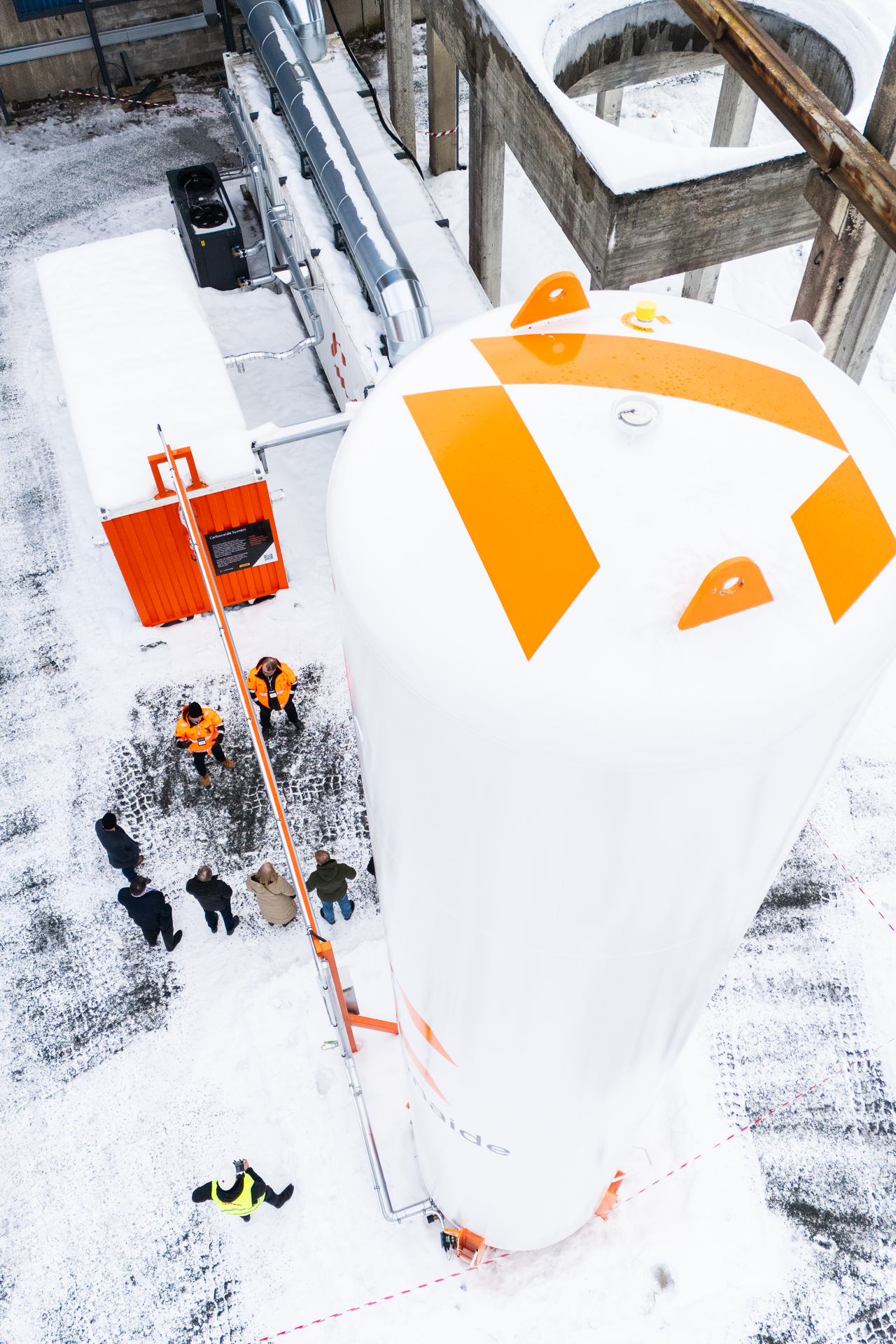
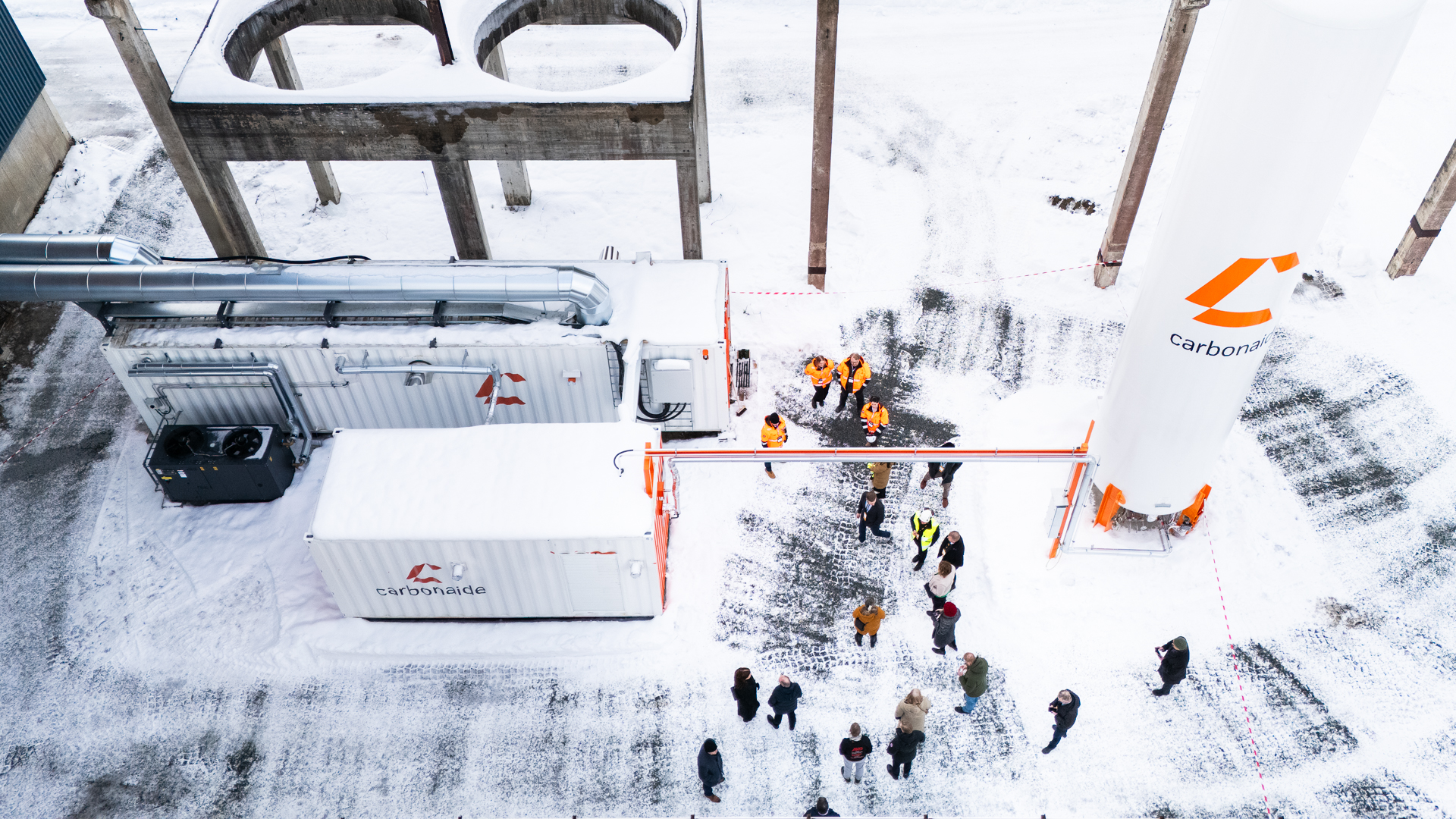
We have developed technology that delivers these benefits through an integrated approach combining hardware, software, and services. Our CO₂ curing system enables concrete producers to reduce cement content, accelerate production, and permanently store carbon dioxide within their products. The Carbonaide Service Platform manages CO₂ flow optimisation and provides verified carbon storage measurements, supporting carbon credit generation while delivering operational improvements that make concrete cheaper, faster, stronger, and greener.