CDR credits generated from the mineralization process are certified by Isometric following the BioCCS Protocol, the Storage in Built Environment Module and the Biomass Feedstock Accounting Module. The minimum crediting period is 10 years. Below is provided a summary of the main certification requirements covering the most important aspects of credit generation.
In the system boundary of the project are included only emissions and removals related to the CDR activities including:
Project establishment - equipment, materials, embodied emissions and their transportation to the site
Operation of the carbon capture and CO2 processing
CO2 transport
Market leakage
End of life of project facilities
All activities that were taking place before project implementation and would continue to take place in the absence of the project are considered the baseline.
CO2 storage
Double counting
Carbon removal must be counted only once. Projects must choose one of the options below for each tCO₂ removed.
CDR credits are issued and concrete products are sold without the low-emission claim.
The CO₂ removal claim stays with the concrete products and is reflected in the EPD. No CDR credits are issued.
Monitoring and energy accounting
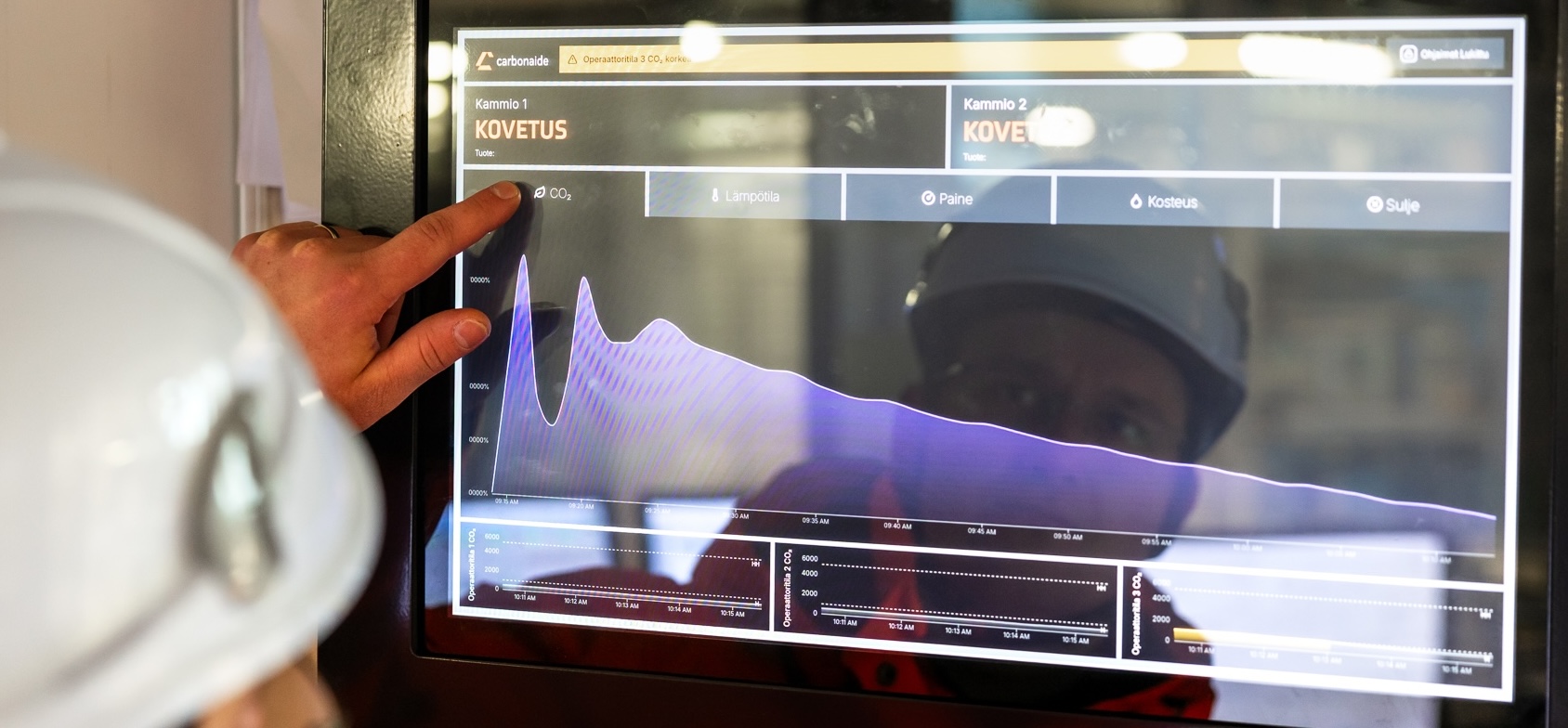
Reactor description and design diagram incl.sensors necessary to quantify any loss of CO₂, mass/volume flow meters and sensors to measure pressure and temperature.
Emissions are monitored for all operations that consume energy inside the CDR storage process based on electricity meter and suitable emission factor.
Reversal risks and buffer pool
The default buffer pool deduction is 6%. Projects have the options to submit project specific reversal risks data to calculate more accurately the buffer pool needed including:
Product types
Likelyexposure risk
Climatic data
Risk of external acid attack based on regional groundwater and precipitation pH.
Financial additionality
CDR revenue enables the business model for concrete manufacturers to adopt Carbonaide’s mineralization technology.
Price decrease for the CDR credits, allows them to still play a major role in the financing for the storage, but at the same time ensures financial additionality is preserved.
NET CDR CALCULATIONS
Net CDR removal is calculated by:
CO2 Removal = CO2 Stored – CO2 Counterfactual – CO2 Emissions
CO2 Emissions = CO2 Establishment + CO2 Operations + CO2 End of life + CO2 Market Leakage
CO2 stored is quantified using real time gas measurements.
Counterfactual carbonation is the amount of carbonation that would have occurred under business-as-usual practices.
Biomass feedstock accounting
Carbonaide uses biogenic CO2 from a biogas plant. In the absence of the CDR activities, CO2would be released in the atmosphere.
The CDR project is meeting the biomass feedstock sustainability criteria. The biogas plant capturing the CO2 is utilizing biogenic waste. Examples include biowaste from food processing industry, sewage sludge, grease waste, households’ biowaste.
The project does not lead to market leakage as the sourced feedstocks for the purpose of CDR Project is waste with no economic value.
The built environment can become a carbon sink with permanent storage and carbon credits that make an impact!