
Concrete manufacturers can stay competitive as sustainability requirements increase by treating compliance not as a cost burden but as a production opportunity. The manufacturers that adapt earliest gain real advantages: lower input costs, faster production cycles, and access to markets where verified carbon performance is becoming a procurement requirement. The questions below unpack the specific pressures, technologies, and strategies that make that shift possible.
What sustainability requirements are manufacturers actually facing?
Concrete manufacturers are facing a growing combination of regulatory obligations, procurement standards, and voluntary market pressures that together make carbon performance a measurable business factor. These requirements are no longer abstract targets. They show up in tender documents, Environmental Product Declaration (EPD) thresholds, and supply chain due diligence frameworks across European and global markets.
The most immediate pressure comes from public procurement. Many government construction contracts now specify maximum embodied carbon limits, which means concrete producers supplying infrastructure or public building projects must demonstrate verified carbon footprint data for their products. EPDs, which quantify the lifecycle emissions of a concrete product, are increasingly mandatory rather than optional in these contexts.
Beyond procurement, the EU taxonomy for environmentally sustainable activities defines what qualifies as a “green” investment or building. For concrete manufacturers, this matters because developers and building owners seeking taxonomy-aligned financing must source materials that meet specific environmental criteria. Manufacturers who cannot provide compliant documentation risk being excluded from those supply chains entirely.
Carbon pricing mechanisms, including the EU Emissions Trading System and the Carbon Border Adjustment Mechanism, add another layer. As the cost of emitting carbon rises, producers with higher-emission processes face a structural cost disadvantage compared to those who have reduced their cement intensity or integrated carbon storage into production.
How does a carbon footprint requirement affect concrete production costs?
A carbon footprint requirement affects concrete production costs primarily by putting pressure on cement content, since cement is both the largest source of emissions and one of the highest-cost inputs in a concrete mix. Meeting a carbon limit without changing anything else is expensive. Meeting it by reducing cement use is not.
The relationship between emissions and cost is more aligned than it might appear. Portland cement production is energy-intensive and accounts for the majority of a standard concrete product’s carbon footprint. When a procurement specification sets an embodied carbon ceiling, the most direct path to compliance is reducing how much cement goes into each cubic metre of concrete. That reduction also lowers raw material costs.
The challenge is that cement does real structural work. Reducing it without compensating through other means, such as alternative binders, SCMs, or process changes that accelerate strength development, risks producing concrete that does not meet mechanical performance standards. Manufacturers who approach carbon requirements as a compliance checkbox without rethinking their mix design often find themselves spending more to achieve less.
Manufacturers who treat carbon requirements as a signal to optimise their production process, on the other hand, can reduce both emissions and input costs simultaneously. This is where technologies that enable cement reduction while maintaining or improving strength become directly relevant to the business case, not just the sustainability case.
What are the most effective ways to reduce concrete’s carbon footprint?
The most effective ways to reduce concrete’s carbon footprint are reducing Portland cement content, substituting cement with SCMs or alternative binders, and permanently mineralising CO₂ into the concrete structure during curing. These approaches can be used individually or in combination, and their effectiveness depends on the product type, production setup, and available materials.
Reducing Portland cement through mix optimisation
Portland cement is the primary driver of concrete’s carbon footprint, so reducing its proportion in the mix is the most direct lever available. This can be achieved through better particle packing, use of plasticizers that reduce the water-to-cement ratio, and process changes that allow adequate early-age strength without excess cement. In precast production, where curing conditions are controlled, there is often more room to reduce cement content than in site-cast applications.
Using SCMs and alternative binders
SCMs such as slag and fly ash replace a portion of Portland cement while still contributing to strength development. They work alongside cement and require it for activation. Alternative binders, such as alkali-activated materials derived from slag, can in some cases replace cement more substantially, though availability and mix complexity vary by location. Both approaches reduce the emission intensity of the binder system, and both are compatible with carbon dioxide curing processes that further enhance their performance.
Mineralising CO₂ during curing
Permanently mineralising CO₂ into the concrete structure during curing adds a third mechanism: negative emissions. Rather than simply reducing the emissions associated with cement, this process converts CO₂ into stable carbonate minerals within the concrete product itself. The stored carbon does not re-enter the atmosphere, even if the concrete is later demolished or recycled. When combined with cement reduction and SCM substitution, the resulting carbon footprint can move from positive to negative.
How does CO₂ curing technology work in concrete production?
Carbon dioxide curing works by introducing CO₂ gas into sealed curing chambers during the early hardening phase of concrete production. The CO₂ reacts with calcium ions from the cement and supplementary materials to form stable carbonate minerals within the concrete matrix. This mineralisation process is permanent, strengthens the concrete structure, and stores the carbon in solid form.
In practical terms, the process takes place in gas-tight curing chambers where CO₂ concentration, temperature, and humidity are controlled to achieve optimal mineralisation rates. The CO₂ is sourced externally, typically from industrial capture processes, and introduced to the chamber through a managed flow system. The chemistry involves CO₂ reacting with calcium silicate hydrates and other cement hydration products, converting hydroxides to carbonates and densifying the microstructure of the concrete.
This densification has direct production benefits. Carbonation accelerates early-age strength development through two mechanisms: the formation of ultrafine calcium carbonate particles that act as nucleation sites for further hydration, and the acidic nature of CO₂, which increases the dissolution rate of binders. The result is that concrete gains adequate strength faster, which can reduce curing time and allow earlier demoulding in precast production.
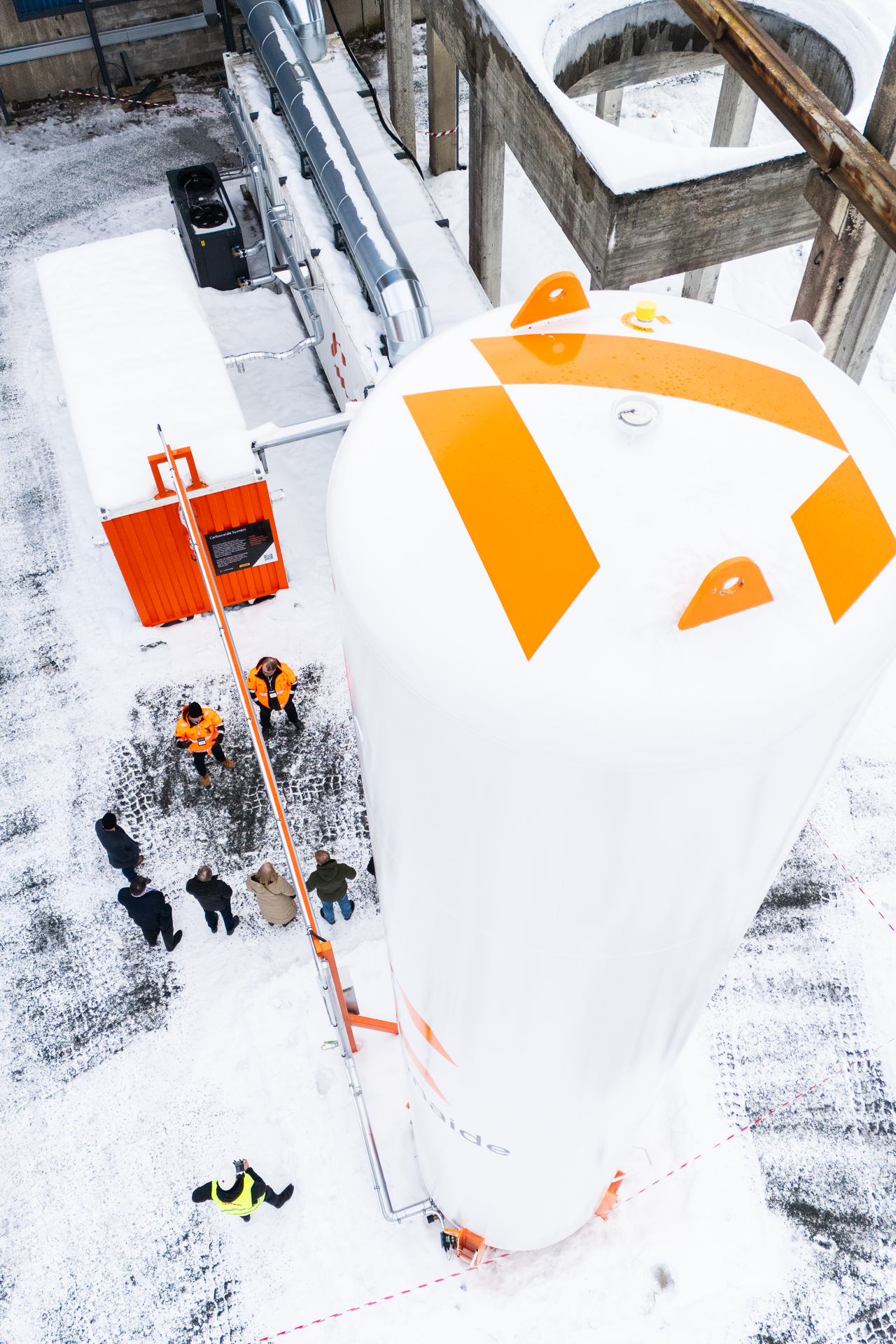
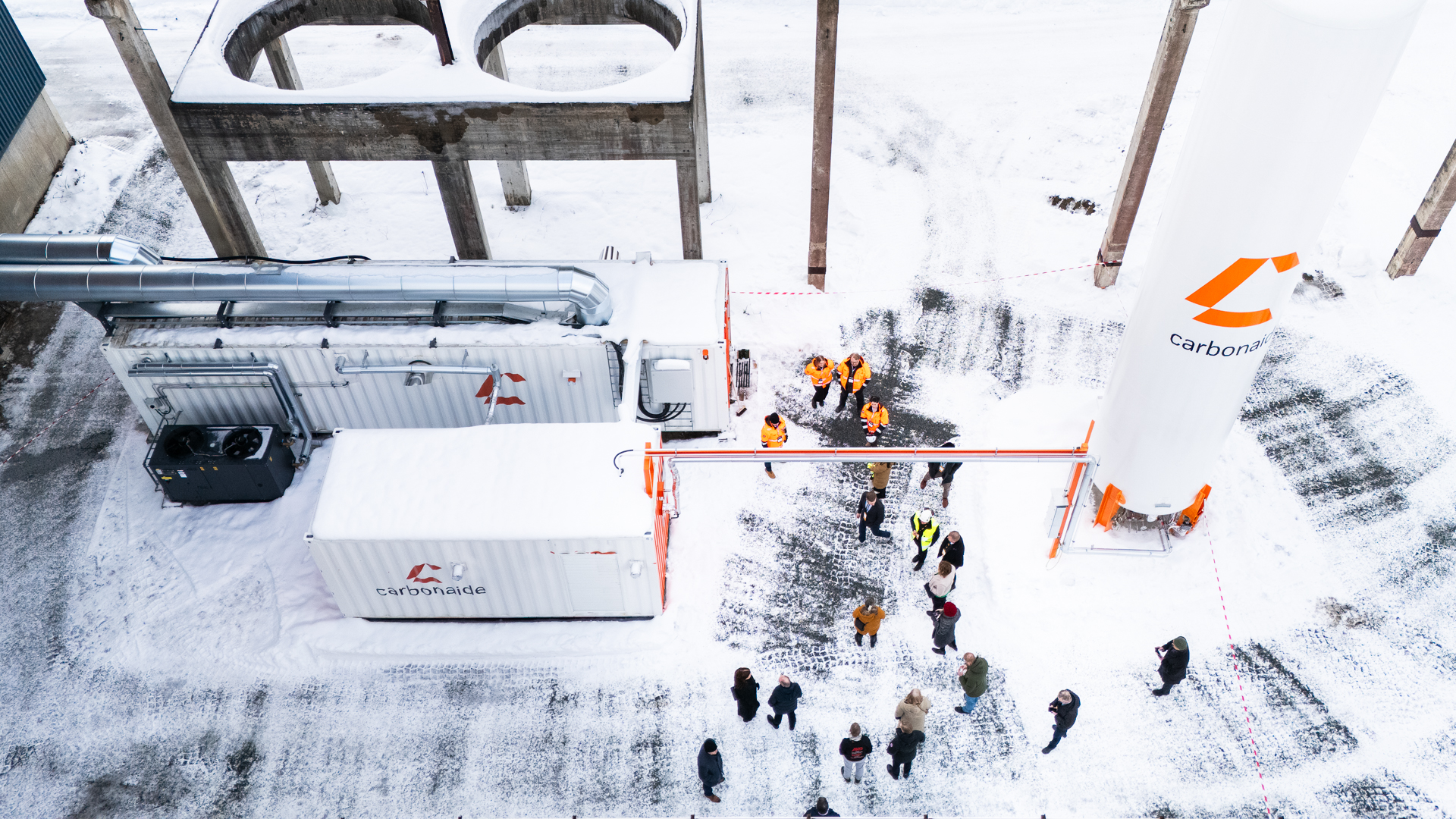
The Carbonaide CO₂ Curing System applies this technology at production scale, integrating with existing curing chamber infrastructure or new facilities. The Carbonaide Service Platform manages CO₂ flow in real time, measures the quantity of CO₂ mineralised per batch, and generates the carbon storage documentation needed for EPD updates and carbon credit certification.
Can sustainable concrete production also improve manufacturing efficiency?
Yes, carbon dioxide curing in particular improves manufacturing efficiency directly, not just as a side effect. Faster strength development means shorter curing cycles, which increases throughput in precast facilities without requiring additional chamber capacity. Cement reduction lowers raw material costs. These are production gains that stand on their own merits, independent of any carbon or sustainability framing.
The connection between emission reduction and efficiency is strongest in precast production, where curing conditions are controlled and the benefits of CO₂ curing are most consistent. When CO₂ is introduced during curing, the accelerated strength development reduces the time products need to remain in the chamber before demoulding. This shortens the production cycle and allows the same chamber to process more batches over a given period.
Cement reduction compounds the efficiency gain. Cement is one of the most expensive inputs in concrete production. Reducing it by even a modest proportion across high-volume production has a measurable impact on input costs. When CO₂ curing enables cement reduction without sacrificing strength, the cost saving is real and recurring.
Manufacturers sometimes assume that meeting stricter environmental standards will require investment that outweighs the returns. In practice, the combination of reduced cement use, faster production cycles, and access to carbon credit revenues creates a financial case that can offset the investment in CO₂ curing infrastructure over time. The efficiency improvements are not incidental to the carbon performance. They are part of the same process.
What role do carbon credits play in a manufacturer’s sustainability strategy?
Carbon credits give concrete manufacturers a way to monetise the CO₂ they permanently store in their products, creating a revenue stream from the same process that reduces their carbon footprint. For manufacturers using CO₂ mineralisation, the stored carbon can be certified as durable carbon dioxide removal (CDR) credits and sold to buyers in voluntary carbon markets who need verified, permanent carbon removal.
Not all carbon credits are equivalent. Buyers in corporate net-zero strategies increasingly distinguish between credits that offset emissions temporarily, such as reforestation projects, and credits that represent permanent removal. Mineralised CO₂ in concrete qualifies as durable CDR because the carbonate minerals formed during the curing process are stable over timescales exceeding a thousand years, and they are not released even if the concrete is crushed and recycled.
For manufacturers, carbon credits serve two purposes in a sustainability strategy. First, they provide a financial return that contributes to the return on investment for CO₂ curing infrastructure. Second, they position the manufacturer as a supplier of verified carbon removal, which is increasingly relevant to buyers who need credible CDR to meet their own climate commitments.
Certification is the prerequisite. The quantity of CO₂ mineralised must be independently measured, verified, and certified to a recognised standard. Carbonaide’s process is certified under Isometric’s module for CO₂ storage via carbonation in the built environment, which provides the documentation chain that buyers and auditors require. Without that verification infrastructure, the stored carbon cannot be credibly counted or sold, which is why the measurement and reporting capability built into the production system matters as much as the curing technology itself.
Concrete manufacturers that integrate carbon credit generation into their operations are not simply adding a sustainability label. They are building a second revenue line from a production process that also reduces their input costs and meets tightening procurement requirements. That combination is what makes carbon performance a competitive factor rather than a compliance burden.