
Concrete manufacturers can participate in the carbon removal economy by using carbon dioxide curing technology to permanently mineralize CO₂ into precast concrete products. This process transforms concrete from a source of emissions into a material that stores carbon, and that stored carbon can be verified and sold as durable carbon removal credits. The sections below answer the most common questions producers have about how this works in practice.
What does the carbon removal economy mean for concrete producers?
The carbon removal economy refers to a growing market where organizations pay for verified, permanent removal of carbon dioxide from the atmosphere. For concrete producers, it represents a direct opportunity: the concrete manufacturing process can be modified to permanently store CO₂ within the product itself, generating verifiable carbon removal credits that can be sold to companies seeking to offset their own emissions.
This is a meaningful shift in how concrete production is valued. Traditionally, concrete manufacturing has been assessed primarily on cost, strength, and production speed. The carbon removal economy adds a fourth dimension: the carbon footprint of the product, and specifically whether that footprint can be made negative. Producers who achieve net-negative concrete can monetize that outcome in voluntary carbon markets, creating a new revenue stream alongside their core business.
The demand for high-quality, durable carbon removal credits is growing as corporate net-zero commitments become more common and regulatory scrutiny of carbon offsets increases. Concrete-based carbon storage is particularly attractive to buyers because the CO₂ is stored permanently as carbonate minerals, not temporarily in biological systems that can release carbon again. This permanence gives concrete-based credits a credibility advantage in the market.
How does CO₂ curing turn concrete into a carbon sink?
Carbon dioxide curing turns concrete into a carbon sink through a process called CO₂ mineralisation. During curing, CO₂ gas is introduced into a sealed chamber where fresh concrete is hardening. The CO₂ reacts with calcium ions from the cement, forming stable carbonate minerals within the concrete structure. These carbonates do not break down or release CO₂ back into the atmosphere, even if the concrete is later demolished or recycled.
The chemistry is straightforward: CO₂ enters the concrete matrix and converts into carbonates, effectively locking the carbon into solid mineral form. This is a permanent transformation. Unlike biological carbon storage methods such as reforestation, where stored carbon can be released through fire, decay, or land-use change, mineralised CO₂ in concrete remains stable for well over a thousand years.
The process takes place in gas-tight curing chambers under controlled conditions that maximize the mineralisation rate. The amount of CO₂ stored depends on factors including the cement type, the material mix, and the curing conditions. When industrial byproducts such as steel slag are used as alternative binders alongside CO₂ curing, the combined effect can push the concrete product’s calculated carbon footprint into negative territory, meaning it stores more CO₂ than was emitted during its production.
What carbon credits can concrete manufacturers actually earn?
Concrete manufacturers using CO₂ mineralisation can generate durable carbon dioxide removal (CDR) credits. These are not standard offset credits based on avoided emissions but verified credits for CO₂ that has been physically removed from the atmosphere and permanently stored. The distinction matters because durable CDR credits meet stricter standards and command higher market value than conventional offsets.
For credits to be issued, the mineralised CO₂ must be independently quantified, verified, and certified. Quantification happens through gas flux measurement during the curing process, with laboratory-tested control samples confirming accuracy. Certification is carried out by independent third parties working under recognized frameworks. Carbonaide’s CDR credits, for example, are certified under Isometric’s module for CO₂ storage via carbonation in the built environment.
Several criteria determine whether the credits meet high-integrity standards:
- Additionality: CO₂ mineralisation is not required by regulation, so credits represent genuine additional action beyond business as usual.
- Permanence: Carbonate minerals are stable for more than 1,000 years, satisfying the permanence requirements of leading certification frameworks.
- No double counting: The activity is not included in national or EU greenhouse gas accounting, so the same CO₂ removal is not claimed twice.
- Quantification accuracy: Real-time measurement during the process, confirmed by laboratory analysis, provides a defensible basis for the credit volume.
Producers can either use the carbon removal to reduce the reported carbon footprint of their concrete products (relevant for Environmental Product Declarations) or sell the credits separately to third-party buyers in voluntary carbon markets. Both pathways have commercial value.
What production benefits come alongside carbon removal?
Carbon dioxide curing delivers production benefits beyond carbon storage. The same CO₂ that mineralises into the concrete also accelerates strength development, allows cement content to be reduced, and can enable the use of alternative binders that would not activate under normal curing conditions. These benefits reduce raw material costs and can shorten production cycles.
The cement reduction effect works through several mechanisms. CO₂ curing densifies the microstructure of the concrete, improving mechanical properties and allowing producers to meet strength requirements with less cement. It also activates certain supplementary cementitious materials (SCMs) and alternative binders that are otherwise non-reactive, expanding the range of materials that can be used in the mix design.
On the production speed side, CO₂ introduced during early curing acts as a combination of seeding and accelerating agents. It promotes nucleation of calcium carbonate crystals, which provides growth sites for further hydration products, and it increases the dissolution rate of binders. The practical result is faster early-age strength development, which can reduce the time products need to remain in curing chambers before they can be handled or dispatched.
These combined effects mean that carbon dioxide curing is not solely an environmental measure. It is a process improvement that can make concrete production cheaper, faster, and stronger at the same time as it reduces emissions and generates carbon removal credits.
How can a concrete manufacturer get started with CO₂ curing?
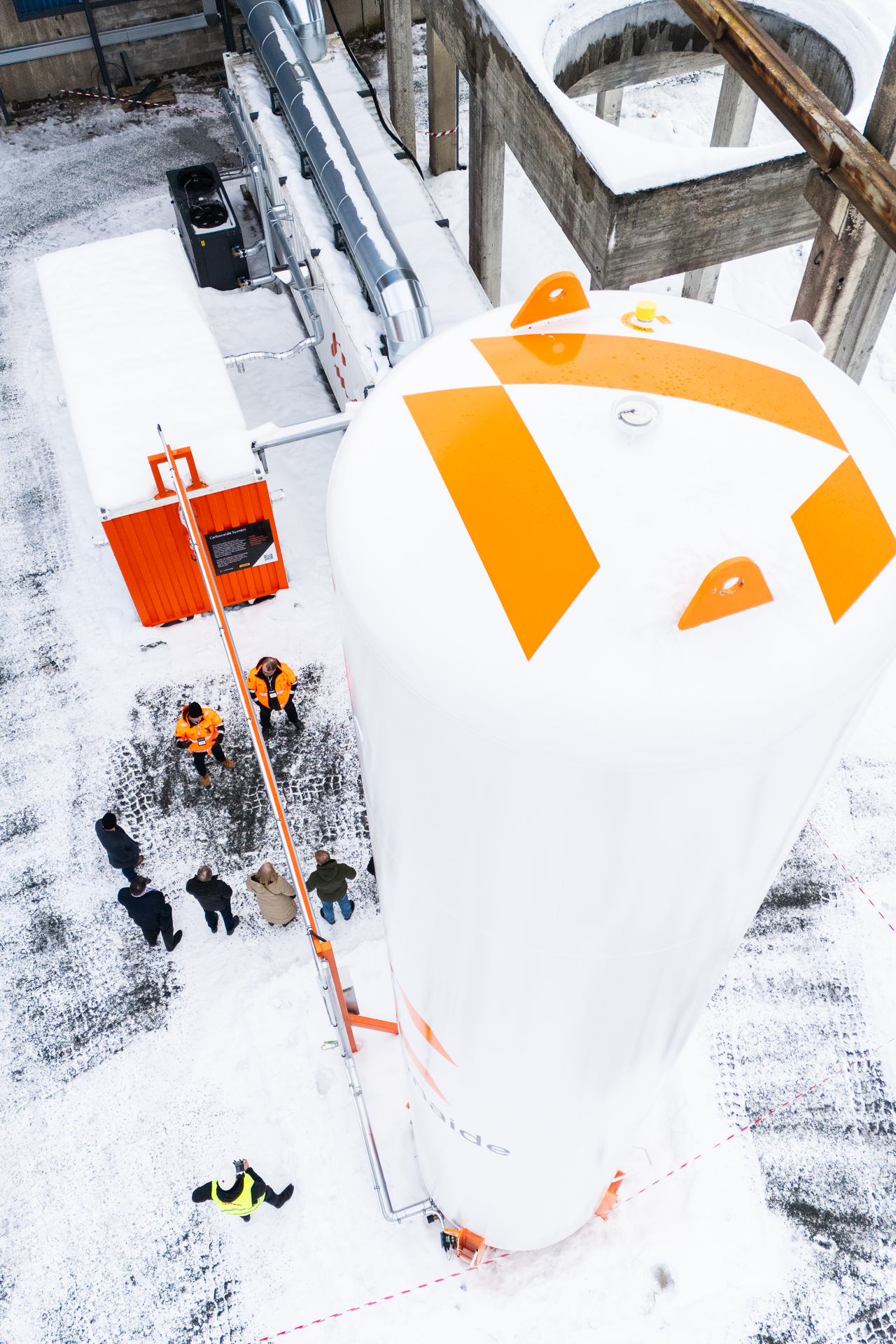
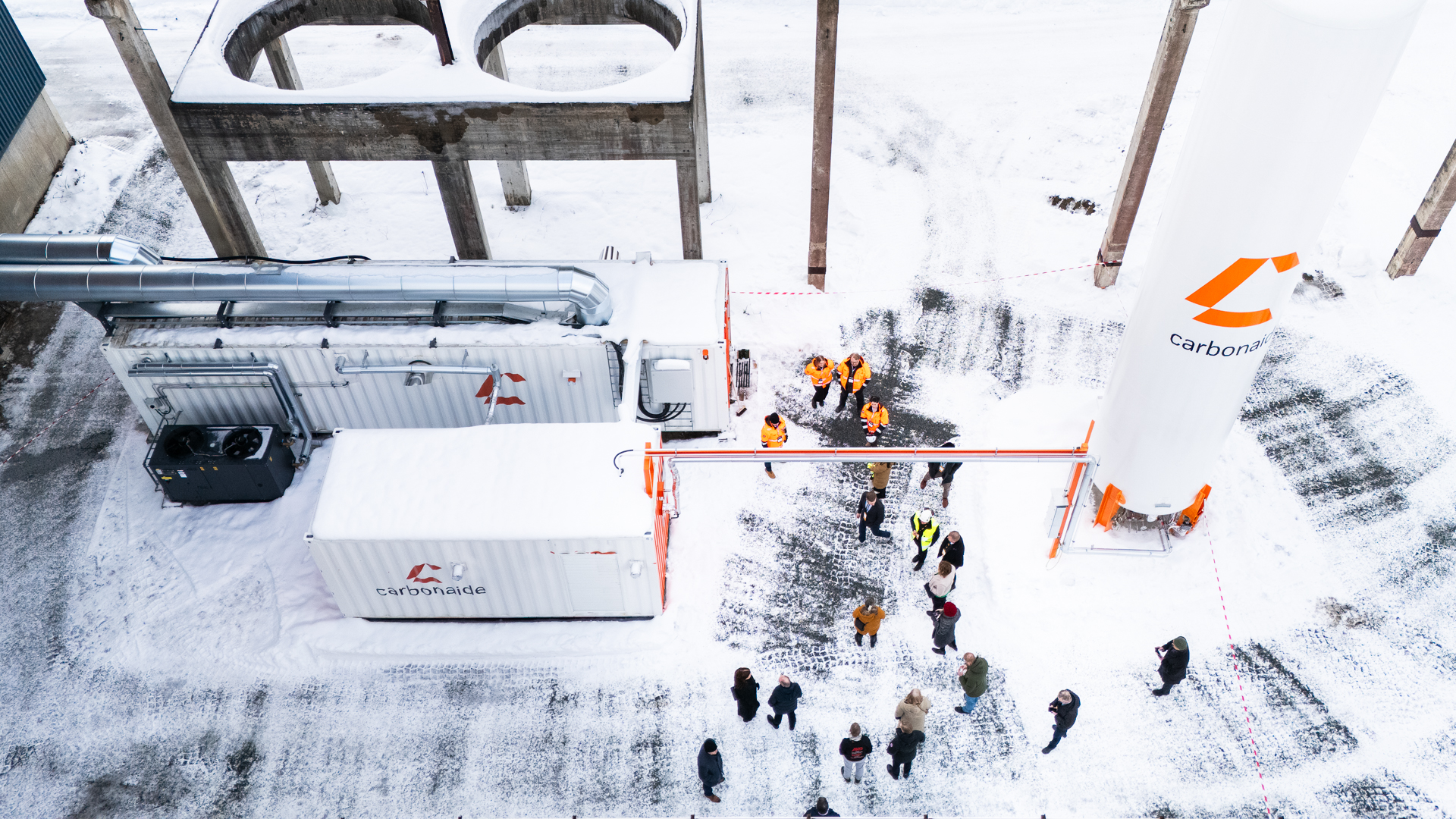
A concrete manufacturer can get started with CO₂ curing by assessing whether their existing curing chambers can be retrofitted or whether a new installation is needed, then working with a system provider to design and commission the required hardware and software. The technology is compatible with existing precast production facilities and does not require a complete rebuild of the production line.
The typical path to implementation involves several stages:
- Assessment and design: Review the existing curing chamber configuration and production mix to determine what modifications are needed for gas-tight operation and CO₂ flow management.
- System installation: Install the CO₂ process module, CO₂ supply infrastructure, and chamber modifications. The hardware manages CO₂ delivery and controls curing conditions with precision.
- Software integration: Connect the curing system to a platform that manages CO₂ flow in real time, records mineralisation data, and supports carbon credit reporting and certification.
- Mix design optimisation: Adjust the concrete mix to take advantage of reduced cement requirements and, where applicable, introduce SCMs or alternative binders that benefit from CO₂ activation.
- Carbon credit setup: Establish the verification and certification process for CDR credits, either for internal reporting or for sale in voluntary markets.
The Carbonaide CO₂ Curing System covers this full journey, from initial design and project planning through to system setup, maintenance, and carbon credit management. Producers do not need to source CO₂ independently if they prefer not to, as CO₂ sourcing and logistics support are also available as part of the service offering.
Which types of concrete products are best suited for CO₂ curing?
Precast concrete products cured in separate, enclosed chambers are best suited for CO₂ curing. The process requires a gas-tight environment where CO₂ concentration can be controlled and maintained during the curing period. Products manufactured in batch production with defined curing cycles, such as wall elements, pavement slabs, pipes, and small precast units, align well with this requirement.
Lightweight concrete products benefit particularly from CO₂ curing because they typically require higher cement content to achieve adequate early-age strength under conventional curing. Carbon dioxide curing accelerates early strength development, which means cement content can be reduced without compromising the product’s ability to meet handling and strength requirements. This makes the process especially relevant for lightweight wall elements and similar products where cement reduction has the greatest impact on both cost and carbon footprint.
Products that incorporate industrial byproducts such as steel slag as SCMs or alternative binders also benefit disproportionately. CO₂ curing can activate materials that are otherwise non-reactive in standard curing conditions, opening up mix designs that combine high carbon storage with very low or net-negative carbon footprints. Pavement products and infrastructure elements are practical examples where this combination has been demonstrated in commercial production.
Ready-mix concrete and cast-in-place applications are not well suited to CO₂ curing in its current form because they do not use enclosed curing chambers. The technology is focused on the precast sector, where controlled curing environments are already standard practice and the infrastructure for CO₂ curing can be integrated without changing the fundamental production model.