
Decarbonising concrete manufacturing involves multiple approaches that address the industry’s significant environmental impact. The main methods include:
- Reducing cement content through alternative binders – Using supplementary cementitious materials and geopolymers to replace traditional Portland cement
- Implementing carbon dioxide curing technology – Capturing and mineralising CO₂ directly into concrete structures during production
- Optimising production processes – Improving energy efficiency and incorporating renewable energy sources
These complementary strategies work together to transform concrete from one of the largest industrial emission sources into a potential climate solution. By combining cement reduction with active carbon utilisation, manufacturers can achieve both immediate cost savings and long-term environmental benefits while meeting growing market demand for sustainable construction materials.
Why does concrete manufacturing need decarbonisation in the first place?
Concrete manufacturing requires urgent decarbonisation because it accounts for approximately 8% of global CO₂ emissions, making it one of the largest industrial contributors to climate change. The construction industry as a whole represents 38% of global greenhouse gas emissions, with concrete being the most widely used construction material worldwide.
The massive carbon footprint stems primarily from cement production, which involves heating limestone to extremely high temperatures and releases CO₂ both from fuel combustion and the chemical breakdown of limestone itself. As global construction demand continues to grow, particularly in developing nations, the environmental impact will only intensify without significant changes to production methods.
The urgency becomes clear when you consider that concrete production volumes are expected to increase substantially over the coming decades. Traditional Portland cement concrete typically produces hundreds of kg of CO₂ per cubic metre, making every construction project a significant emission source. This scale of impact means that even modest improvements in concrete manufacturing can deliver substantial environmental benefits.
What are the main methods for reducing cement content in concrete?
The primary methods for reducing cement content involve several proven approaches that maintain concrete performance while lowering emissions:
- Supplementary cementitious materials (SCMs) – Industrial byproducts like slag from steel production and fly ash from power plants that replace 20-40% of cement content
- Alternative binders – Advanced systems including alkali-activated materials and geopolymers that can eliminate traditional cement entirely
- Chemical admixtures – Plasticisers that reduce water requirements, allowing for lower cement content while maintaining strength
- Optimised mix designs – Engineering approaches that maximise the effectiveness of each component to minimise overall cement needs
These cement reduction strategies offer immediate pathways to lower emissions while often improving concrete performance and reducing costs. The most effective approach combines multiple methods, using SCMs for baseline cement replacement while incorporating admixtures and optimised designs to maximise the impact. This integrated strategy allows manufacturers to achieve significant emission reductions using proven technologies that can be implemented with existing production infrastructure.
How does carbon capture and utilisation work in concrete production?
Carbon dioxide curing technology works by introducing captured CO₂ directly into concrete during the curing process, where it becomes permanently mineralised into the concrete structure. This process transforms concrete from a carbon emission source into a carbon sink by chemically binding CO₂ within the material matrix.
The process involves infusing carbon dioxide into concrete during manufacturing, which creates carbonation reactions that alter the concrete’s chemical composition. The CO₂ becomes chemically bound within the concrete matrix through mineralisation, ensuring permanent storage rather than temporary sequestration. This dual-benefit approach addresses both production efficiency and climate impact simultaneously.
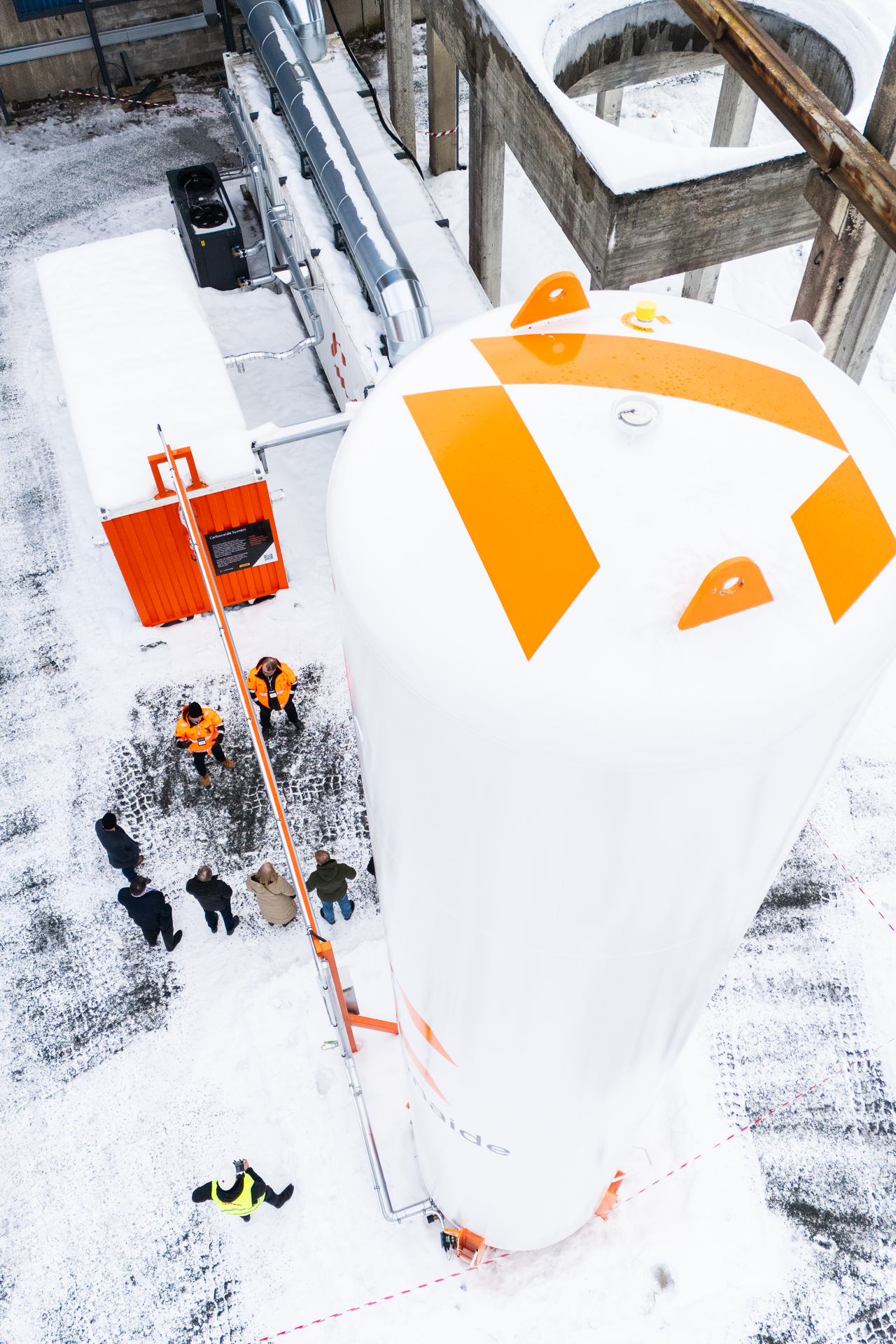
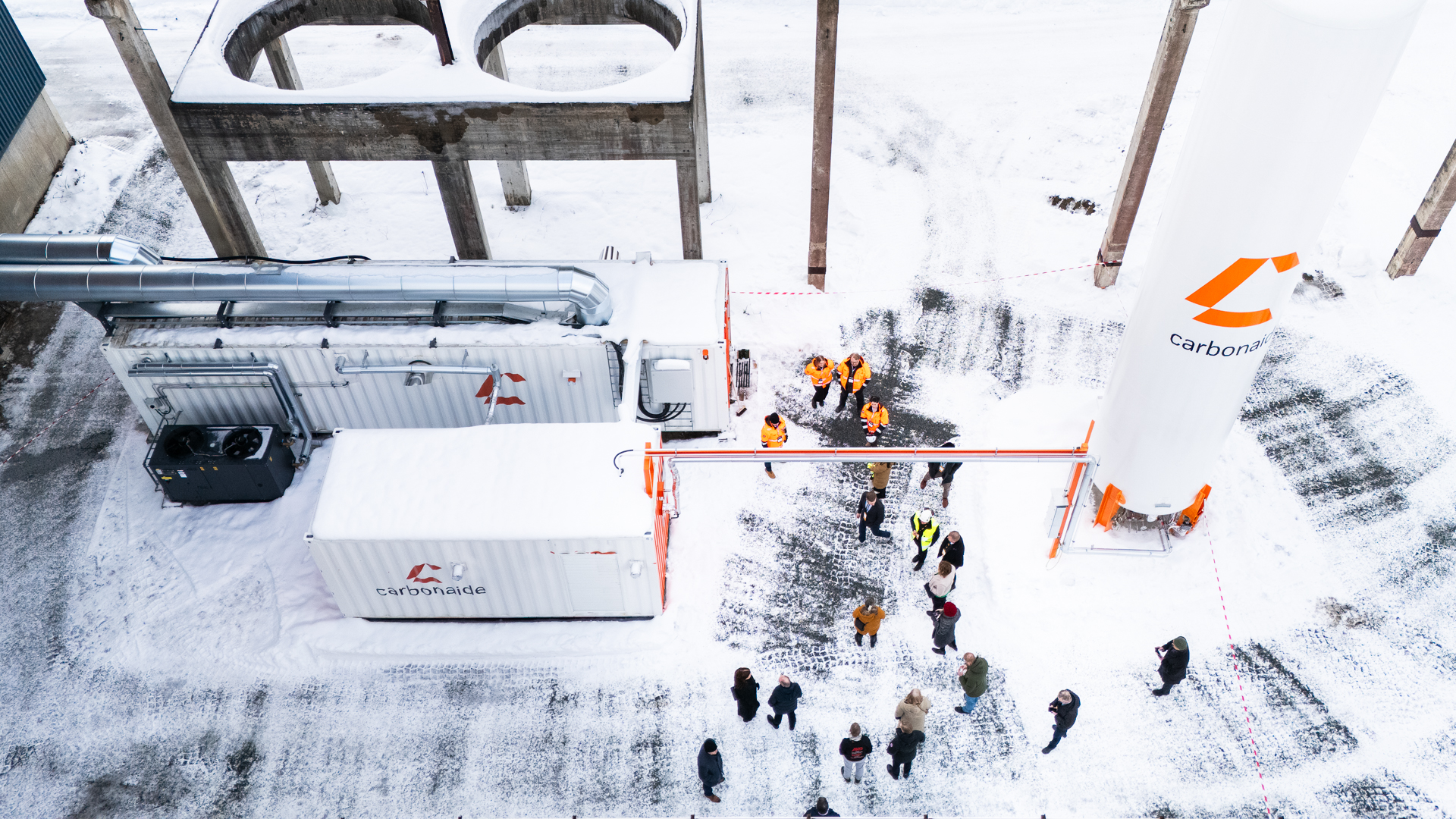
At Carbonaide, we have developed CO₂ curing systems that can be integrated with existing concrete production facilities or incorporated into new installations. The technology adapts to balance carbon dioxide benefits between utilisation advantages and storage objectives based on specific customer needs. Some applications prioritise maximum carbon storage capacity, while others emphasise production benefits like reduced curing times and enhanced concrete strength.
The carbonation process also enables the utilisation of previously passive materials as supplementary cementitious materials. For example, gamma dicalcium silicate found in steel slags becomes an active binding agent when exposed to CO₂ during curing, expanding the range of usable cement replacement materials.
What’s the difference between carbon neutral and carbon negative concrete?
The distinction between carbon neutral and carbon negative concrete represents different levels of environmental impact reduction:
- Carbon neutral concrete – Produces zero net emissions by balancing CO₂ generated during production with equivalent reductions through cement replacement, renewable energy, and carbon offsets
- Carbon negative concrete – Actually removes more CO₂ from the atmosphere than it produces through active carbon capture and permanent mineralisation within the concrete structure
- Verification requirements – Both approaches require lifecycle assessment and third-party verification to ensure accurate carbon accounting and credible environmental claims
- Market positioning – Carbon negative concrete commands premium pricing and enables manufacturers to generate carbon credits as an additional revenue stream
Understanding this distinction is crucial for manufacturers developing sustainability strategies and market positioning. While carbon neutral concrete represents a significant improvement over traditional concrete, carbon negative concrete positions companies as climate solution providers rather than simply emission reducers. This fundamental difference creates new business opportunities and competitive advantages as construction industry sustainability requirements continue to evolve and strengthen.
Which decarbonisation approach offers the best return on investment for manufacturers?
The most cost-effective decarbonisation approach typically combines cement reduction strategies with production efficiency improvements. This dual approach addresses the fact that cement accounts for roughly half of concrete production costs while simultaneously reducing emissions and improving operational performance.
Carbon dioxide curing technology offers particularly attractive returns because it delivers multiple benefits simultaneously: cheaper production through reduced cement requirements, faster curing times that increase throughput, stronger concrete that can command premium pricing, and lower emissions that meet regulatory requirements. The technology can reduce required cement content while shortening curing times, directly improving both costs and production capacity.
Implementation complexity varies significantly between approaches. Adding SCMs to existing concrete mixes represents the lowest-complexity option, requiring minimal equipment changes but offering moderate emission reductions. Carbon dioxide curing systems require more substantial infrastructure modifications but deliver greater long-term benefits through permanent CO₂ storage and enhanced production capabilities.
Long-term benefits favour approaches that create permanent competitive advantages. Technologies that enable concrete producers to offer verified carbon negative products position them advantageously as construction industry sustainability requirements continue to tighten. The ability to generate carbon credits while improving production economics creates multiple revenue streams that compound over time.
For manufacturers evaluating decarbonisation investments, we recommend starting with approaches that deliver immediate operational benefits while building toward more comprehensive carbon utilisation systems. This staged approach minimises risk while establishing the foundation for advanced decarbonisation technologies that transform concrete production from an emission source into a climate solution.