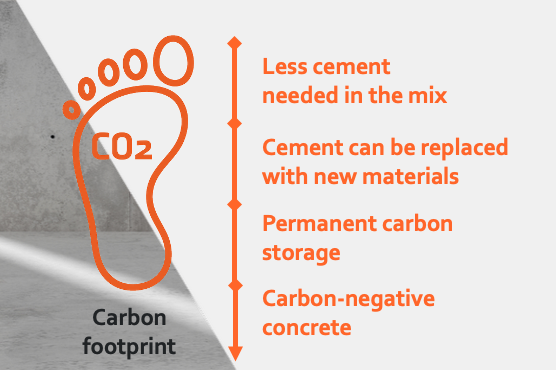
The biggest part of concrete’s carbon footprint is caused by cement production so the easiest way to lower the footprint is to use less cement. CO₂ curing allows the concrete manufacturers to reduce the amount of cement in the concrete mix design.
CO2 Activates New Materials
When the factory uses carbon dioxide during the concrete curing phase, the CO₂ activates new materials that can be used for replacing cement. Faster curing under the CO₂ treatment also enables the use of materials that would without CO₂ be too slow to harden in industrial production.
Materials such as steel slag that would normally not work as cement replacements can be added to concrete because of the carbon dioxide treatment. This further reduces the carbon footprint.
Permanent Carbon Storage
During the Carbonaide carbon dioxide curing process, CO₂ reacts with the cement in the concrete mix and forms extremely stable carbonates that lock the carbon dioxide away in the concrete structure permanently.
The cement savings combined with the use of new alternative binders and the permanent storage of carbon dioxide, make it possible to produce concrete products that are carbon-negative.
Next: The Curing Chamber
In a factory that uses Carbonaide technology for producing low-carbon concrete, the CO₂ treatment takes place during the hardening phase.
On the next page, you can visit the curing chamber.